Please ensure Javascript is enabled for purposes of website accessibility
Skip to main content
Advertisement

North Okaloosa schools raise nearly $15K for cancer research

Editor's Note: This report is part of the News Bulletin's ongoing series on cancer-research fundraisers. The newspaper is proud to support Relay For Life Crestview, which will take place 6 p.m. April 25 at Shoal River Middle School.

CRESTVIEW —  North Okaloosa schools are raising money for the American Cancer Society Relay for Life in April.

Several schools have Relay For Life teams, which have organized multiple fundraisers with teachers, faculty and students' help.

Davidson Middle School's team, which has raised more than $9,000, collected most of the funds from last month's Davidson Dash 5K/10K, which nabbed more than $7,000, team captain Daniel Richards said. The team also had a yard sale and monthly faculty luncheons.

Baker School's team met a $4,000 goal following T-shirt sales, December's Santa Shop and selling caramel covered apples, team chair Janice Roberts said.

Northwood Arts and Science Academy has raised $1,800 from monthly teachers luncheons, Kacy Kellogg said. 

This will be Bob Sikes Elementary School's 13th year of involvement, Christi Collinsworth, the school's team captain, said.

Through T-shirt sales, benefit luncheons, a school dance and a Yankee candle fundraiser, Bob Sikes has collected nearly $1,000 of its $8,000 goal, she said. Starting April 7, students can donate pocket change to wear a hat or chew bubblegum.

Riverside Elementary School has raised more than $900 toward its $2,000 goal, team captain Amber Johns said. Staffers made donations to wear jeans on early release Thursdays, and students can participate in a March 20 "mini Relay" and an April 12 Relay For Life pageant.

New participant Southside Center has raised $65, according to team captain Becky Kannapel.

She said the school will organize several benefit luncheons for teachers and staff to increase that amount.   

WANT TO GO?

WHAT: Crestview Relay For Life

WHEN: Begins at 6 p.m. April 25

WHERE: Shoal River Middle School, 3200 E. Redstone Ave. 

EmailNews Bulletin Staff Writer Matthew Brown, follow him on Twitteror call 850-682-6524.

This article originally appeared on Crestview News Bulletin: North Okaloosa schools raise nearly $15K for cancer research

FISH BUSTERS' BULLETIN: Bream destinations great for kids

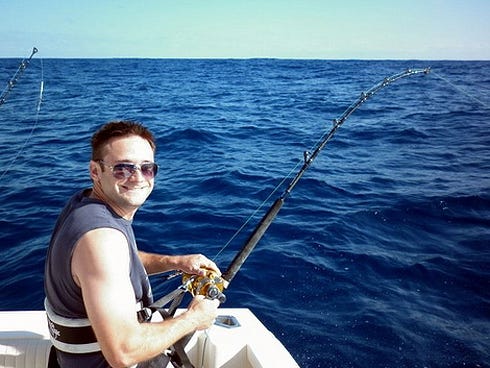
Virtually all of Florida’s fresh waters are brimming with bream, which include bluegill, redear sunfish, redbreast sunfish and spotted sunfish.

These sporty little fish are many a kid’s first catch, introducing them to a lifetime of fishing fun. They provide great opportunities for shoreline fishing using simple cane poles or spinning rods. License-free freshwater fishing weekends are a great time for adults to introduce kids to fishing and see if they and you would like to take up the sport.

The Florida Fish and Wildlife Conservation Commission (FWC) schedules the first of four license-free recreational freshwater fishing days on the first full weekend in April each year (April 5-6 this year), because it is such a productive fishing time, and the weather is usually pleasant. Many of Florida’s recreational sport fishes, such as black bass, bluegill and redear sunfish, move into the shallows to spawn during spring, making them more available for anglers to catch.

During license-free freshwater fishing weekends (the first weekend in April and the second weekend in June) no recreational fishing license is required; however, all other bag limit, season, gear and size restrictions apply on these dates for recreational fishing. The FWC invites you to take this opportunity to take your family, friends and colleagues fishing.

Children don’t need a fishing license until they are 16, but parents may buy them one at any time and they won’t expire until they are 17. This helps the FWC attain additional revenue from the Federal Aid in Sportfish Restoration program to improve their fishing and gives the child pride in belonging to the angling community.

Fishing is a low-cost, wholesome form of entertainment that often pays for itself with healthy food for the table. An annual license is only $17.50 for residents.

To further encourage recreational fishing, the FWC will conduct a special contest during April to collect photos of anglers. All you have to do is post a photo of your family fishing in Florida’s fresh waters on Twitter or Instagram with #FWC-FamilyFishing. In return for your efforts, the FWC will enter your name into a drawing for one of six surprise packages, each including a $50 gift card, compliments of Bass Pro Shops and TrophyCatch, and another $50 worth of assorted fishing lures, hooks, line and goodies to make your next trip even more productive.

Submitted photos must be your own, unedited pictures, and the photo must not include inappropriate content. Photos should be taken during April while freshwater fishing in Florida and include multiple anglers enjoying their day together on the water. The FWC may subsequently use the photos for outreach purposes.

In addition, freshwater anglers are encouraged to participate in the Big Catch angler-recognition program. All you need to do is catch one of 33 species of freshwater fish that exceed a specific length or weight, go to BigCatchFlorida.com, fill out some information and post a photo. Besides getting to share the excitement of your catch on the Internet, you’ll receive via email a custom certificate to print, and a discount for SportsmanOnCanvas.com.

Big Catch encourages anglers to try different species and locations, by recognizing different levels of achievement: Master Angler (five different qualifying Big Catch species), Elite Angler (10 different qualifying Big Catch species) or Specialist (five qualifying fish of the same species). It is fun and challenging for the entire family.

Here are some tips to make your bream fishing more successful. During spring, sunfish congregate to spawn in water depths from 3 to 10 feet. Bluegill continue to spawn periodically throughout summer. Bluegill opt for slightly shallower areas than redear sunfish, but it’s not unusual to see them use the same bedding areas simultaneously. Crickets, grubs, sand maggots or grass shrimp will all catch bedding bluegill. Use a small hook, #6 or #8, with a split-shot sinker about 6 inches up the line, and concentrate on water less than 6 feet deep. A small float helps identify strikes. For artificial baits, a 1/8-ounce “beetle spin” with a white or chartreuse body on ultralight tackle is an excellent choice. Your local bait and tackle shop can quickly help you find what you need.

The redear sunfish, or shellcracker, is another popular panfish. Although they prefer snails and clams, redear sunfish are caught most often on earthworms around the full moon in March and April, when spawning peaks. Redear prefer hard-bottom habitat and typically begin spawning about one month before bluegill. In south Florida, shellcracker spawn as early as late February and will likely begin bedding in the Panhandle around the end of May, depending on water temperatures. Shellcracker continue spawning into August.

Redbreast sunfish, also known as river bream and redbellies, are the flowing water cousins of bluegill. Redbellies are more common in rivers than bluegill, and often can be found in backwater areas with less flow. The same baits that work for bluegill will catch redbreast sunfish.

The spotted sunfish, or stumpknocker, is an often overlooked stream panfish. Aptly named, stumpknockers can be found in the tangle of roots at the water’s edge. Although spotted sunfish rarely exceed 8 inches, these feisty species provide great sport on light tackle. Tiny (1/16-ounce) beetle spins pitched close to shore can be deadly, particularly tipped with freshwater clam meat.

With a fishing hole within 30-45 minutes of almost everyone in Florida, the hardest part might be picking your destination. Although your neighborhood pond or a local park may be your best bet, FWC biologists created a list of some major public water bodies they think should be great bream fisheries this year. For full descriptions of the sites, access to them and specific fishing tips for these locations, see the FWC Sites & Forecasts web page.

Bob Watterndorf is a columnist for Florida Fish & Wildlife Conservation Commission. For more Fish Busters columns, visit the FWC website and select News/Monthly Columns. Instant licenses are available at on the FWC website or by calling 888-FISH-FLORIDA (347-4356). Report violators by calling 888-404-3922, *FWC or #FWC on your cell phone, or texting or emailing Tip@MyFWC.com.

This article originally appeared on Crestview News Bulletin: FISH BUSTERS' BULLETIN: Bream destinations great for kids

Men's health issues are hot topics for March 20 Lunch and Learn

Dr. Rick Weaver will speak at a March 20 Lunch and Learn program on "Men's Mealth." The public event is sponsored by the Crestview Area Chamber of Commerce's Health and Wellness Committee.

CRESTVIEW — Men's health issues, including testicular cancer, prostate cancer, colo-rectal cancer, alcoholism, hypertension, skin cancer and cholesterol are on the agenda for the Crestview Area Chamber of Commerce Health and Wellness Committee's March 20 Lunch and Learn.

The importance of examinations for cancer forms common to men, including how to conduct self-examinations for some of them, will be emphasized, presenter Dr. Rick Weaver said.

Testicular cancer is one of the least discussed forms of the disease and is "highly treatable when diagnosed early," but is often ignored by men because of denial and embarrassment, he said.

And colo-rectal cancer is the second leading cause of cancer deaths among men and women, Weaver said.

"More lives are lost each year to colorectal cancer than to AIDS and breast cancer combined," Weaver's presentation materials state.

The Lunch and Learn will begin with a free lunch provided by Publix supermarket followed by Weaver's presentation. The program will conclude with a questions-and-answers period.

"We try to leave some time for questions, although because of  the nature of the topic, some on the committee are concerned there may be some reluctance," chamber President Dennis Mitchell said.

To avoid participants having to ask embarrassing questions aloud, Mitchell said that he and committee chairwoman Dr. Pam Meadows will solicit questions prior to the talk and pull them randomly.

Email News Bulletin Staff Writer Brian Hughes, follow him on Twitter or call 850-682-6524.

This article originally appeared on Crestview News Bulletin: Men's health issues are hot topics for March 20 Lunch and Learn

All Okaloosa beach monitoring sites pass water quality tests

FORT WALTON BEACH — All Okaloosa County parks lack potentially hazardous bathing water, the Florida Department of Health in Okaloosa County stated this week.

Lincoln Park, Valparaiso; Poquito Park, Shalimar; Fred Gannon Rocky Bayou State Park, Niceville; Liza Jackson Park and Garniers Park, Fort Walton Beach; Gulf Islands National Seashore, East Pass, Emerald Promenade, Marler Park and Wayside Park, Okaloosa Island; and Clement E. Taylor Park, Henderson Beach and James Lee Park, Destin, passed tests based on EPA-recommended enterococci standards.

Enteric bacteria’s presence indicates fecal pollution from stormwater runoff, pets and wildlife or human sewage.

Call 689-7859 or 833-9247 for more information. 

This article originally appeared on Crestview News Bulletin: All Okaloosa beach monitoring sites pass water quality tests

EXTENSION CONNECTION: We're celebrating 100 years of extension

Extension is celebrating 100 years! The Smith-Lever Act of 1914 established the Cooperative Extension Service, which allows us all to benefit from our land-grant universities' knowledge.

Extension agents have helped millions of Floridians by tapping the latest information from the University of Florida and Florida A&M University's research engines and converting it into practical knowledge we use every day.

Cooperative Extension was designed as a partnership of the U.S. Department of Agriculture and the land-grant universities, which were authorized by the Federal Morrill Acts of 1862 and 1890. Legislation in various states has enabled local governments or organized groups in the nation’s counties to become a third legal partner in this education endeavor.

The congressional charge to Cooperative Extension through the Smith-Lever Act of 1914 is far-ranging. Today, this educational system includes professionals in each of America’s 1862 land-grant universities (in the 50 states, Puerto Rico, the Virgin Islands, Guam, Northern Marianas, American Samoa, Micronesia and the District of Columbia) and in the Tuskegee University and 16 1890 land-grant universities.

All of Florida's 67 counties have a University of Florida Institute of Food and Agricultural Sciences Extension Service. Most offices include an agent experienced in Family and Consumer Sciences, 4-H Youth Development, Horticulture, Marine Science, and Agriculture. Agents provide programming on topics important to their communities and plenty of resources to help local farmers, youths, parents and anyone with questions on the above topics.

Okaloosa County currently has an agent in the extension office for each of these program areas. If you are interested in learning more about our mission, when future programs are scheduled and more, call 689-5850 or come by 3098 Airport Road, Crestview.

Haley Worley is an agent at the University of Florida's Institute of Food and Agricultural Sciences Extension office in Crestview.

This article originally appeared on Crestview News Bulletin: EXTENSION CONNECTION: We're celebrating 100 years of extension

Church presents video testimony by the Robertsons of 'Duck Dynasty'

HOLT — The 10:30 a.m. service at Holt Assembly of God March 16 will feature video testimony of the Robertson family, of "Duck Dynasty" fame.

"No suits, no ties! Camouflage is welcome and encouraged," a representative of Holt Assembly said. The church address is 540 Third Ave., Holt.

A fellowship luncheon will be served afterward, but no evening service is scheduled.

This article originally appeared on Crestview News Bulletin: Church presents video testimony by the Robertsons of 'Duck Dynasty'

Help Florida Fish & Wildlife monitor horseshoe crabs spawning on beaches

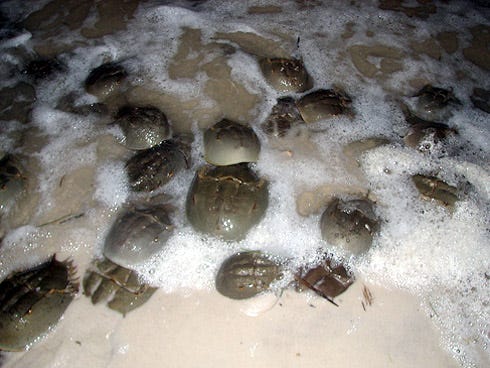
Horseshoe crabs congregate along a beach at night during mating season.

A ritual dating back millions of years takes place again this spring on Florida beaches. Spring marks horseshoe crabs’ mating season, and biologists with the Florida Fish and Wildlife Conservation Commission want the public’s help identifying spawning sites.

Beachgoers will likely have the best luck spotting mating horseshoe crabs around high tide, just before, during or after a new or full moon. The conditions around the full moon this Sunday, March 16, and the new moon on March 30 will create ideal opportunities to view the spawning behavior of horseshoe crabs.

Mating crabs “pair up,” with the smaller male on top of the larger female. Other male crabs may also be present around the couple. Beachgoers lucky enough to spot horseshoe crabs are asked to note how many they see and whether the horseshoe crabs are mating. If possible, the observer should also count how many horseshoe crabs are mating adults and how many are juveniles (4 inches wide or smaller).

In addition, biologists ask observers to provide the date, time, location, habitat type and environmental conditions – such as tides and moon phase – when a sighting occurs.

The FWC asks the public to report sightings through one of several options. Go to the FWC website, click on "Horseshoe Crab Nesting Activity” for the “Submit a Horseshoe Crab Survey” link, then select “Florida Horseshoe Crab Spawning Beach Survey.” You can also report findings via email at horseshoe@MyFWC.com or by phone, 866-252-9326.

The survey program began in April 2002. Through 2013, the FWC received 2,831 reports from across Florida.

Horseshoe crabs, often called “living fossils,” are an important part of the marine ecosystem. Their eggs are a food source for animals. Birds, such as red knots, rely on horseshoe crab eggs to fuel their long migrations to nesting grounds.

Horseshoe crabs have also proved valuable to human medicine. Pharmaceutical companies use horseshoe crab blood to ensure intravenous drugs and vaccine injections are bacteria-free and sterile. Scientists are also using horseshoe crabs in cancer research.

This article originally appeared on Crestview News Bulletin: Help Florida Fish & Wildlife monitor horseshoe crabs spawning on beaches

HOBO HOMEFRONT: Bring positive attitudes to the pageant of life

I had the honor of being in the presence of some of the most beautiful young ladies I ever met during last Saturday's Laurel Hill School Beauty Pageant.

On stage, young constants wowed the crowd. But once off stage, there were unfazed, still glowing young ladies, and there were completely crushed ones. Defeated teen princesses let the tears fall and makeup smear. Many said “I just wanna go home!”

Thankfully, my little princess was part of the first group.

Please do not take this the wrong way, Lady Hoboes. I am not picking on you. I have been in your “high heels.” (Granted, it was a long, long time ago.) But I would like to take this opportunity to offer some advice.

At the beginning of LHS pageant season, I ask my daughters if they want to participate. If yes is the answer, we proceed. But if the desire isn’t there, that ends the conversation. When one of my daughters does enter the pageant, we make that our fun, dress-up time together with no interruptions from brothers or daddy.

Look at this time as an opportunity to be a princess. Please don't concern yourself so much with a title. Regardless of a woman's age, there is always a time when the need to dress up and wear pretty things arises. So take advantage of it!

Live in the moment and have confidence in yourself. Remember: The crowd greets you with cheers and claps because you have the confidence and courage to participate. You are beautiful to the audience because they’re your friends and family.

Whether you are awarded a title from five random people shouldn’t cloud the fact that you are already royalty in so many others' eyes. If people love you for who you are — the person inside, not out — you're crowned every time, hands down!

Remember: Physical beauty will fade, but caring for those who care for you, and enjoying each moment to its full potential, will last as long as you let it.

You are all Miss Laurel Hill.

Amber Kelley lives in Laurel Hill. Send news or comments to Hobo.homefront@gmail.com or P.O. Box 163, Laurel Hill, FL, 32567.

This article originally appeared on Crestview News Bulletin: HOBO HOMEFRONT: Bring positive attitudes to the pageant of life

COVER STORY: Pastor to retire after 39 years in the ministry

New Beginnings Church Pastor Raymond Williams, 82, preaches from the pulpit during a Sunday morning service. Williams, who has served Crestview's area faithful the past 39 years, plans to retire from full-time ministry.

CRESTVIEW — New Beginnings Church Pastor Raymond Williams' impending retirement is bittersweet for Jeanette Prater.

Williams introduced the church secretary to her husband and served at theirs and their daughters' weddings.

He officiated 237 weddings and 721 funerals during 39 years of ministry between New Beginnings and Southside Baptist Church, now known as Central Baptist Church,  Prater said. 

And New Beginnings grew in attendance from 26 members in 1993 to nearly 300 members each Sunday, she said.

"He deserves the opportunity to retire, but on the other hand, he has been such a vital part of our lives here," Prater said. 

See the full story in the March 8-11, 2014 Crestview News Bulletin, available here >>

Email News Bulletin Staff Writer Matthew Brown, follow him on Twitter or call 850-682-6524.

This article originally appeared on Crestview News Bulletin: COVER STORY: Pastor to retire after 39 years in the ministry

error: Content is protected !!