Please ensure Javascript is enabled for purposes of website accessibility
Skip to main content
Advertisement

FINANCIAL FOCUS: Start saving today for tomorrow’s college bills

Another school year is drawing to a close. If you have young children, you might be planning their summer activities.

But you might want to look even farther into the future — to the day when your kids say goodbye to local schools and hello to college dormitories.

When that day arrives, will you be financially prepared?

For the 2013–2014 academic year, the average cost — tuition, fees, room and board — was $18,391 for an in-state student at a four-year public college or university, and $40,917 for a private school, according to the College Board.

These costs may be considerably higher when your children enter college.

Of course, these are just the “sticker” prices; some families pay less, thanks to grants and tax benefits, such as the American Opportunity Tax Credit and the Lifetime Learning Tax Credit.

College is still a good investment in your child’s future. Over an adult’s working life, an individual with a bachelor’s degree can expect to earn, on average, nearly $1 million more than someone with just a high school diploma, according to the U.S. Census Bureau.

Unfortunately, you may not be saving enough — or you might not be making the most of your savings.

More parents use a general savings account than any other method, according to Sallie Mae’s "How America Saves for College" 2014 study. However, these types of accounts typically earn tiny returns with no tax advantages.

On the other hand, attractive college-funding vehicles include a 529 plan; earnings accumulate tax free, provided they are used for qualified higher education expenses. (529 plan distributions not used for qualified expenses may be subject to federal and state income tax and a 10 percent IRS penalty.) Furthermore, your 529 plan contributions may be deductible from your state taxes. But 529 plans vary, so check with your tax advisor regarding deductibility.

A 529 plan offers other benefits. For one thing, lifetime contribution limits for 529 plans are generous; they vary by state, but some plans allow contributions exceeding $200,000. And a 529 plan is flexible: If your child decides against college or vocational school, you can transfer unused funds to another family member, tax and penalty free.

While a 529 plan is a popular choice for college savings, it is not the only option. You also might want to consider a Coverdell Education Savings Account, which, like a 529 plan, can generate tax-free earnings if the money is used for higher education expenses.

Typically, you can put in a maximum of $2,000 per year to a Coverdell account, but it offers more flexibility in investment choices than a 529 plan.

Your children may be young, but before you know it, they’ll be packing their bags for college. So, no matter which college savings vehicles you choose, put them to work soon.

This article originally appeared on Crestview News Bulletin: FINANCIAL FOCUS: Start saving today for tomorrow’s college bills

Irish radio personalities learn about north county culture, Southern hospitality

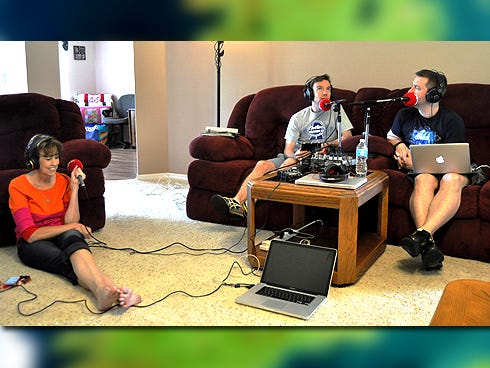
Mary Gadeken — left, with Dermot Whelan and Dave Moore broadcasting "Laughternoons with Dermot and Dave" last week from her Baker living room — plans to visit the Irishmen on May 30.

BAKER — After a week of hosting Ireland's top radio personalities, resident Mary Gadeken has her sights set on exploring the Emerald Isle, and her guests are eager to return her hospitality.

"Mary is obsessed with castles so we're going to show her as many medieval castles as possible," Dermot Whelan, co-host of the 98FM show "Laughternoons with Dermot and Dave," said.

He and Dave Moore, of Dublin, were expecting Southern hospitality when they arrived in Baker, but their week in north Okaloosa County far exceeded their expectations, they said.

"It really has been everything we expected and more," Moore said. "We really learned a lot from being friends with Mary."

"Everything they say about Southern hospitality is true," Whelan said.

With their producer, Maria Devereux, and "resident tech nerd," Paul Bonass, the four Irishmen experienced north county culture, sampling food and soaking up local ambience.

On their first night at the Crestview Hampton Inn, a resounding noise kept the jetlagged quartet awake. Finally, with Bonass armed with recording equipment, they investigated.

Playing it back the next day for Gadeken, she laughed and said, "Those are bullfrogs!"

"We don't have those in Ireland," Moore said.

"We have bulls and we have frogs but not the two in one animal," Whelan added. "They were louder than Dave snoring."

Gators and more Gators

Lunch at Baker's Gator Café, holding — and eating — alligators at Fudpucker's, and hoisting a couple of cold ones at Hooters and Johnny O'Quigley's were among their local experiences.

But Moore said there was one Southern icon he avoided during their four-day visit, having experienced it before.

"Mary sent me grits," he said. "I cooked the grits and I ate the grits and I didn't know what was happening to my mouth. I've been to the beach and the beach was in my mouth."

There was one thing the Irishmen especially appreciated during the warmer part of their visit to Okaloosa County.

"My thing is, air-con is a serious requirement here," Bonass said of air conditioning, expressing surprise when Gadeken said, "It isn't even hot yet."

During a visit with Gadeken's friend, Crestview Mayor David Cadle, the radio hosts laughed during a humorous proclamation of "Dermot and Dave Day" in Crestview.

Cadle proclaimed the duo "goodwill ambassadors for Ireland as they visit America, and their presence is an honor for Okaloosa County, the city of Crestview, and the town of Baker."

In return, Cadle received "warmest greetings" in an official scroll from Dublin Lord Mayor Oisín Quinn, praising the "many new friendships" his citizens were forming, "strengthening cordial relationships" between the cities.

Gadeken, strengthening her own cordial relationships with Dublin, is counting down the days until her May 30 trip to see her friends in Ireland.

Email News Bulletin Staff Writer Brian Hughes at brianh@crestviewbulletin.com, follow him on Twitter @cnbBrian or call 850-682-6524.

This article originally appeared on Crestview News Bulletin: Irish radio personalities learn about north county culture, Southern hospitality

Okaloosa County's evening mosquito control begins next week

The Okaloosa County Division of Environmental Services began spot spraying in May.  On Monday, May 19, the standard evening broadcast spray schedule will begin, weather permitting. 

MONDAYS:

John Riley Barnhill Road to Escambia Farms

Beaver Creek to Baker

Crestview: Rattlesnake Bluff and Little Silver Road, Live Oak Church Road to John King, Hwy. 90 East to county line Road and north to Poverty Creek Road

Destin, FWB( Brooks street going west)

Mary Esther, Wynn Haven Beach, and Valparaiso.

TUESDAYS:

Vinson Ray Road east side of Hwy 189 to Laurel Hill

Wilkerson Bluff Road to Log Lake (Holt) west to County Line Road

Crestview: John King to Hwy 90 East to Shoal River ridge, Old Antioch to Hwy 90 West

Destin, Fort Walton Beach, Wynnehaven Beach, Bluewater Bay and Cinco Bayou.

WEDNESDAYS:

Galliver Cut Off to Milligan and back to Baker

Garden City to Laurel Hill

Crestview: Old Bethel Road to Airport Road, south of Hwy 90 west to Duggan Street. Fairchild Road to Hwy 85 to Airport Road

Shalimar, Streets off of Lewis Turner Blvd. and Niceville

THURSDAYS:

Poverty Creek Road, Hwy 393 to Campton, Old River Road to Vinson Ray Road (from Milligan to Baker)

Crestview: Lake Silver Road to Airport Road to Auburn area

Poquito Bayou area, Ocean City, Mooney Road area, and Niceville.

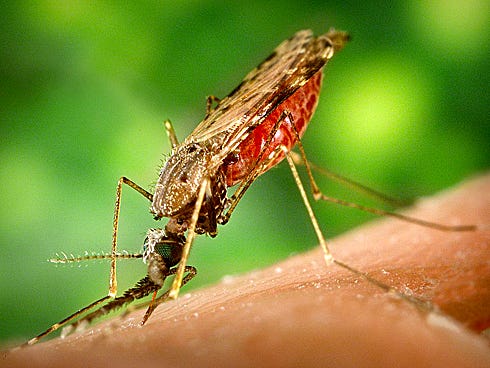
Okaloosa County Mosquito Control and the Florida Department of Health urge the public to remain diligent in their personal mosquito protection efforts. These should include remembering to “SWAT.”

§  Stay inside with screened doors and windows when mosquitoes are biting (dusk and dawn).

§  When outside, wear clothing that covers skin.

§  Apply mosquito repellant that includes DEET  [N, N diethyl-m-toluamide] on your skin when you are outside

§  Turn over standing water where mosquitoes lay eggs or better yet – rid your outdoor area of standing water in which mosquitoes can lay their eggs. 

Remember to apply all mosquito repellants in accordance with the recommended frequency and methods suggested by the manufacturer.

The Florida Department of Health now recommends the following mosquito-borne illness recommendations:

DRAIN standing water to stop mosquitoes from multiplying:

•     Drain water from garbage cans, house gutters, buckets, pool covers, coolers, toys, flower pots or any other containers where sprinkler or rain water has collected.

•     Discard old tires, drums, bottles, cans, pots and pans, broken appliances and other items that aren't being used.

•     Empty and clean birdbaths and pets water bowls at least once or twice a week.

•     Protect boats and vehicles from rain with tarps that don’t accumulate water.

•     Maintain swimming pools in good condition and appropriately chlorinated. Empty plastic swimming pools when not in use.

COVER skin with clothing or repellent:

Clothing: Wear shoes, socks, and long pants and long-sleeves. This type of protection may be necessary for people who must work in areas where mosquitoes are present.

Repellent: Apply mosquito repellent to bare skin and clothing. Always use repellents according to the label. Repellents with DEET, picaridin, oil of lemon eucalyptus, and IR3535 are effective. Use mosquito netting to protect children younger than 2 months old.

COVER doors and windows with screens to keep mosquitoes out of your house:

• Repair broken screening on windows, doors, porches, and patios.

The County Mosquito Control Program sprays for mosquitoes county-wide excluding federal and state-owned land and entities who have contacted the MC Program for inclusion on the no-spray list.  Mosquito spray trucks generally operate from 7 p.m. until 12 p.m. but could also operate in the early morning hours.  Surveillance activities may indicate  certain types of mosquitoes known to be disease vectors being active during other time periods than noted.  If this is the case, the County will respond appropriately. The following is the Okaloosa County spray route schedule and justification of mosquito populations.

Areas of Concern:

§  Wetlands;properties bordering Eglin A.F.B., which are not treated; and property owners unaware that they are creating mosquito breeding sites.

§  Standing water; eliminating should be at the top of everyone’s ‘to do list’ right now!

§  Children’s pools, plant pots, old tires*, leaf piles, pet watering bowl and gutters should be checked daily for standing water.  Even something as simple as a soda lid can literally breed hundreds of mosquitoes.

*     Waste tires can be disposed of FREE at the South Okaloosa County Transfer Station and the Baker Landfill. – this applies only to local households and not businesses. Tire sizes are limited to passenger car and light truck tires.

Quantities limited – 5 tires per household/month.-more-

In addition to spraying, the county has an aggressive larvaciding program in place that includes more than 1,670 sites treated and are checked on a regular basis.  Additionally, more than 750 ponds and areas with standing water are treated with gambusia fish, which eat mosquito larva and reproduce at incredible rates.

Residents are also reminded to have outdoor animals vaccinated against disease.  Horses should be vaccinated against Eastern Equine Encephalitis (EEE).  Although West Nile and EEE can occur throughout the year, peak season is August, September and October.  Horses must receive two vaccine injections 3 to 6 weeks apart and then it is recommended every 3 to 6 months.  Dog owners are also reminded to have pets treated for heartworms, as mosquitoes carry the disease as well.

The Mosquito Control Division of Public Works is open Monday through Friday from 8 a.m. until 4:30 p.m. and may be reached at 651-7394 or 689-5772.  Mosquito spray schedule, preventative tips and other related information is available on the county’s web site at www.co.okaloosa.fl.us.

This article originally appeared on Crestview News Bulletin: Okaloosa County's evening mosquito control begins next week

EXTENSION CONNECTION: Kudzu bugs attack kudzu — and plenty of Florida plants

Florida is extending a warm welcome to a new pest!

Kudzu bugs — 3.5 to 6 millimeters long, rounded oblong and olive-green — lay egg masses in two rows of 13 to 137 eggs per row.

Their first generation seems to prefer feeding on kudzu, but subsequent generations will feed on and lay eggs on other legumes.

When fall comes, adults over-winter where they can find shelter. They crawl under tree bark and into houses' cracks.

Origin

The kudzu bug — first documented in the U.S. in 2009 in Northeast Georgia — has quickly spread throughout the Southeast.

Last year, the kudzu bug made its first appearance in Okaloosa County.

This year, its settling.

At first, a pest that attacks kudzu sounds pretty good, but this bug also attacks wisteria, figs and other legumes like beans and peas. It also is a serious pest to soybeans grown in our area.

They are similar to stink bugs and discharge an odor when disturbed. Skin and eye irritation can occur from this odor emission.

Getting rid of the bugs

If kudzu bugs enter your home, you can vacuum and dispose of them.

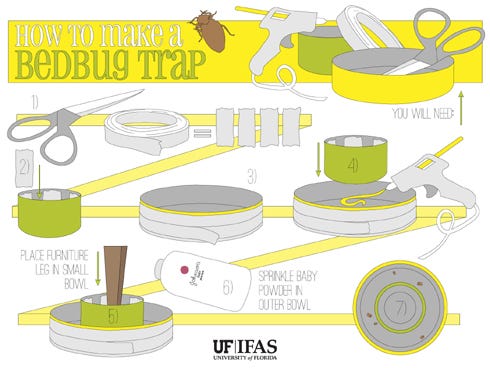
If they are in your garden, you can set a trap using a bucket of soapy water and a piece of white poster board. Just cut the poster board in half; cut a line up the middle of the two pieces and insert them into each other; and place the plus sign-shaped board over the bucket. As the insects hit the board, they will fall into the bucket and drown.

You can use insecticides, but timing and placement are important. Right now, kudzu bugs are just becoming active, making now a good time to spray kudzu host plants with an insecticide. Insecticides with active ingredients ending in “-thrin”, such as pyrethrin and cyfluthrin, are effective against them. Just read instructions and follow precautions. 

Controlling kudzu near your house will help decrease the number of bugs, but they are strong flyers and can migrate through neighborhoods that aren’t near kudzu.

Natural enemies

Kudzu bugs have natural enemies: generalist predators like green lacewings, lady beetles, damsel bugs and big eye bugs.

Two parasitoids attack them: a tiny wasp that develops in the kudzu bug eggs and a fly that lays eggs in the adult kudzu bug.

The kudzu bug, like other exotic invasive insects, is opportunistic; we have yet to see how many different plants species may serve as a host for this pest.

Jennifer Bearden is an agent at the University of Florida's Extension office in Crestview.

This article originally appeared on Crestview News Bulletin: EXTENSION CONNECTION: Kudzu bugs attack kudzu — and plenty of Florida plants

Free training on domestic violence, mental health next week

Shelter House and the Florida Coalition Against Domestic Violence will offer free training later this month.

The session, titled, “Exploring the Intersection of Family Violence, Trauma and Mental Health," will take place 8:30 a.m. to 5:30 p.m. May 20 at Embassy Suites in Destin.

Cathy Cave from the National Center on Domestic Violence, Trauma and Mental Health, and Olga Trujillo, an attorney, author and national trainer and speaker, will speak for advocates, case workers, law enforcement personnel and therapists.

Participants will examine a lived experience of violence, trauma and mental health concerns that may arise. Attendees will learn trauma's impact on the brain and how they can respond to survivors in more effective ways.

Click here to pre-register.

This article originally appeared on Crestview News Bulletin: Free training on domestic violence, mental health next week

'The American Nurse — Healing America' screening set May 19

Northwest Florida State College will participate in the nationwide screening of “The American Nurse: Healing America,” a documentary by photojournalist and filmmaker Carolyn Jones.

The film starts at 7:30 p.m. May 19 at the Mattie Kelly Arts Center's main stage theater on the Niceville campus.

Admission is $8 general public, $5 for those in the nursing profession (RN, LPN or CNA license) and free to NWF State College students with ID. Ticket sales will help defray the film's cost and support NWF State College Nursing programs.

Contact the Box Office, 729-6000, or purchase at www.MattieKellyArtsCenter.org. Box Office hours are 10 a.m. to 4 p.m. Monday to Friday and from 6-7:30 p.m. the night of the film presentation.

This article originally appeared on Crestview News Bulletin: 'The American Nurse — Healing America' screening set May 19

EXTENSION CONNECTION: High rainfall, ice storm bring take-all root rot

Last summer’s heavy rain and stress from January’s icy weather have contributed to widespread take-all root rot.

The culprit? A soil-inhabiting fungus — Gaeumannomyces graminis var. graminis — that causes leaf color loss and yellow grass patches ranging from a few inches to more than 15 feet in diameter.

Symptoms appear in the spring, but the disease can persist all summer and survive winter. Over time, the entire area dies as the root system rots away.

Taking action

When disease occurs, raise the cutting height. Scalping grass damages the growing point; raising cutting height increases the green plant tissue available for photosynthesis, resulting in more energy for turfgrass growth and subsequent disease recovery.

If an area of the lawn has an active fungus, washing or blowing off the mower after use will reduce the disease's spread to unaffected areas.

The amount of water and timing of its application can prevent or contribute to disease development. Most fungal pathogens that cause leaf diseases require free water — rainfall, irrigation, dew — on the leaf to initiate the infection process.

Still, irrigating daily for a few minutes is not beneficial for turfgrass — it does not provide enough water to the root zone — but it does benefit turfgrass pathogens. So you should irrigate when dew is present, usually between 2 and 8 a.m., and only apply enough water to saturate the turfgrass' root zone.

Beneficial nutrients

Excessively high nitrogen fertility contributes to turfgrass diseases, so you should apply the minimum amount required for the grass species.

Potassium (K), key in disease prevention, prevents plant stress. Applying equal amounts of nitrogen and potassium is recommended for turfgrass health.

When disease damages turfgrass roots, it is beneficial to apply nutrients in a liquid solution. However, nitrate-nitrogen increases diseases' severity, so avoid its use when possible. Ammonium-containing fertilizers are preferred nitrogen sources.

Heavy liming has also been linked to take-all root rot increase. Since most turfgrasses can tolerate a range of pH, maintaining soil at 5.5 to 6.0 can suppress the pathogen's development. When the disease is active, frequent foliar applications of small amounts of nutrients is necessary to keep the turfgrass from declining.

Additional maintenance practices are thatch removal and reduction of soil compaction.

Fertilizing habits

Applying azoxystrobin, fenarimol, myclobutanil, propiconazole, pyraclostrobin, thiophate methyl and triadimefon and excessively irrigating newly laid sod can help prevent disease development.

Ideally, the turf area should be mowed and irrigated prior to fungicide application. Unless the product needs to be watered in, do not irrigate for at least 24 hours after a chemical treatment.

Do not mow at least 24 hours to avoid removal of the product attached to leaf blades.

Since recovery of take-all damaged turfgrass is often poor, complete renovation of the lawn may be necessary. Removal of all diseased tissue is advised. As a native, soil-inhabiting pathogen, take-all root-rot cannot be eliminated. But suppression of the organism through physical removal, followed by proper cultivation of the new sod, is critical to establishing a new lawn.

Turfgrass management practices, not chemicals, offer the best control of the disease.

Sheila Dunning is an agent at the University of Florida's Extension office in Crestview.

This article originally appeared on Crestview News Bulletin: EXTENSION CONNECTION: High rainfall, ice storm bring take-all root rot

Club for remote controlled aircraft enthusiasts re-forms

Tony Dunavant shows off his remote controlled airplane during a Laurel Hill RC Flyers gathering. The revived club's leaders have reached a land use agreement with city officials; they seek more members and plan to host community events.

LAUREL HILL —  Ron Meade enjoys flying remote controlled airplanes; the hobby offers an escape from the daily routine, he said.

"I enjoy the concentration it takes," Meade, president of The Laurel Hill RC Flyers, said. "It's a great diversion … it's a relaxing thing to do." 

And the Crestview resident hopes more people will become part of the revived group, purportedly the only club of its kind in the county. The Flyers took the first step toward staging a comeback last week when the City Council approved a land use agreement allowing the club to operate aircraft at Industrial Park off New Ebenezer Road.  

City leaders also allowed the club three months of water usage to help replant grass at the location. Club members have purchased seeds and other items needed to replant, and Meade predicts the field will be ready for club use by mid-summer. 

After taking a break from the planes, he can't wait.

"We have been flying since 2008," Meade said. "We were out of action for two or three years and now we are back at it."

The club─ which had 15 members from Crestview, Laurel Hill, Baker and Alabama ─stopped meeting when Meade's daughter, Heather Meade Adams, became ill. He cared for her until her death last year at age 39.

"I'm feeling like doing something again; it's time for me to get back on my feet," Meade said.  

 Meeting times haven't been decided, as of this writing, but club members pay a $10 monthly fee toward field maintenance.

 In addition to helping enthusiasts practice flying remote controlled airplanes, helicopters and quads, Meade said being part of an RC club gives new flyers more insight.

"This is not something you can get into on your own very easily," he said. "You need to have someone help you in order to get into it, and that is why we have a club."

WANT TO JOIN?

Area remote controlled airplane enthusiasts interested in joining the Laurel Hill RC Flyers can email the club at  laurelhillrc@cox.net.

Email News Bulletin Staff Writer Matthew Brown, follow him on Twitter or call 850-682-6524.

This article originally appeared on Crestview News Bulletin: Club for remote controlled aircraft enthusiasts re-forms

Event organizer: 44 saved during weekend festival (PHOTOS)

Holt resident Elizabeth Klabuhn shares her testimony on Saturday during the Rise and Unite Music Festival at Old Spanish Trail Park in Crestview.

CRESTVIEW — For Stephen Booe, co-organizing Saturday's Rise and Unite Music Festival was fruitful.

"I’d call the festival well worth the time and effort," he said in an email. "(Rainy) weather and all sure stopped a lot of participation, but it did not stop God … with 44 youth and adults turning their lives over to the Lord."

PHOTOS: See 12 photos from the Rise and Unite Music Festival >>

Attendees listened to live Christian music and testimony from guest speakers, and could speak with church volunteers about matters of faith.

 Holt resident Elizabeth Klabuhn shared how her faith helped her overcome a thiamine, or vitamin B-1, deficiency called Wernicke encephalopathy.

Two bilateral strokes left her with memory loss, a speech impediment and often dependent on walking crutches.  

"I used to have a photographic memory; now I'm lucky to remember what I had for breakfast," she said.

Through the ordeal, Klabuhn never lost her faith.

"I don't know how to explain it, but God has kept me here … he saw me through this and he did not have to."

During the festival, she found inspiration from other guest speakers, she said.  

"I think it's a positive influence in our community and the people in our community," she said.

Jamyah Shinholster agreed.

"It's kind of fun and it's helping people who have problems," the 10-year-old said.

Email News Bulletin Staff Writer Matthew Brown, follow him on Twitter or call 850-682-6524.

This article originally appeared on Crestview News Bulletin: Event organizer: 44 saved during weekend festival (PHOTOS)

Top-rated Irish radio show broadcasts from Baker this week

Dermot Whelan and Dave Moore will broadcast their top-rated Irish radio show live from Mary Gadeken's Baker home this week.

BAKER — "Laughternoons with Dermot and Dave," an Irish pop music and humor radio show, drops its brogue for a Southern accent when a regular contributor from Baker calls in.

This week, listeners of the top-rated Dublin's 98FM program will hear more Southern accents than usual when the show broadcasts May 13-15 from Baker.

"We're going to Florida to do our show live from Mary's house," Dermot Whelan announced during Thursday's broadcast. "We're so very, very excited. We're going to be live next week from Baker, Florida."

Mary Gadeken contacted the program more than a year ago and soon became a regular contributor, Crestview Mayor David Cadle, a family friend, said.

"They were delighted with her Southern accent and she now has a spot each week talking to the fellows about Southern U.S. traditions," Cadle said.

'Y'all this and y'all that'

Gadeken stumbled across the show while twiddling the dial on a new radio her children gave her that receives overseas broadcasts.

"I was listening to a local station and it was full of commercials, just one after the other, and I couldn't stand it," Gadeken said. "Then I came to Dermot and Dave and they were just hilarious."

"We loved the way you typed like you talked," co-host David Moore stated in an email to Gadeken. "Y'all this and y'all that! It was hilarious! After reading out your emails a few times, I realized we should call you and let you talk. What a great idea!"

After exchanging emails — and parcels of goodies — Gadeken, who has never traveled abroad, told her new Irish friends, "'I'm going to come see y'all,' so June 30 I'm going over there."

But they decided to surprise her by visiting Baker first.

Must dos

The Irish celebrities, winners of the Best Music Programme in Ireland Award for three consecutive years, have a checklist of must-dos while they are in town, Whelan said.

"Our priorities are shoot guns, wrestle alligators and sit in a bar and drink beer with a guy in a ball hat," he said. "And the guy has to have an alligator on a (leash)."

When Gadeken visits in June, she'll tour Ireland with her new friends, where she is something of a celebrity due to her radio appearances, and meet Dublin Lord Mayor Oisín Quinn.

"Their mayor said the other day, 'I want to meet this girl,'" Gadeken said.

But first, Cadle will greet the visiting Irishmen Tuesday and present a mayoral proclamation welcoming them to Crestview and Northwest Florida.

WANT TO LISTEN?

Dublin's 98FM's "Laughternoons with Dermot and Dave" airs 10 a.m. to 1 p.m. daily at www.98fm.com/Dermot-and-Dave. The program will broadcast from Baker May 13, 14 and 15.

Email News Bulletin Staff Writer Brian Hughes, follow him on Twitter or call 850-682-6524.

This article originally appeared on Crestview News Bulletin: Top-rated Irish radio show broadcasts from Baker this week

error: Content is protected !!