Please ensure Javascript is enabled for purposes of website accessibility
Skip to main content
Advertisement

Community Health & Fitness Fair May 28

The annual Community Health & Fitness Fair is 8:30 a.m. to noon May 28 at Santa Rosa Mall's Main entrance, 300 Mary Esther Blvd., Mary Esther.

More than 30 vendors will provide free blood pressure, BMI and other screenings, as well as information on healthcare options available in  Northwest Florida.

Call 855-614-7274 for more information.

This article originally appeared on Crestview News Bulletin: Community Health & Fitness Fair May 28

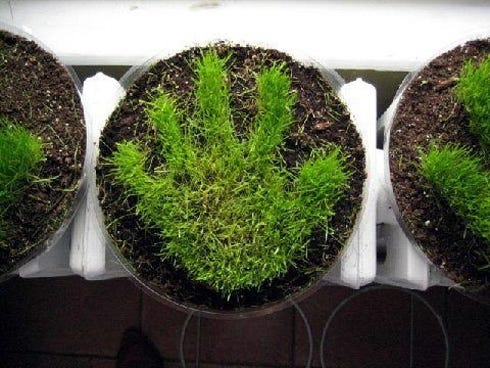
EXTENSION CONNECTION: Growing a grass handprint makes a great summer DIY project

Soon, kids will be out of school, and you know they'll be bored and itching for fun.

So try this boredom buster!

Creating a grass handprint is simple and doesn’t require special equipment.

Materials

•Container to plant in (Ensure the top is large enough for your handprint. Pie plates work great and are super-cheap!)

•Potting soil

•Grass seed

•Writing utensil (pen, pencil or marker)

•Scissors (preferably safety scissors)

•Construction paper or card stock

•Water

Instructions

•Trace your hand on a piece of construction paper.

•Use the scissors to cut out the image.

•Fill the container almost to the top with potting soil; leave at least an inch of space.

•Immerse your paper handprint in water.

•Remove it from the water quickly and lay it out on a flat surface.

•Sprinkle grass seed over the paper handprint until it is covered.

•Lay the seed-covered handprint atop the dirt in the container and cover it with a quarter-inch of soil.

•Ensure the pot receives adequate sunlight and water as directed on the seed packet your seeds came from. In a few days, you should have a grassy handprint!

It's a great introductory lesson to gardening or plant sciences, and it’s just plain cool.

Haley Worley is an agent at the University of Florida's Extension office in Crestview.

This article originally appeared on Crestview News Bulletin: EXTENSION CONNECTION: Growing a grass handprint makes a great summer DIY project

FINANCIAL FOCUS: Start saving today for tomorrow’s college bills

Another school year is drawing to a close. If you have young children, you might be planning their summer activities.

But you might want to look even farther into the future — to the day when your kids say goodbye to local schools and hello to college dormitories.

When that day arrives, will you be financially prepared?

For the 2013–2014 academic year, the average cost — tuition, fees, room and board — was $18,391 for an in-state student at a four-year public college or university, and $40,917 for a private school, according to the College Board.

These costs may be considerably higher when your children enter college.

Of course, these are just the “sticker” prices; some families pay less, thanks to grants and tax benefits, such as the American Opportunity Tax Credit and the Lifetime Learning Tax Credit.

College is still a good investment in your child’s future. Over an adult’s working life, an individual with a bachelor’s degree can expect to earn, on average, nearly $1 million more than someone with just a high school diploma, according to the U.S. Census Bureau.

Unfortunately, you may not be saving enough — or you might not be making the most of your savings.

More parents use a general savings account than any other method, according to Sallie Mae’s "How America Saves for College" 2014 study. However, these types of accounts typically earn tiny returns with no tax advantages.

On the other hand, attractive college-funding vehicles include a 529 plan; earnings accumulate tax free, provided they are used for qualified higher education expenses. (529 plan distributions not used for qualified expenses may be subject to federal and state income tax and a 10 percent IRS penalty.) Furthermore, your 529 plan contributions may be deductible from your state taxes. But 529 plans vary, so check with your tax advisor regarding deductibility.

A 529 plan offers other benefits. For one thing, lifetime contribution limits for 529 plans are generous; they vary by state, but some plans allow contributions exceeding $200,000. And a 529 plan is flexible: If your child decides against college or vocational school, you can transfer unused funds to another family member, tax and penalty free.

While a 529 plan is a popular choice for college savings, it is not the only option. You also might want to consider a Coverdell Education Savings Account, which, like a 529 plan, can generate tax-free earnings if the money is used for higher education expenses.

Typically, you can put in a maximum of $2,000 per year to a Coverdell account, but it offers more flexibility in investment choices than a 529 plan.

Your children may be young, but before you know it, they’ll be packing their bags for college. So, no matter which college savings vehicles you choose, put them to work soon.

This article originally appeared on Crestview News Bulletin: FINANCIAL FOCUS: Start saving today for tomorrow’s college bills

CHS alumni among worship ensemble ministering in Crestview on Monday

Crestview High School alumni Ryan Jackson, right, and Jessica Phillips, beside him, sing worship music with Impact, a mixed vocal ensemble from the University of Mobile. The group will minister on Monday at Emmanuel Baptist Church.

CRESTVIEW — Crestview High School alumni Jessica Phillips and Ryan Jackson have returned home, and they've brought a few friends from the University of Mobile.

Jackson and Phillips will be among 14 performers in Impact, a touring contemporary praise and worship music ensemble, performing Monday night at Emmanuel Baptist Church.

Phillips, a long-time Emmanuel member who previously sang worship music with the church's youth band and the adult praise team, said she anticipates the homecoming.

"My whole family is part of … Emmanuel," said Phillips, a junior working to earn her degree in worship music with a concentration in church ministry at the Christian university. "I'm pretty excited (that) we are in Crestview."

The group travels on weekends to perform at multiple churches and worship events in the country's southeastern region.

In January, the group ministered to a Sunday morning service at First Baptist Church of Crestview, where Jackson is a long-time member.

"It was a little bit of an emotional experience for me," said Jackson,  a junior who sings and plays acoustic guitar. "The church has encouraged my faith so much."

Now, he's doing the same for others.

"I like that we get the get the opportunity to use our gifts to minister to other people," he said.

WANT TO GO?

WHAT: Impact concert

WHEN: 6:30 p.m. Monday

WHERE: Emmanuel Baptist Church, 3252 E. James Lee Blvd., Crestview

COST: Free

Email News Bulletin Staff Writer Matthew Brown, follow him on Twitter or call 850-682-6524.

This article originally appeared on Crestview News Bulletin: CHS alumni among worship ensemble ministering in Crestview on Monday

Sisters show talent while raising money for pageant

Samantha Redmond, 4, and her sister, Madeline, 6, are acting in online skits to raise funds for a July 27 children's pageant in Mississippi.

CRESTVIEW — Madeline and Samantha Redmond are doing what they can to participate in the July 27 Little Miss Magnolia State pageant in Mississippi.

The sisters, 6 and 4, respectively, have collected donations at public events like the May 10 Rise and Unite Music Festival in Crestview, and they've displayed showmanship in several online videos.

Skits featured on their YouTube channel are inspired by their favorite films, Christina Saxton, their mother, said. 

"I would see them play these little roles and I thought that would be really cute to record them," she said.

"Creating a Monster," their latest video, features the girls in a black and white horror send-up with a twist ending to the familiar mad scientist plot.

Acting out storybook fantasies is fun, Madeline said.

"You get to marry a prince," she said. "Plus, I get to have magic friends."

She feels the same excitement for participating in pageants.

"It's fun … we always get to be pretty," Madeline said.

So, why the Little Miss Magnolia State pageant?

Well, the family recently moved from Pearl, Mississippi to be closer to loved ones in Crestview.  

 The girls have participated in the pageant and want to return. Christina, a single mom working two jobs, has raised enough to cover production fees, including a banner and advertisements. Now, they need roughly $450 for admission fees.

Their fundraising account, gofundme.com/maddieandsammie, has helped some, but it's not all about the money, Christina said.

If residents can't donate toward the pageant fund, they can just click play on videos like "Creating a Monster" to be in good spirits.

And if that's the case, just sharing the video is all she asks.

"It's worth it knowing it brings a smile to so many people's faces," she said.

Email News Bulletin Staff Writer Matthew Brown, follow him on Twitter or call 850-682-6524.

This article originally appeared on Crestview News Bulletin: Sisters show talent while raising money for pageant

Health department: beware of mold in water-damaged buildings

Take precautions when cleaning and repairing flood-damaged homes and buildings, the Florida Department of Health in Okaloosa County advises.  

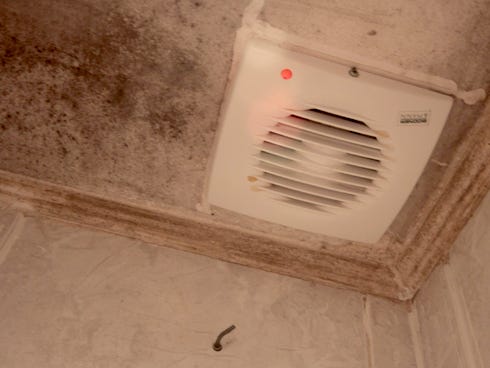
Moisture that enters buildings accelerates mold growth, which can present short and long-term health risks.

Mold often appears as a staining or fuzzy growth on furniture or building materials and may look cottony, velvety, rough or leathery. It may have different colors like white, gray, brown, black, yellow or green.

WHAT TO DO

If you spot mold in your home, the health department advises taking these actions:

•Remove standing water from your home or office.

•Remove wet materials. If mold growth has appeared, carefully remove or clean the moldy material.

•Consider using personal protective equipment — like cleaning gloves and safety goggles — when cleaning or removing mold. Individuals with known mold allergies or asthma should not clean or remove moldy materials.

This article originally appeared on Crestview News Bulletin: Health department: beware of mold in water-damaged buildings

A better bedbug trap: made from household items for about $1

GAINESVILLE— The contraption seems so simple, yet so clever, like something The Professor might have concocted on “Gilligan’s Island.”

Researchers at the University of Florida’s Institute of Food and Agricultural Sciences have devised a bedbug trap that can be built with household items.

All you need are two disposable plastic containers, masking tape and glue, said Phil Koehler, UF/IFAS urban entomology professor. The traps catch and collect the bugs when they try to travel between people and the places where bedbugs hide, he said.

“This concept of trapping works for places where people sleep and need to be protected at those locations,” Koehler said.

The traps rely on the bugs’ poor ability to climb on smooth surfaces, he said. Instead, the traps have rough areas to let bedbugs enter easily, and a smooth-surfaced moat that keeps them from escaping.

Here’s how to make one:

•Cut four pieces of rough-surfaced tape. Each piece should be at least as long as the wall of smaller container is tall.

•Evenly space and firmly press the four pieces of tape vertically on the inside surface of the smaller container. The tape allows the bugs to escape the small container easily and fall into the space between the small and the large container wall, where they are trapped.

•Wrap tape around the exterior of the larger container from the base to its upper edge so the bedbugs can enter the trap easily.

•Glue the smaller container onto the center of the bottom of the larger container.

The traps work best if you apply talc, including baby powder, to the space between the small and large container walls to make it harder for the bugs to escape. Many people use incorrect methods to treat bedbugs. Koehler advises against using flammable liquids, mothballs, treating mattresses with pesticides and using bug bombs.

Koehler said the bedbug device is pretty foolproof and effective.

“It’s really hard to mess this up to the point that you’d hurt anything,” he said.

The trap is a stunningly easy solution for a vexing national problem.

An April 2013 survey by the National Pest Management Association showed that nearly every pest management professional, 99.6 percent, had encountered a bedbug infestation during the prior 12 months. Nearly half, 49 percent, said infestations occur mostly in the summer. Because more people tend to travel and relocate during the summer, it’s possible more of them unknowingly bring bugs home or discover them soon after moving, according to the pest management group.

Entomologists say bedbugs are becoming more resistant to pesticides, exacerbating what is also an expensive problem.

Bedbug treatments can run $3,000 for a single-family home or $1,200 for a low-income apartment – something many can ill-afford.

So Koehler and his colleagues created their trap from about $1 worth of household items. The number of traps needed for any given dwelling depends on the number of places people sleep. Researchers estimate one would need about 50 traps for a typical three-bedroom home, enough to place one under each leg of furniture, including chairs, sofas and beds.

The bedbug trap is the brainchild of Koehler; Benjamin Hottel, an entomology doctoral student; Rebecca Baldwin, assistant urban entomology professor; and Roberto Pereira, an associate research scientist in the UF entomology and nematology department. Their Extension paper on the subject is available online.

See a UF/IFAS video on the bedbug trap.

This article originally appeared on Crestview News Bulletin: A better bedbug trap: made from household items for about $1

Irish radio personalities learn about north county culture, Southern hospitality

Mary Gadeken — left, with Dermot Whelan and Dave Moore broadcasting "Laughternoons with Dermot and Dave" last week from her Baker living room — plans to visit the Irishmen on May 30.

BAKER — After a week of hosting Ireland's top radio personalities, resident Mary Gadeken has her sights set on exploring the Emerald Isle, and her guests are eager to return her hospitality.

"Mary is obsessed with castles so we're going to show her as many medieval castles as possible," Dermot Whelan, co-host of the 98FM show "Laughternoons with Dermot and Dave," said.

He and Dave Moore, of Dublin, were expecting Southern hospitality when they arrived in Baker, but their week in north Okaloosa County far exceeded their expectations, they said.

"It really has been everything we expected and more," Moore said. "We really learned a lot from being friends with Mary."

"Everything they say about Southern hospitality is true," Whelan said.

With their producer, Maria Devereux, and "resident tech nerd," Paul Bonass, the four Irishmen experienced north county culture, sampling food and soaking up local ambience.

On their first night at the Crestview Hampton Inn, a resounding noise kept the jetlagged quartet awake. Finally, with Bonass armed with recording equipment, they investigated.

Playing it back the next day for Gadeken, she laughed and said, "Those are bullfrogs!"

"We don't have those in Ireland," Moore said.

"We have bulls and we have frogs but not the two in one animal," Whelan added. "They were louder than Dave snoring."

Gators and more Gators

Lunch at Baker's Gator Café, holding — and eating — alligators at Fudpucker's, and hoisting a couple of cold ones at Hooters and Johnny O'Quigley's were among their local experiences.

But Moore said there was one Southern icon he avoided during their four-day visit, having experienced it before.

"Mary sent me grits," he said. "I cooked the grits and I ate the grits and I didn't know what was happening to my mouth. I've been to the beach and the beach was in my mouth."

There was one thing the Irishmen especially appreciated during the warmer part of their visit to Okaloosa County.

"My thing is, air-con is a serious requirement here," Bonass said of air conditioning, expressing surprise when Gadeken said, "It isn't even hot yet."

During a visit with Gadeken's friend, Crestview Mayor David Cadle, the radio hosts laughed during a humorous proclamation of "Dermot and Dave Day" in Crestview.

Cadle proclaimed the duo "goodwill ambassadors for Ireland as they visit America, and their presence is an honor for Okaloosa County, the city of Crestview, and the town of Baker."

In return, Cadle received "warmest greetings" in an official scroll from Dublin Lord Mayor Oisín Quinn, praising the "many new friendships" his citizens were forming, "strengthening cordial relationships" between the cities.

Gadeken, strengthening her own cordial relationships with Dublin, is counting down the days until her May 30 trip to see her friends in Ireland.

Email News Bulletin Staff Writer Brian Hughes at brianh@crestviewbulletin.com, follow him on Twitter @cnbBrian or call 850-682-6524.

This article originally appeared on Crestview News Bulletin: Irish radio personalities learn about north county culture, Southern hospitality

Okaloosa County's evening mosquito control begins next week

The Okaloosa County Division of Environmental Services began spot spraying in May.  On Monday, May 19, the standard evening broadcast spray schedule will begin, weather permitting. 

MONDAYS:

John Riley Barnhill Road to Escambia Farms

Beaver Creek to Baker

Crestview: Rattlesnake Bluff and Little Silver Road, Live Oak Church Road to John King, Hwy. 90 East to county line Road and north to Poverty Creek Road

Destin, FWB( Brooks street going west)

Mary Esther, Wynn Haven Beach, and Valparaiso.

TUESDAYS:

Vinson Ray Road east side of Hwy 189 to Laurel Hill

Wilkerson Bluff Road to Log Lake (Holt) west to County Line Road

Crestview: John King to Hwy 90 East to Shoal River ridge, Old Antioch to Hwy 90 West

Destin, Fort Walton Beach, Wynnehaven Beach, Bluewater Bay and Cinco Bayou.

WEDNESDAYS:

Galliver Cut Off to Milligan and back to Baker

Garden City to Laurel Hill

Crestview: Old Bethel Road to Airport Road, south of Hwy 90 west to Duggan Street. Fairchild Road to Hwy 85 to Airport Road

Shalimar, Streets off of Lewis Turner Blvd. and Niceville

THURSDAYS:

Poverty Creek Road, Hwy 393 to Campton, Old River Road to Vinson Ray Road (from Milligan to Baker)

Crestview: Lake Silver Road to Airport Road to Auburn area

Poquito Bayou area, Ocean City, Mooney Road area, and Niceville.

Okaloosa County Mosquito Control and the Florida Department of Health urge the public to remain diligent in their personal mosquito protection efforts. These should include remembering to “SWAT.”

§  Stay inside with screened doors and windows when mosquitoes are biting (dusk and dawn).

§  When outside, wear clothing that covers skin.

§  Apply mosquito repellant that includes DEET  [N, N diethyl-m-toluamide] on your skin when you are outside

§  Turn over standing water where mosquitoes lay eggs or better yet – rid your outdoor area of standing water in which mosquitoes can lay their eggs. 

Remember to apply all mosquito repellants in accordance with the recommended frequency and methods suggested by the manufacturer.

The Florida Department of Health now recommends the following mosquito-borne illness recommendations:

DRAIN standing water to stop mosquitoes from multiplying:

•     Drain water from garbage cans, house gutters, buckets, pool covers, coolers, toys, flower pots or any other containers where sprinkler or rain water has collected.

•     Discard old tires, drums, bottles, cans, pots and pans, broken appliances and other items that aren't being used.

•     Empty and clean birdbaths and pets water bowls at least once or twice a week.

•     Protect boats and vehicles from rain with tarps that don’t accumulate water.

•     Maintain swimming pools in good condition and appropriately chlorinated. Empty plastic swimming pools when not in use.

COVER skin with clothing or repellent:

Clothing: Wear shoes, socks, and long pants and long-sleeves. This type of protection may be necessary for people who must work in areas where mosquitoes are present.

Repellent: Apply mosquito repellent to bare skin and clothing. Always use repellents according to the label. Repellents with DEET, picaridin, oil of lemon eucalyptus, and IR3535 are effective. Use mosquito netting to protect children younger than 2 months old.

COVER doors and windows with screens to keep mosquitoes out of your house:

• Repair broken screening on windows, doors, porches, and patios.

The County Mosquito Control Program sprays for mosquitoes county-wide excluding federal and state-owned land and entities who have contacted the MC Program for inclusion on the no-spray list.  Mosquito spray trucks generally operate from 7 p.m. until 12 p.m. but could also operate in the early morning hours.  Surveillance activities may indicate  certain types of mosquitoes known to be disease vectors being active during other time periods than noted.  If this is the case, the County will respond appropriately. The following is the Okaloosa County spray route schedule and justification of mosquito populations.

Areas of Concern:

§  Wetlands;properties bordering Eglin A.F.B., which are not treated; and property owners unaware that they are creating mosquito breeding sites.

§  Standing water; eliminating should be at the top of everyone’s ‘to do list’ right now!

§  Children’s pools, plant pots, old tires*, leaf piles, pet watering bowl and gutters should be checked daily for standing water.  Even something as simple as a soda lid can literally breed hundreds of mosquitoes.

*     Waste tires can be disposed of FREE at the South Okaloosa County Transfer Station and the Baker Landfill. – this applies only to local households and not businesses. Tire sizes are limited to passenger car and light truck tires.

Quantities limited – 5 tires per household/month.-more-

In addition to spraying, the county has an aggressive larvaciding program in place that includes more than 1,670 sites treated and are checked on a regular basis.  Additionally, more than 750 ponds and areas with standing water are treated with gambusia fish, which eat mosquito larva and reproduce at incredible rates.

Residents are also reminded to have outdoor animals vaccinated against disease.  Horses should be vaccinated against Eastern Equine Encephalitis (EEE).  Although West Nile and EEE can occur throughout the year, peak season is August, September and October.  Horses must receive two vaccine injections 3 to 6 weeks apart and then it is recommended every 3 to 6 months.  Dog owners are also reminded to have pets treated for heartworms, as mosquitoes carry the disease as well.

The Mosquito Control Division of Public Works is open Monday through Friday from 8 a.m. until 4:30 p.m. and may be reached at 651-7394 or 689-5772.  Mosquito spray schedule, preventative tips and other related information is available on the county’s web site at www.co.okaloosa.fl.us.

This article originally appeared on Crestview News Bulletin: Okaloosa County's evening mosquito control begins next week

EXTENSION CONNECTION: Kudzu bugs attack kudzu — and plenty of Florida plants

Florida is extending a warm welcome to a new pest!

Kudzu bugs — 3.5 to 6 millimeters long, rounded oblong and olive-green — lay egg masses in two rows of 13 to 137 eggs per row.

Their first generation seems to prefer feeding on kudzu, but subsequent generations will feed on and lay eggs on other legumes.

When fall comes, adults over-winter where they can find shelter. They crawl under tree bark and into houses' cracks.

Origin

The kudzu bug — first documented in the U.S. in 2009 in Northeast Georgia — has quickly spread throughout the Southeast.

Last year, the kudzu bug made its first appearance in Okaloosa County.

This year, its settling.

At first, a pest that attacks kudzu sounds pretty good, but this bug also attacks wisteria, figs and other legumes like beans and peas. It also is a serious pest to soybeans grown in our area.

They are similar to stink bugs and discharge an odor when disturbed. Skin and eye irritation can occur from this odor emission.

Getting rid of the bugs

If kudzu bugs enter your home, you can vacuum and dispose of them.

If they are in your garden, you can set a trap using a bucket of soapy water and a piece of white poster board. Just cut the poster board in half; cut a line up the middle of the two pieces and insert them into each other; and place the plus sign-shaped board over the bucket. As the insects hit the board, they will fall into the bucket and drown.

You can use insecticides, but timing and placement are important. Right now, kudzu bugs are just becoming active, making now a good time to spray kudzu host plants with an insecticide. Insecticides with active ingredients ending in “-thrin”, such as pyrethrin and cyfluthrin, are effective against them. Just read instructions and follow precautions. 

Controlling kudzu near your house will help decrease the number of bugs, but they are strong flyers and can migrate through neighborhoods that aren’t near kudzu.

Natural enemies

Kudzu bugs have natural enemies: generalist predators like green lacewings, lady beetles, damsel bugs and big eye bugs.

Two parasitoids attack them: a tiny wasp that develops in the kudzu bug eggs and a fly that lays eggs in the adult kudzu bug.

The kudzu bug, like other exotic invasive insects, is opportunistic; we have yet to see how many different plants species may serve as a host for this pest.

Jennifer Bearden is an agent at the University of Florida's Extension office in Crestview.

This article originally appeared on Crestview News Bulletin: EXTENSION CONNECTION: Kudzu bugs attack kudzu — and plenty of Florida plants

error: Content is protected !!