Please ensure Javascript is enabled for purposes of website accessibility
Skip to main content
Advertisement

Don't Fall Prey to Medical Identity Theft

By now, most people know about the perils of identity theft, where someone steals your personal or financial account information and makes fraudulent charges or opens bogus accounts in your name.

Lately, a not-so-new twist has been getting a lot of attention – medical identity theft. That's where someone gains access to your health insurance or Medicare account information and uses it to submit phony insurance claims, obtain prescription drugs or medical devices, or get medical treatment in your name.

Besides its high cost, medical ID theft also can have deadly consequences: Suppose someone poses as you and gets an appendectomy; if you later entered the hospital with abdominal pain, your medical file would show that your appendix was already removed and you could be tragically misdiagnosed.

Here are a few tips for avoiding medical ID fraud and steps to take if it happens:

Your medical files are often full of information ID thieves crave: account numbers for Social Security, health insurance, Medicare or Medicaid, contact information, email address, etc. All it takes is one stolen employee laptop or an intercepted piece of mail or email to leave you vulnerable.

Sophisticated thieves will also hack computer networks of insurance companies, pharmacies, medical equipment suppliers and others who have access to your medical records. And unfortunately, the black market for stolen information is so tempting that employees have been known to steal data.

Common signs of medical identity theft include:

Just as you shouldn't hesitate to ask your doctor or nurse whether they washed their hands, so you should feel free to ask what security precautions their business office takes to protect your information. Here are a few preventive measures to take:

If you suspect or know your information has been compromised, ask for copies of your medical records from each doctor, hospital, pharmacy, lab or health plan where a thief may have used your information. Also request a copy of their "Accounting of Disclosures" form, which lists everyone who got copies of your medical records.

Next, write them all by certified mail explaining which information is inaccurate, along with copies of documents supporting your position. Ask them to correct or delete all errors and to inform everyone they may have sent records to (labs, other doctors, hospitals, etc.) Keep copies of all correspondence and logs of all phone calls or other related activities.

You can also file a police report and contact the fraud units at the three major credit bureaus: Equifax, Experian and TransUnion. You may want to place a fraud alert or freeze on your accounts. Visit the Federal Trade Commission's Identity Theft site for more information.

Jason Alderman, a financial expert who directs Practical Money Skills for Life, a free, award-winning financial education program.

This article originally appeared on Crestview News Bulletin: Don't Fall Prey to Medical Identity Theft

EXTENSION CONNECTION: The truth about lovebugs

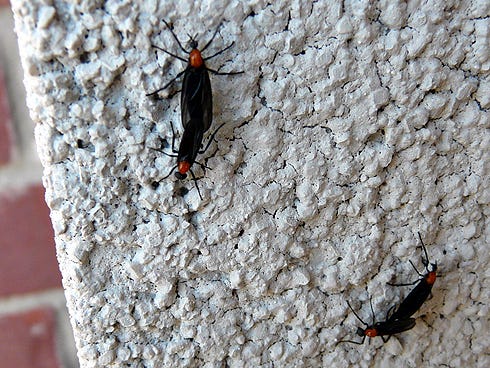
Lovebugs — which often splatter on your automobile — invaded the U.S. from Central America. The bugs feed on pollen, nectar and plant debris.

The lovebug, an invasive Central American species, migrated through Texas and Louisiana to get to Florida in the late 1940s. Prevailing winds, vehicle traffic, sod transport, increased habitat along highways and expansion of pastures may have assisted the lovebugs' movement throughout Florida.

However, despite rumors, University of Florida researchers did not genetically engineer lovebugs to kill mosquitoes.

The evidence? Forget insects; lovebugs feed on flowers' pollen and nectar. They lack jaws and grasping legs to hold onto and eat mosquitoes. They are too slow-flying to go after mosquitoes. Lovebugs are active during the day — usually between 10 a.m. and 4 p.m., in temperatures above 84 degrees Fahrenheit; most mosquitoes are out evenings. Lovebugs are only adults a few weeks each year; mosquitoes are active most of the year.

So the lovebug would be a poor candidate to genetically engineer as a mosquito predator.

Now more facts: Lovebugs are attracted to diesel and gasoline exhaust fumes. Female lovebugs are attracted to UV irradiated aldehydes, a major component of automobile exhaust fumes. They may confuse these chemicals with odors emitted from decaying organic matter where the female deposits her eggs. Heat also attracts lovebugs and may be another reason for their abundance along highways.

Lovebug larvae feed on decaying plant material, assisting with converting plant debris into organic components that can again be used by the growing plants.

Also: Although lovebugs can be a problem as they splatter on our automobiles, be thankful they don’t bite, sting or hang around all year. 

Larry Williams is an agent at the University of Florida's Extension office in Crestview.

This article originally appeared on Crestview News Bulletin: EXTENSION CONNECTION: The truth about lovebugs

FINANCIAL FOCUS: 'Rules of the road' for investors

As an investor, you may sometime wonder what on earth is going on in the financial world. One day, the stock market is down 200 points; the next day, it's up 300. One day, a scandal rocks a company; the next day, another firm declares a poor earnings report.

There's no smooth route to follow, but you can help smooth out the journey by observing these "rules of the road":

• Create a plan. You can waste time, effort and money through haphazard investing. Create a plan that defines your long-term goals and establishes a strategy to achieve them, considering your individual tolerance for risk and your time horizon.

• Take action. The best plan is useless unless implemented. Once you've set a course of action, follow through. Don't wait for "time to be right" before you invest; you can always find excuses to delay. The best time to start is right now.

• Stay invested. When the market is "hot," it's easy for people to keep investing. It takes far more courage to continue investing during a long bear market. And yet, it's essential to stay invested, through good times and bad. Ultimately, the long-term performance of the investments you have chosen will have far more impact on your portfolio's success than the daily, inevitable price fluctuations.

• Look for quality. Persistence in investing, by itself, isn't enough to help you achieve long-term goals. You also need to invest in quality. Look for stocks of companies with solid track records, strong management teams, competitive products and well-defined business plans. You'll experience ups and downs even in quality stocks, but if you hold them over time, you'll greatly increase your prospects for success.

• Diversify your holdings. During any given market environment, some investments will do well while others will not. You could try to pick the winners, but that's almost impossible to do consistently. You'll be much better off diversifying your dollars among a range of high-quality stocks, bonds, mutual funds, government securities and other vehicles. By staying diversified, you'll help cushion yourself against downturns affecting just one type of investment, and you'll multiply opportunities of benefiting from assets performing well.

• Review your plan. Annually review investment plans and strategies. Your life will evolve — new job, new house, new children, etc. — and you may need to adjust plans to accommodate these changes. If some of your investments no longer suit your needs, find other opportunities. A qualified financial professional can help evaluate your situation and make recommendations on rebalancing your portfolio.

There's nothing magic, or complex, about these "rules for the road."

However, to follow these guidelines, you'll need patience and perseverance. If you have these traits, you're well prepared for a fulfilling investment journey.

Joe Faulk is a financial adviser.

This article originally appeared on Crestview News Bulletin: FINANCIAL FOCUS: 'Rules of the road' for investors

Three Tips for Choosing an Assisted-Living Home for Your Parent

Seventy percent of people age 65 and older will need long-term care at some point in their lives, according to a 2014 study by CareScout, a division of Genworth Financial Services.

“But that doesn’t mean they have to sacrifice their quality of life,” says Peder Johnsen, CEO of Concordis Senior Living, which owns, operates and develops senior housing communities.

“In fact, a person who needs some assistance with day-to-day living will often find he or she is much happier in a good assisted-living community with an atmosphere that reminds them of their former home.”

And it doesn’t have to be outrageously priced, notes Johnsen, a third-generation ALF operator whose family pioneered the contemporary congregate community model.

The median price for a private, one-bed home in an ALF community is $42,000, he says, citing the CareScout report. By contrast, a semi-private nursing home bed costs a median $77,000 a year.

But it’s up to prospective residents and their families to ascertain the quality of the community and whether it’s a good match for the person who will be living there.

“ALFs are not federally regulated and states vary widely on the breadth of oversight they provide, so you can’t necessarily rely on the law,” Johnsen says. “And don’t rely on salespeople either – that’s the biggest mistake people make.”

There are, however, a number of easy ways to see if a home has a truly caring atmosphere and well-trained staff.

Johnsen offers these tips:

•  Ask to see the home’s state licensing survey, an assessment that usually includes inspections, audits, interviews with residents, etc. Every state has an ALF licensing agency and all have some form of survey system for ensuring that certain standards of quality are met, according to the Assisted Living Federation of America.

“Requirements vary from state to state about how often the surveys are conducted and how the public can access the reports, but no matter what state you live in, you should be able to ask the ALF for its most recent report, or obtain it from the licensing agency,” Johnsen says. 

The surveys will tell you if problems were found – or not – and what the ALF did to address them.

•  Visit the ALF during non-business hours.

Go before breakfast or after dinner – times when the administrators aren’t around. What’s the atmosphere? How do employees behave with the residents?

“That’s a good time to talk to residents, too,” Johnsen says.

Be a “mystery shopper,” he suggests. Pretend you’re just visiting the community – not scouting it out as a prospective customer.

•  Ascertain how truly “homelike” the community is.

In your own home, if you don’t feel like eating breakfast at 7:30 a.m., you don’t have to. You can have breakfast at 10. You can get snacks when you want them.

“Depending on what’s important to your loved one, there are potentially many rules that can affect how ‘at home’ a person feels,” Johnsen says. “Some communities allow residents to have pets, others don’t. Some provide lots of activities. At some, residents can quickly and easily arrange for transportation or a service like hair styling.”

Not every community can offer everything, he notes. That’s why it’s important to look for those features that are especially important to your loved one.

Peder Johnsen is the CEO of Concordis Senior Living. For more information, visit www.concordisseniorliving.com.

This article originally appeared on Crestview News Bulletin: Three Tips for Choosing an Assisted-Living Home for Your Parent

Crestview parents to present Lyme disease awareness information, share their stories

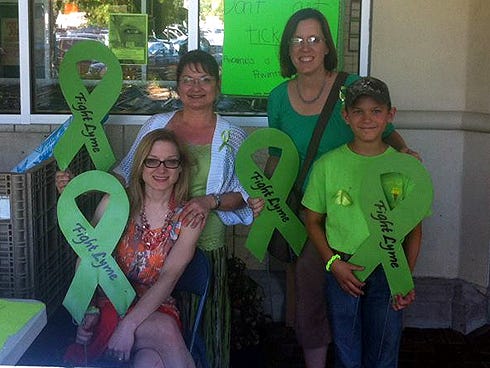
Connie Murray — left, with her daughter, Nikki, at a recent Lyme disease awareness event at Publix — and Connie B. — with her son, Bryson — will present a Lyme disease awareness documentary on Saturday in Crestview.

Editor's note: Due to the sensitivity of her husband's military mission, Colleen B. has requested that we withhold her family's last name.

CRESTVIEW — Bryson B. is a typical 11-year-old boy who loves playing outside, hunting in woods with his dad and riding horses.

But, his mother, Colleen said, there is a difference.

"My son has Lyme disease," she said.

"He was racing through the woods and got into a tick nest and had about 50 of them on him," she said.

After picking off the ticks, everything seemed fine until Bryson awoke several days later with a few red spots. Colleen, suspecting bedbugs, changed his sheets, but more spots appeared.

"I took him to the doctor. His nurse said, 'You should have him checked for Lyme.'

"About a week and a half after the bites, he complained of joint pains, headaches and fever all at the same time. I didn't know about the impact of Lyme disease at the time."

Finding a doctor

When the family's pediatrician reluctantly agreed to extend Bryson's antibiotics treatment for a second week, a church friend advised Colleen to find a Lyme-literate doctor.

However, despite the prevalence of tick-laden Northwest Florida wooded areas, the closest doctors specializing in the often debilitating disease were at least two hours away.

Under the care of a Lyme-literate doctor in Tallahassee, Bryson received the full antibiotics treatment.

"And he's still on antibiotics now," Colleen said. "We think we've conquered it, but it lives in his body, so if his immune system is compromised, he could have a relapse."

Thanks to early detection and prompt antibiotic treatment, Bryson's story has a happy ending.

"If he was not treated in the five- to six-week window, he wouldn't be where he is today," Colleen said.

Award-winning documentary

Colleen, along with Connie Murray, also the mother of a child with Lyme disease, encourages parents to attend a 2 p.m. May 31 screening of "Under Our Skin," an award-winning documentary about Lyme disease.

The film's Woodlawn Baptist Church screening will be followed by guest speakers addressing Lyme disease detection and prevention, and how it has changed their lives. Admission is free.

"This is what's behind our desire to inform people," Colleen said. "You have to push for the proper diagnosis and the proper treatment."

Lyme disease is transmitted to humans through the bite of infected blacklegged ticks. Symptoms include fever, headache, fatigue and a skin rash that often resembles ringworm. Infection can spread to joints, the heart and the nervous system if the disease is untreated.

Avoid wooded and bushy areas with high grass and leaf litter, walk in the center of trails and repel ticks with DEET or Permethrin, to prevent infection.

Be extra vigilant in warmer months — April through September — when ticks are most active.

Source: Centers for Disease Control and Prevention, www.cdc.gov/lyme

Email News Bulletin Staff Writer Brian Hughes at brianh@crestviewbulletin.com, follow him on Twitter @cnbBrian or call 850-682-6524.

This article originally appeared on Crestview News Bulletin: Crestview parents to present Lyme disease awareness information, share their stories


Mental Health Presentation to be given at Crestview Library

Learn about achieving balance while avoiding or changing destructive behaviors that lead to chronic diseases June 3 at 10:30 a.m., at the Crestview Public Library, 1445 Commerce Drive, Crestview.

Ginny Barr, the Mental Health Association of Okaloosa/Walton Counties' executive director, will discuss wellness' impact on the mind and body, building on life experiences and positive change.

Coffee and cookies will be served at 10 a.m.

This article originally appeared on Crestview News Bulletin: Mental Health Presentation to be given at Crestview Library

TRY THIS: Make fruitful container gardens

Strawberries are excellent container plants. Everbearing or day neutral varieties will provide fruit to harvest throughout the growing season.

Picture yourself harvesting a few fresh strawberries for your cereal in the morning or perhaps picking a few apples from your own backyard tree to cook up into a pie.  It is possible, even if you garden on a balcony or small lot. And even if you have plenty of space, you will still appreciate the fun and convenience of reaching out the backdoor and harvesting some homegrown fruit.

Strawberries are excellent container plants. Grow everbearing or day neutral varieties, so you will be harvesting strawberries throughout the growing season. Reduce your workload and increase success with a self-watering hanging basket (gardeners.com).  Or dress things up a bit more with a decorative container.  The haystack hanging baskets have the beauty of the coco fiber lined planters, but require half the watering. The AquaSav™ liner is a combination of coir and recycled plastic designed to conserve moisture. This means better results with less watering.

But don’t stop there. Add some dwarf fruit trees to your patio plantings. A dwarf apple, peach or pear will provide beautiful spring flowers, nice foliage for the summer and fruit for you to enjoy. Select self-fertile varieties, those that only require one plant to produce fruit, if space is limited. Grow your dwarf trees in large weather-proof pots with drainage. Those in cold climates will need to provide some winter protection, but the first harvest will make that extra bit of work well worth the effort.

Or try your green thumb at growing lemons, limes and other citrus in a container. The fragrant flowers and glossy green leaves are a beautiful prelude to the tasty fruit. Even cold weather gardeners can put their green thumb to the test by growing a Meyer lemon, Kaffir lime or other citrus in a container.  Just move the potted plant indoors for the winter and back outdoors next season once the danger of frost has passed.

And don’t forget the blueberries that are high in antioxidants and flavor.  These nutritious beauties require moist well-drained acidic soil. Something most gardeners do not have. This makes growing them in containers, where you control the soil, a good option. Blueberries provide seasonal interest with their nodding white bell-shaped flowers in spring, colorful fruit in summer and yellow, orange or red color in fall.  Though only one plant is needed to bear fruit, keep in mind that your harvest will more than double if you grow two.  

So survey your patio, deck, balcony or garden for space to add a container or two of fruiting plants that are sure to add beauty and flavor to your garden and meals this season.

Gardening expert, TV/radio host, author & columnist Melinda Myers has more than 30 years' horticulture experience and has written over 20 gardening books, including Can’t Miss Small Space Gardeningand the Midwest Gardener’s Handbook. She hosts The Great Courses “How to Grow Anything” DVD seriesand the nationally syndicated Melinda’s Garden Moment segments. Myers is also a columnist and contributing editor for Birds & Bloomsmagazine. Myers’ web site, www.melindamyers.com, offers gardening videos and tips.

This article originally appeared on Crestview News Bulletin: TRY THIS: Make fruitful container gardens

Corporate sponsorships, underwriters sought for Covenant Hospice fundraiser

Thrive Music Fest, benefiting Covenant Hospice, will feature live music on two outdoor stages from 11 a.m. to midnight June 21 at KC’s Sandbar and Grille, 190 Miracle Strip Parkway, Fort Walton Beach.

Organizers seek artists interested in performing at the charity event, and volunteers for the planning committee and event day. Preference will be given to artists performing original rock music.

Corporate sponsorships and underwriting opportunities are available, ranging from $250 to $2,500. Participating organizations will receive a variety of benefits including promotional recognition, complimentary admission and preferred seating at the event.

Call Jenni Perkins or Rachel Mayew, 729-1800, and jenni.perkins@covenanthospice.org or rachel.mayew@covenanthospice.org.

Covenant Hospice is a not-for-profit organization that provides comprehensive, compassionate services to patients and loved ones with life-limiting illnesses.

Visit www.covenanthospice.org for more information.

This article originally appeared on Crestview News Bulletin: Corporate sponsorships, underwriters sought for Covenant Hospice fundraiser

Miss Walker crowned May 17

Walker Elementary School's annual beauty pageant winners are as follows, in no particular order: Miss Walker, Meryha Cahill; 1st Alternate, Kaylah Sears; and 2nd Alternate and Photogenic, Caitlyn Dill.

CRESTVIEW — Seventeen princesses graced the stage with poise during Walker Elementary School's annual beauty pageant on Saturday.

The following students were crowned:

• Miss Walker: Meryha Cahill

• 1st Alternate: Kaylah Sears

• 2nd Alternate and Photogenic: Caitlyn Dill

Petite Miss Walker: Cadance Simmons

• 1st Alternate: Tylee Johnson

• 2nd Alternate: Bayleigh Meadows

• Photogenic: Asline Heringer

The pageant's proceeds will be used to support the fund for an electronic sign for the school. 

This article originally appeared on Crestview News Bulletin: Miss Walker crowned May 17

error: Content is protected !!