Please ensure Javascript is enabled for purposes of website accessibility
Skip to main content
Advertisement

Cancer survivors' hoedown set next week

CRESTVIEW — This weekend, area cancer survivors, family members and caregivers can attend 21st Century Oncology's National Cancer Survivors Day Hoedown.

The country-themed celebration, to take place at the Redstone Avenue office, will include free food, music, games, entertainment and cancer information, event organizer Roly Alvarez said. Free barbecued pulled pork sandwiches will be available and there will be children's bingo, music and a disc jockey.

"We hope to get people dancing," he said.

This event allows survivors to celebrate with loved ones and caregivers who helped them every step of the way, Alvarez said. Each survivor will receive a free event T-shirt.

"This is not just for our patients, (but) all cancer survivors are welcome," he said. "This is a celebration of life."  

Attendees can tour the facility and view paintings created by cancer survivors, and oncologists will be available to answer questions about cancer treatments, Alvarez said.  

WANT TO GO?

WHAT: National Cancer Survivors Day Hoedown

WHEN: 10 a.m. to 2 p.m. Saturday, June 7

WHERE: 21st Century Oncology, 601 W. Redstone Ave., Crestview

COST: Free

CONTACT: 683-0003

Email News Bulletin Staff Writer Matthew Brown, follow him on Twitter or call 850-682-6524.

This article originally appeared on Crestview News Bulletin: Cancer survivors' hoedown set next week

Presentation examines art's place during war

The Battle of Hastings' violence is captured in the Bayeux Tapestry, an 11th-century chronicle of William the Conqueror's Norman invasion of England. The tapestry, among other artworks, will be discussed Tuesday at the Crestview Public Library.

CRESTVIEW — Man's fatal attraction to war contrasted with his aspirations for beauty is the discussion topic of a multimedia presentation Tuesday evening at the Crestview Public Library.

French art historian Marie-Claude Tildach-Bohler presents "Art, Literature and Music in Times of War."

After four years in the 1970s as a diplomat at the French Embassy in Washington, D.C., Tildach-Bohler returned 10 years later as an American Air Force officer's wife.

A passion for music, art and history, and being a self-described "museum rat," led her to a position as docent and guide at the Fort Worth Museum of American Art.

"Music has occupied a major and constant place in my life, as have my interests in philosophy, religions, history — with a special focus on Greco-Latin antiquity — and my passion for human voice," Tildach-Bohler said.

She teaches French language and conversation classes in Niceville, where she and her husband, Don, live when not at their Montpelier, France home.

The Tildach-Bohlers are members of the Crestview Sister City Program, and together presented a history of the famed Bayeux Tapestry to participants in last summer's exchange visit to France.

The tapestry, considered the world's oldest graphic novel, is one of the artworks to be discussed during the presentation at the library, which is behind the U.S. Post Office.

WANT TO GO?

WHAT: "Art, Literature and Music in Times of War"

WHEN: 6 p.m. June 3

WHERE: Crestview Public Library, 1445 Commerce Drive

COST: Free

NOTES: Historian Marie-Claude Tildach-Bohler conducts a multimedia exploration of humans' fatal attraction to war contrasting with aspirations for beauty

Email News Bulletin Staff Arts and Entertainment Editor Brian Hughes at brianh@crestviewbulletin.com, follow him on Twitter @cnbBrian or call 850-682-6524.

This article originally appeared on Crestview News Bulletin: Presentation examines art's place during war

Crestview man, Florida's Knight of the Year, sets standard for volunteerism, community involvement

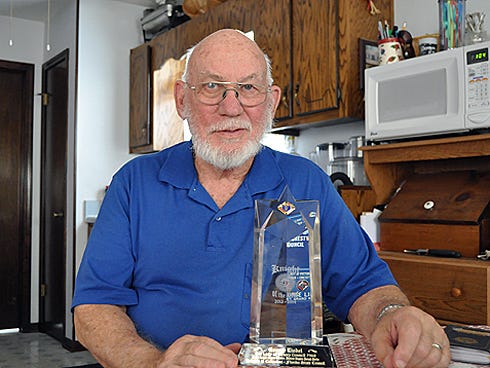
Crestview resident George Liedel, Florida's 2013-2014 Knight of the Year, sets an example for community involvement, resident Herb Fosman says. "He is absolutely amazing," Fosman said. "He acts like he is 26 ... he puts a lot of younger members to shame."

CRESTVIEW — Being named Florida's 2013-2014 Knight of the Year caught George Liedel by surprise.

"It just blew me away," the 81-year-old Crestview resident said.

But the recognition is no shock to other Knights of Columbus members  in Crestview Council 7968.

'Acts like he's 26'

Liedel attends regular council meetings at the K of C's Twin Hills Park building, volunteers for Tuesday night bingo fundraisers, assists with quarterly highway clean-ups and Boy Scout activities and is the council's Crestview Area Chamber of Commerce liaison.

He is an acolyte and regularly attends and assists with daily Mass at Our Lady of Victory Catholic Church.

During the Christmas season, he suits up as Santa Claus, visits churches, schools, restaurants, stores, hospitals and assisted living facilities and passes out candy canes at his own expense, friends said.

"He is absolutely amazing," Herb Fosman said. "He acts like he is 26 … he puts a lot of younger members to shame."

An inspiration

Liedel's high involvement and energy earned him the local council's recognition earlier this month; that made him eligible for state candidacy.

"They look at the overall contributions of the (candidates)," said Gene Calabro, the group's master knight. "(Liedel) has made contributions in many areas, and he has been doing that for many years."

The Knights of Columbus is a Catholic organization that promotes charity, unity and fraternity, according to its website. Liedel — who learned about his award May 24 during a state banquet in Orlando — said he's happy to see involvement in the organization become a family tradition.

"My father was a knight; I have been a knight for the past 20 years. I have two sons who are knights living in Michigan, and now my grandson (Billy Thompson) just started this year." Liedel said.

Thompson said Liedel's example inspires him.

"It makes me walk a little taller, me being a fourth-generation (member) and him being Knight of the Year," he said.

Email News Bulletin Staff Writer Matthew Brown, follow him on Twitter or call 850-682-6524.

This article originally appeared on Crestview News Bulletin: Crestview man, Florida's Knight of the Year, sets standard for volunteerism, community involvement

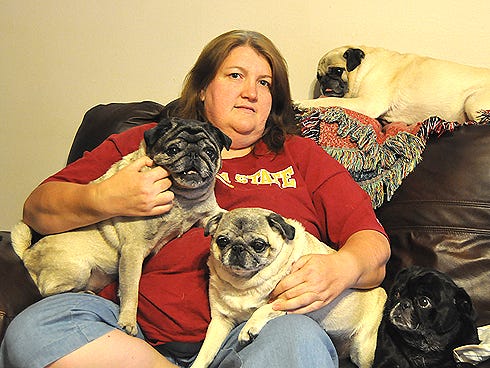
Tips to protect pups from the dog days of summer

As you and your dog head outside to enjoy the warmer weather, it's important to remember pet safety. Heat can be dangerous for pets, increasing the chances of heat-related stress or illness, including sun burns, skin cancers and heat stroke.

The American Veterinarian Medical Association (AVMA) wants to help keep pups safe this summer with tips to protect dogs from the heat. Remember, dogs can't expel heat as well as humans can, so be sure to follow these tips to make sure your dog stays cool this summer.

1. Never leave your dog in the car. Ever. Temperatures can rise as much as twenty degrees inside a vehicle in ten minutes, and can reach up to 115 degrees – when the outside temperature is only 70! Leave your dog at home instead, your pup will thank you.

2. Make sure your dog has access to water at all times. As temperatures get hotter, it's important for your dog to have water available. If your dog's water bowl is left in the sun for a while, replace it with fresh, cold water that will cool your dog down.

3. Make sure your dog has access to shade. This is especially important if your dog is going to be outside for an extended period of time. Remember, dogs can get sunburned, too.

4. Walk your pet during the cooler hours of the day. "Pets shouldn't be exercised during the peak hours when the sun is hottest," says Dr. Mitsie Vargas, Veterinarian. "Dogs can't dissipate heat as well as we can."

5. When walking, try to avoid hot surfaces. As roads, trails and sidewalks become hot, they can burn your dog's paws. Plan a route with lots of shade, and let your dog walk on cooler surfaces like grass.

6. Prevent pesky parasites. Summer is the high season for fleas, ticks and heartworms. Talk to your Veterinarian about the best way to keep your dog free of parasites.

7. Consider clipping or shaving dogs with long coats. Dogs are basically wearing a fur coat 24/7, which can be extremely hot during the summer months. Giving your dog a trim will help keep him or her cool.

For more information, visit www.avma.org.

This article originally appeared on Crestview News Bulletin: Tips to protect pups from the dog days of summer

Four must-haves to entertain your wedding guests

Watch any of the popular wedding reality shows – Say Yes to the Dress, My Big Fat American Gyspy Wedding, Four Weddings – and the common denominator is money.

“The focus has always been on saving, borrowing or budgeting so that the bride can have her ‘perfect’ wedding,” says Eric Gulbrandson, a wedding photographer and author of the new book, “Dream Wedding Secrets: The All Important G.S.F."

“But weddings now cost more than ever for the guests – the average cost jumped 75 percent over the past two years.”

Wedding guests now spend an average $592 per wedding on clothing, gifts, transportation, hotels, etc., up from $339 in 2012, according to a just-published American Express survey.

“If you want people to actually attend, you have to make sure it’s the perfect wedding for them, too,” says Gulbrandson, whose book is a compilation of tips for doing just that based on interviews with hundreds of wedding guests.

Gulbrandson shares four must-haves for achieving a high G.S.F – Guest Satisfaction Factor:

•  Have plenty of food and drink.

If you have to choose between paying for more food versus paying for better food, go for quantity. Nobody will mind if the food’s not stellar, but they will if you run out.

Taste and presentation are important, but having enough food and drink and having it available throughout the event is more important, Gulbrandson says.

“I had one woman who said that, toward the end of one reception, the caterers brought out a nacho bar.  She said, ‘It was cheap … and perfect.’ ” he says.

•  Have details that show appreciation.

“One woman I interviewed talked about being greeted by trays of hors d’oeuvres and champagne as soon as they arrived for the wedding, and how it made the guests feel appreciated,” Gulbrandson says.

“Another went to a wedding in a foreign country. The bride and groom had a welcome bag  filled with helpful items, like a survival translation dictionary, insect repellant and maps of the local area in the hotel rooms for their guests as they arrived.”

When people take the time and expense to attend your wedding, details that show how much you appreciate that go over very well, Gulbrandson says.

•  Have on hand whatever’s necessary to make people comfortable while they wait. One couple Gulbrandson interviewed talked about arriving at the reception venue following the wedding and waiting for more than two hours for the bride and groom. Not only was there no food or drink available while they waited, there was no entertainment or information about when the wedding party would arrive.

“When they finally did arrive, it was clear they’d all been out drinking and joyriding in their limo,” Gulbrandson says. “Many of their guests had left.”

Some delays are unavoidable: Photos taken after the wedding, for instance, can delay the reception.

“Make sure food and drink is available for those waiting, and entertainment,” Gulbrandson says. “It could be an acoustic musician or a disc jockey, and slide shows of the bride and groom growing up.”

•  Have entertainment that almost everyone can enjoy.

Usually, the choice is between a live band or a DJ. Since DJs can usually provide more musical variety than a band, they stand a better chance of giving all of your guests a good time.

“A DJ can play music that appeals to different generations and different styles of music,” Gulbrandson says. “One compromise, if you’d really like a band, is to have live music for an hour or two, then switch to the DJ – although that’s not the most economical choice.”

Gulbrandson also recommends taking the time to choose your own music rather than giving the DJ carte blanche. Be sure to choose songs from a variety of genres and styles. If there are some wedding standards you dislike, create a “do not play” list for the DJ.

This article originally appeared on Crestview News Bulletin: Four must-haves to entertain your wedding guests

Health department offers water disinfecting tips for Crestview residents

The Florida Department of Health in Okaloosa County (DOH-Okaloosa) wants to make residents in Crestview aware of a precautionary boil water notice issued by the City of Crestview late Thursday. A loss of water pressure was experienced due to a water main break on P.J. Adams Parkway, affecting residents and businesses on city water in the area south of I-10 to (Old) Antioch Road and east of Ashley Drive and west of Old Mill Way West.

The precautionary boil water notice will remain in effect until the problem has been corrected and a bacteriological survey shows that the water is safe to drink. DOH-Okaloosa is advising individuals under a boil water notice to take precautions against contaminated water.

DOH-Okaloosa recommends one of the following:

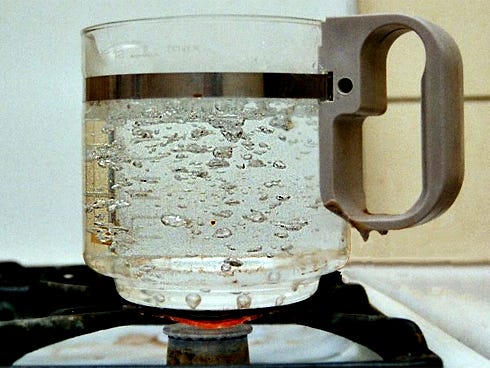
Boil water before use, holding it at rolling boil for at least one minute before using it for drinking, cooking, making ice, brushing teeth or washing dishes.

Disinfect water by adding 8 drops (about 1/8 teaspoon – this would form a puddle about the size of a dime) of plain unscented household bleach per gallon of water, and then let it stand for 30 minutes. If the water is cloudy after 30 minutes, repeat the procedure. Use a container that has a cap or cover for disinfecting and storing water to be used for drinking. This will prevent contamination.

Use bottled water, especially for mixing baby formula.

This article originally appeared on Crestview News Bulletin: Health department offers water disinfecting tips for Crestview residents

FINANCIAL FOCUS: 'Rules of the road' for investors

As an investor, you may sometime wonder what on earth is going on in the financial world. One day, the stock market is down 200 points; the next day, it's up 300. One day, a scandal rocks a company; the next day, another firm declares a poor earnings report.

There's no smooth route to follow, but you can help smooth out the journey by observing these "rules of the road":

• Create a plan. You can waste time, effort and money through haphazard investing. Create a plan that defines your long-term goals and establishes a strategy to achieve them, considering your individual tolerance for risk and your time horizon.

• Take action. The best plan is useless unless implemented. Once you've set a course of action, follow through. Don't wait for "time to be right" before you invest; you can always find excuses to delay. The best time to start is right now.

• Stay invested. When the market is "hot," it's easy for people to keep investing. It takes far more courage to continue investing during a long bear market. And yet, it's essential to stay invested, through good times and bad. Ultimately, the long-term performance of the investments you have chosen will have far more impact on your portfolio's success than the daily, inevitable price fluctuations.

• Look for quality. Persistence in investing, by itself, isn't enough to help you achieve long-term goals. You also need to invest in quality. Look for stocks of companies with solid track records, strong management teams, competitive products and well-defined business plans. You'll experience ups and downs even in quality stocks, but if you hold them over time, you'll greatly increase your prospects for success.

• Diversify your holdings. During any given market environment, some investments will do well while others will not. You could try to pick the winners, but that's almost impossible to do consistently. You'll be much better off diversifying your dollars among a range of high-quality stocks, bonds, mutual funds, government securities and other vehicles. By staying diversified, you'll help cushion yourself against downturns affecting just one type of investment, and you'll multiply opportunities of benefiting from assets performing well.

• Review your plan. Annually review investment plans and strategies. Your life will evolve — new job, new house, new children, etc. — and you may need to adjust plans to accommodate these changes. If some of your investments no longer suit your needs, find other opportunities. A qualified financial professional can help evaluate your situation and make recommendations on rebalancing your portfolio.

There's nothing magic, or complex, about these "rules for the road."

However, to follow these guidelines, you'll need patience and perseverance. If you have these traits, you're well prepared for a fulfilling investment journey.

Joe Faulk is a financial adviser.

This article originally appeared on Crestview News Bulletin: FINANCIAL FOCUS: 'Rules of the road' for investors

Three Tips for Choosing an Assisted-Living Home for Your Parent

Seventy percent of people age 65 and older will need long-term care at some point in their lives, according to a 2014 study by CareScout, a division of Genworth Financial Services.

“But that doesn’t mean they have to sacrifice their quality of life,” says Peder Johnsen, CEO of Concordis Senior Living, which owns, operates and develops senior housing communities.

“In fact, a person who needs some assistance with day-to-day living will often find he or she is much happier in a good assisted-living community with an atmosphere that reminds them of their former home.”

And it doesn’t have to be outrageously priced, notes Johnsen, a third-generation ALF operator whose family pioneered the contemporary congregate community model.

The median price for a private, one-bed home in an ALF community is $42,000, he says, citing the CareScout report. By contrast, a semi-private nursing home bed costs a median $77,000 a year.

But it’s up to prospective residents and their families to ascertain the quality of the community and whether it’s a good match for the person who will be living there.

“ALFs are not federally regulated and states vary widely on the breadth of oversight they provide, so you can’t necessarily rely on the law,” Johnsen says. “And don’t rely on salespeople either – that’s the biggest mistake people make.”

There are, however, a number of easy ways to see if a home has a truly caring atmosphere and well-trained staff.

Johnsen offers these tips:

•  Ask to see the home’s state licensing survey, an assessment that usually includes inspections, audits, interviews with residents, etc. Every state has an ALF licensing agency and all have some form of survey system for ensuring that certain standards of quality are met, according to the Assisted Living Federation of America.

“Requirements vary from state to state about how often the surveys are conducted and how the public can access the reports, but no matter what state you live in, you should be able to ask the ALF for its most recent report, or obtain it from the licensing agency,” Johnsen says. 

The surveys will tell you if problems were found – or not – and what the ALF did to address them.

•  Visit the ALF during non-business hours.

Go before breakfast or after dinner – times when the administrators aren’t around. What’s the atmosphere? How do employees behave with the residents?

“That’s a good time to talk to residents, too,” Johnsen says.

Be a “mystery shopper,” he suggests. Pretend you’re just visiting the community – not scouting it out as a prospective customer.

•  Ascertain how truly “homelike” the community is.

In your own home, if you don’t feel like eating breakfast at 7:30 a.m., you don’t have to. You can have breakfast at 10. You can get snacks when you want them.

“Depending on what’s important to your loved one, there are potentially many rules that can affect how ‘at home’ a person feels,” Johnsen says. “Some communities allow residents to have pets, others don’t. Some provide lots of activities. At some, residents can quickly and easily arrange for transportation or a service like hair styling.”

Not every community can offer everything, he notes. That’s why it’s important to look for those features that are especially important to your loved one.

Peder Johnsen is the CEO of Concordis Senior Living. For more information, visit www.concordisseniorliving.com.

This article originally appeared on Crestview News Bulletin: Three Tips for Choosing an Assisted-Living Home for Your Parent

Crestview parents to present Lyme disease awareness information, share their stories

Connie Murray — left, with her daughter, Nikki, at a recent Lyme disease awareness event at Publix — and Connie B. — with her son, Bryson — will present a Lyme disease awareness documentary on Saturday in Crestview.

Editor's note: Due to the sensitivity of her husband's military mission, Colleen B. has requested that we withhold her family's last name.

CRESTVIEW — Bryson B. is a typical 11-year-old boy who loves playing outside, hunting in woods with his dad and riding horses.

But, his mother, Colleen said, there is a difference.

"My son has Lyme disease," she said.

"He was racing through the woods and got into a tick nest and had about 50 of them on him," she said.

After picking off the ticks, everything seemed fine until Bryson awoke several days later with a few red spots. Colleen, suspecting bedbugs, changed his sheets, but more spots appeared.

"I took him to the doctor. His nurse said, 'You should have him checked for Lyme.'

"About a week and a half after the bites, he complained of joint pains, headaches and fever all at the same time. I didn't know about the impact of Lyme disease at the time."

Finding a doctor

When the family's pediatrician reluctantly agreed to extend Bryson's antibiotics treatment for a second week, a church friend advised Colleen to find a Lyme-literate doctor.

However, despite the prevalence of tick-laden Northwest Florida wooded areas, the closest doctors specializing in the often debilitating disease were at least two hours away.

Under the care of a Lyme-literate doctor in Tallahassee, Bryson received the full antibiotics treatment.

"And he's still on antibiotics now," Colleen said. "We think we've conquered it, but it lives in his body, so if his immune system is compromised, he could have a relapse."

Thanks to early detection and prompt antibiotic treatment, Bryson's story has a happy ending.

"If he was not treated in the five- to six-week window, he wouldn't be where he is today," Colleen said.

Award-winning documentary

Colleen, along with Connie Murray, also the mother of a child with Lyme disease, encourages parents to attend a 2 p.m. May 31 screening of "Under Our Skin," an award-winning documentary about Lyme disease.

The film's Woodlawn Baptist Church screening will be followed by guest speakers addressing Lyme disease detection and prevention, and how it has changed their lives. Admission is free.

"This is what's behind our desire to inform people," Colleen said. "You have to push for the proper diagnosis and the proper treatment."

Lyme disease is transmitted to humans through the bite of infected blacklegged ticks. Symptoms include fever, headache, fatigue and a skin rash that often resembles ringworm. Infection can spread to joints, the heart and the nervous system if the disease is untreated.

Avoid wooded and bushy areas with high grass and leaf litter, walk in the center of trails and repel ticks with DEET or Permethrin, to prevent infection.

Be extra vigilant in warmer months — April through September — when ticks are most active.

Source: Centers for Disease Control and Prevention, www.cdc.gov/lyme

Email News Bulletin Staff Writer Brian Hughes at brianh@crestviewbulletin.com, follow him on Twitter @cnbBrian or call 850-682-6524.

This article originally appeared on Crestview News Bulletin: Crestview parents to present Lyme disease awareness information, share their stories

Don't Fall Prey to Medical Identity Theft

By now, most people know about the perils of identity theft, where someone steals your personal or financial account information and makes fraudulent charges or opens bogus accounts in your name.

Lately, a not-so-new twist has been getting a lot of attention – medical identity theft. That's where someone gains access to your health insurance or Medicare account information and uses it to submit phony insurance claims, obtain prescription drugs or medical devices, or get medical treatment in your name.

Besides its high cost, medical ID theft also can have deadly consequences: Suppose someone poses as you and gets an appendectomy; if you later entered the hospital with abdominal pain, your medical file would show that your appendix was already removed and you could be tragically misdiagnosed.

Here are a few tips for avoiding medical ID fraud and steps to take if it happens:

Your medical files are often full of information ID thieves crave: account numbers for Social Security, health insurance, Medicare or Medicaid, contact information, email address, etc. All it takes is one stolen employee laptop or an intercepted piece of mail or email to leave you vulnerable.

Sophisticated thieves will also hack computer networks of insurance companies, pharmacies, medical equipment suppliers and others who have access to your medical records. And unfortunately, the black market for stolen information is so tempting that employees have been known to steal data.

Common signs of medical identity theft include:

Just as you shouldn't hesitate to ask your doctor or nurse whether they washed their hands, so you should feel free to ask what security precautions their business office takes to protect your information. Here are a few preventive measures to take:

If you suspect or know your information has been compromised, ask for copies of your medical records from each doctor, hospital, pharmacy, lab or health plan where a thief may have used your information. Also request a copy of their "Accounting of Disclosures" form, which lists everyone who got copies of your medical records.

Next, write them all by certified mail explaining which information is inaccurate, along with copies of documents supporting your position. Ask them to correct or delete all errors and to inform everyone they may have sent records to (labs, other doctors, hospitals, etc.) Keep copies of all correspondence and logs of all phone calls or other related activities.

You can also file a police report and contact the fraud units at the three major credit bureaus: Equifax, Experian and TransUnion. You may want to place a fraud alert or freeze on your accounts. Visit the Federal Trade Commission's Identity Theft site for more information.

Jason Alderman, a financial expert who directs Practical Money Skills for Life, a free, award-winning financial education program.

This article originally appeared on Crestview News Bulletin: Don't Fall Prey to Medical Identity Theft

error: Content is protected !!