Please ensure Javascript is enabled for purposes of website accessibility
Skip to main content
Advertisement

$5,000 purse offered at 3rd annual Paddle at the Porch competition

DESTIN — The 3rd Paddle at the Porch starts at 10 a.m. Aug. 16 behind The Back Porch Seafood & Oyster House, 1740 Scenic Hwy. 98 E., Destin.  The event features one- and three-mile recreational races and a six-mile elite race, to be followed by awards, including a 5,000 cash purse.

People of all ages and skill levels are invited to participate.

For the three- and six-mile races, the cost is $60 before Aug. 16, and $75 on race day.  For the one-mile race, the cost is $48 before Aug. 16, and $55 on race day.  Registration may be completed on Active.com or by downloading a race brochure from the Paddle at the Porch website.

The first 200 people to register are guaranteed t-shirts.

Organizers thank partners BOTE and The Back Porch Seafood & Oyster House, in conjunction with purse sponsor Destin Commons; gold sponsors 99Rock, Brannon & Brannon, The Beachcomber, Buffalo Rock Pepsi, Destin Magazine, MC Photo, and Wyndham Vacation Rentals; silver sponsor Coastal Bank and Trust; and accommodations sponsors Go Southern, Sterling Resorts, and SummerPlace Inn.

This article originally appeared on Crestview News Bulletin: $5,000 purse offered at 3rd annual Paddle at the Porch competition

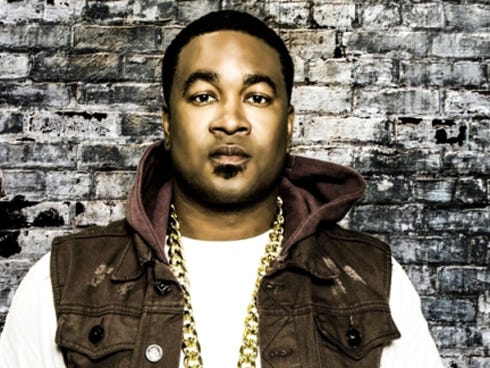
Christian hip-hop musician to perform June 20

Canton "CJ" Jones

A Canton "CJ" Jones concert is scheduled for 7:30 p.m. June 20 at the Mattie Kelly Arts Center outdoor amphitheater, Northwest Florida State College, Niceville.

Emerald Experience presents the Christian hip-hop artist, who also sings R&B and urban gospel. He has shared stages with Ludacris and Patti LaBelle, according to his website.

Pope and other talented musicians will appear.

The amphitheater offers 500 fixed seats and room on the events lawn for more than 2,000 patrons with blankets or lawn chairs.

Tickets cost $20 at the Box Office, 729-6000 or at www.MattieKellyArtsCenter.org.

This article originally appeared on Crestview News Bulletin: Christian hip-hop musician to perform June 20

EXTENSION CONNECTION: The 4 R's of fertilizer application

The cliché is, “April showers bring May flowers,” but April deluges create weak plants and yellow grass.

Picture this: You were following the University of Florida/Institute of Food and Agricultural Sciences' recommendations and waited until April 15 to fertilize.

You followed the Urban Turf Rule and applied low-phosphate fertilizer with slow-release nitrogen.

Yet, your grass is yellow and the shrubs haven’t grown any. What happened?

The 18-plus inches of rainfall we experienced at the end of April flushed nearly everything, including fertilizer, out of the soil. Nitrogen and potassium are highly leachable. Phosphorus is also depleted under saturated soil conditions.

If you haven’t submitted a soil test since the storm, now is the time to do so. It’s time to apply a summer fertilizer, but it needs to address all the nutrient deficiencies created from excess rain. Soil test kits can be obtained from the Okaloosa County Extension office.

Fertilizer selection

Best Management Practices have been developed so individuals can make fertilizer selection decisions that reduce the risk of water contamination.

When you get soil test results from the University of Florida Lab, remember the "4 Rs" when applying fertilizer.

•Right source. A BMP-compliant fertilizer contains a portion of slow-release (water insoluble) nitrogen with little to no phosphorus, and a potassium level similar to the nitrogen percentage (e.g. 15-0-15, that contains 5 percent coated nitrogen).

A soil test is the only way to accurately identify specific nutrients your landscape lacks. Many soil tests indicate a need for phosphate and, currently, it is illegal to apply more than 0.25 pounds per 1,000 square feet without a soil test verifying the need.

•Applied at the right rate. Know the square footage of your property and how much fertilizer you can spread using your equipment's settings. Individuals walk at varied speeds and the product-recommended rates are based on 1,000-square-foot areas.

Using 15-0-15 fertilizer, the right rate for one application would be 3 pounds per 1,000 square feet. That 35-pound bag is all that is needed for a nearly 12,000-square-foot yard (a large corner lot).

Learn more about calibrating application equipment.

•At the right time. This is when plants are actively growing and beginning to show nutrient deficiencies. Summer, when rainfall and irrigation are frequent, is a typical application time.

•Over the right place. That is, only on living plant areas. Avoid getting fertilizer on the sidewalk, driveway and street. A deflector on your spreader is helpful.

Otherwise, sweep or blow the fertilizer back onto the grass or into the landscape beds. Avoid having fertilizer end up in any water body.

The final factor is irrigation. To obtain the most benefit from fertilizer, the 4 R's must also be applied to irrigation. The water source, application rate, frequency and duration of application, and uniformity of the sprinkler system on the application site dramatically affect the results of fertilizer applications.

Learn more about irrigation timing and system calibration.

Nutrient and irrigation management are critical to conserve and protect Florida’s natural resources. We must meet the needs of the present without compromising the ability of future generations to meet their own needs.

Sheila Dunning is an agent at the University of Florida's Extension office in Crestview.

This article originally appeared on Crestview News Bulletin: EXTENSION CONNECTION: The 4 R's of fertilizer application

Crestview doctor: Social support crucial following cancer diagnosis

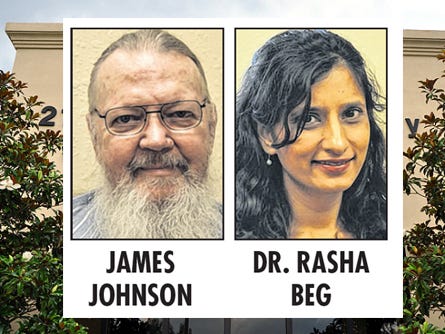
21st Century Oncology Crestview Cancer Center recently celebrated National Cancer Survivors Day at their facility on Redstone Avenue.

CRESTVIEW — Receiving a cancer diagnosis can be difficult, said Dr. Rasha Beg, a specialist with 21st Century Oncology. “So to help them get through it, social support and their own outlet is important.”

Patients at the Redstone Avenue facility have painted 75 ceiling tiles that feature inspirational messages, Bible verses, paintings of cartoon characters, animals, colorful objects and support for a favorite college football team.

That, and staying optimistic help, Baker resident and cancer survivor James Johnson said.

“Keep a positive frame of mind and rely on God to help, cause it worked for me,” he said.

“Try to keep a smile on your face,” his wife, Donna, said. “Don’t treat (a spouse with cancer) any different than you normally do … don’t change your routine.”

After receiving radiation treatments, Johnson, diagnosed in 2012, said he has been cancer-free for about a year.

“I never had any doubt that I would beat it,” he said. “I was told to not worry about things and everything would taken care of … and it was.”

There’s a reason for that, Beg said.

“We don’t have a cure for (cancer) yet,” she said. "The treatments for many cancers have really improved, so we will see more and more survivors.” 

Email News Bulletin Staff Writer Matthew Brown, follow him on Twitter or call 850-682-6524.

This article originally appeared on Crestview News Bulletin: Crestview doctor: Social support crucial following cancer diagnosis

World Blood Donor Day celebration this weekend

PENSACOLA —World Blood Donor Day is Saturday, June 14. It was created as a way of honoring blood donors and to say thank you to the loyal donors who save lives every single day.

OneBlood will be celebrating World Blood Donor Day during the entire weekend, June 13-16.

Donors who participate on those days will receive a free limited edition OneBlood baseball hat, a $10 eGift card and a free wellnes check when they donate at OneBlood donor center locations, including the Crestview Donor Center, 2400 S. Ferdon Blvd., Suite B, Crestview, phone 306-2455; and the Fort Walton Beach Donor Center, 405 NE Racetrack Road, Suite 104, Fort Walton Beach.

Visit the website to find the center closest to you. Appointments are honored and walk-ins are welcome. Photo I.D. is required.

Donating blood is one of the most powerful actions any human can take, as it literally saves lives. One in three of us will need a blood transfusion at some time. While 39 percent of people are eligible to donate blood, only 5 percent do. Generally healthy people age 16 or older who weigh at least 110 pounds can donate blood.

This article originally appeared on Crestview News Bulletin: World Blood Donor Day celebration this weekend

PRACTICAL MONEY SKILLS: Financial advice for new fathers

Each year when Father's Day rolls around, I'm reminded that I wouldn't trade the experience of raising my two kids for the world. But when I think back to how naïve my wife and I once were about the costs of raising children, I can't help wishing we'd been better prepared.

If you're a new dad, or about to become one, you'd better sit down. According to the U.S. Department of Agriculture, a typical middle-income family can expect to spend over $241,000 to raise a newborn child until age 18 – and that doesn't even include prenatal care or college costs.

Right now, you're probably more worried about getting enough sleep than funding your retirement. But at some point, you'll need to plot out a financial roadmap to ensure your family's future financial security. As one dad to another, here are a few strategies I've learned that can help:

Start saving ASAP. It's hard to save for the future when your present expenses are so daunting, but it's important to start making regular contributions to several savings vehicles, even if only a few dollars at a time:

Establish an emergency fund with enough cash to cover at least six months of living expenses. Start small by having $25 or $50 a month deducted from your paycheck and automatically deposited into a separate savings account.

Even if retirement is decades away, the sooner you start saving and compounding your interest, the faster your savings will grow. If your employer offers 401(k) matching contributions, contribute at least enough to take full advantage of the match.

Once those two accounts are well established, open a 529 Qualified State Tuition Plan to start saving for your children's education.

If funding these accounts seems impossible, look for a few luxuries you could cut from your budget for six months – lattes, eating out, premium cable, etc. After six months, evaluate whether they were actual "needs" or simply "wants" you can live without.

Get insured. If your family depends on your income, you must be prepared for life's unexpected events, whether an accident, illness, unemployment or death. Get adequate coverage for:

Health insurance. Everyone needs medical insurance, no matter how young or healthy.

Homeowner/renter's insurance. Don't let theft, fire or another catastrophe leave your family without a home or possessions. To reduce premiums, consider choosing a higher deductible.

Life insurance. You'll probably want coverage worth at least five to 10 times your annual pay – more, if you want to cover college costs. And don't forget to insure your spouse's life so you'll be protected as well.

Disability insurance. Millions of Americans suffer disabilities serious enough to miss work for months or years, yet many forego disability insurance, potentially leaving them without an income after a serious accident or illness. Ask about your employer's sick leave and short-term disability benefits and if long-term disability is offered, consider buying it.

Car insurance. Almost every state requires insurance if you own or drive a car, and for good reason: It protects you financially should you cause an accident or be hit by an uninsured driver. Make sure you have sufficient liability coverage to protect your net worth and income – it only takes one serious accident to wipe out your savings.

And finally, spend responsibly. If you buy things you don't really need or can't afford, you'll just end up having to work longer hours to pay for them – time you could have spent watching your kids growing up.

Jason Alderman directs Visa's financial education programs.

This article originally appeared on Crestview News Bulletin: PRACTICAL MONEY SKILLS: Financial advice for new fathers

Zumba fundraiser to benefit Children's Miracle Network

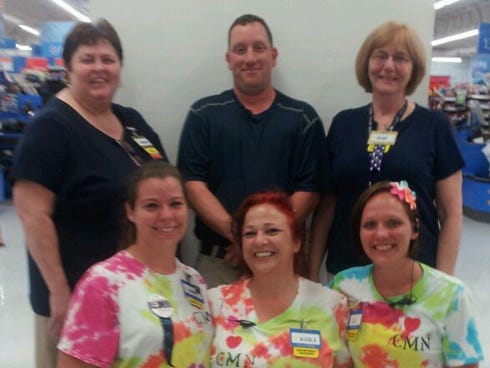
Employees from the Walmart in Crestview helped organize the ‘Dancing for Babies’ event happening on Friday. The event will raise money for the Children’s Miracle Network. Top row from the left are Barbara Johnson, Chris Foster and Alice Cook. Bottom row from the left are Jennifer Rawls, Nicola Pohle, and Elizabeth Blanchard.

CRESTVIEW — Zumba enthusiasts, or those who want to try out the aerobic fitness program, can attend Dancing for Babies, a Children’s Miracle Network fundraiser, on Friday.

Three Zumba-certified instructors will lead the event and Wal-Mart employees have volunteered to watch children while parents exercise at Riverside Elementary School

Attendees have the chance to win door prizes, including gift baskets, from the store, which is sponsoring the event. Water and fresh fruit will be available for donations.

All Dancing for Babies proceeds will benefit Sacred Heart Children’s Hospital in Pensacola, Samantha Rudolph, a co-manager of the Crestview Wal-Mart, said.

It's just one way the store is committed to being involved with the community, Rudolph said.

“We are hoping this will be the first of many” she said.

In addition, the store plans to have a Kitty Carnival featuring children’s activities on June 28 outside the store’s garden center.

WANT TO GO?

WHAT: Dancing for Babies fundraiser

WHEN: 5:30-7 p.m. Friday

WHERE: Riverside Elementary School, 3400 E. Redstone Ave., Crestview

COST:$5 donation for participation

Email News Bulletin Staff Writer Matthew Brown, follow him on Twitter or call 850-682-6524.

This article originally appeared on Crestview News Bulletin: Zumba fundraiser to benefit Children's Miracle Network

FINANCIAL FOCUS: If rates rise, here's what to do with bonds

Interest rates are at historic lows, but they will eventually rise. If you invest in fixed-income vehicles, such as bonds, what might higher rates mean for you?

As is almost always the case in the investment world, there’s no simple answer.

First, it’s important to distinguish between short-term and long-term interest rates. The Federal Reserve is determined to keep short-term rates low until unemployment improves; in the meantime, longer-term rates may well rise.

Depending on your situation, a rise in long-term rates can present opportunity and concern. 

Rising rates can mean greater income if you invest in newly issued bonds. However, if you already own longer-term bonds, and rates rise, your bonds' value will fall. That’s because other investors won’t want to pay full price for your bonds when they can get new ones at higher rates.

Even if your long-term bonds' value falls, isn’t it worthwhile to hold on to them? As long as your bond doesn’t default — and if the bond is considered “investment grade,” default is unlikely — you will get a steady source of income and you’ll receive your bond's full value back at maturity.

Aren’t these valuable benefits?

They are indeed — but they may be more relevant for short-term bonds. Longer-term bonds — those of 10-year duration or longer — are more subject to inflation risk than shorter-term bonds. We’ve experienced low inflation for a number of years, but, over time, even mild inflation can add up. When this happens, and you own a long-term bond whose rate doesn’t change, you could face a potential loss of purchasing power. One of the reasons that long-term bonds pay higher interest rates than short-term bonds is because issuers of longer-term instruments are rewarding you for taking on this additional inflation risk.

Consequently, simply holding on to long-term bonds — especially very long-term ones, such as those that mature in 30 years — may not be the best strategy. If you review your fixed-income holdings and find that they skew strongly toward longer-term bonds, you may want to consider reducing your exposure in this area.

If you did sell some of these bonds, you could use the proceeds to help build a “bond ladder” — which may be one of the best ways to invest in bonds.

To create this ladder, invest in bonds of varying maturities. When market rates are low, you’ll still have your longer-term bonds earning higher interest rates, thereby paying you more income. And when market rates rise, you can reinvest your maturing short-term bonds at the higher rates. You must evaluate whether the bonds held within the bond ladder are consistent with your investment objectives, risk tolerance and financial circumstances.

If you own bonds, be aware of current interest rates — and where they may be headed.  By keeping yourself informed and choosing the right strategies, you can benefit from owning bonds and other fixed-income vehicles in all interest-rate environments.

Before investing in bonds, understand the risks involved, including credit risk and market risk.  Bond investments are subject to interest rate risk; when interest rates rise, the prices of bonds can decrease, and the investor can lose principal value if the investment is sold prior to maturity.

Joe Faulk is a financial adviser in Crestview.

This article originally appeared on Crestview News Bulletin: FINANCIAL FOCUS: If rates rise, here's what to do with bonds

Food bank to provide free meals for Okaloosa children

CRESTVIEW — For the 12th consecutive summer, Bay Area Food Bank is partnering with Northwest Florida organizations to provide free meals to children through the Summer Food Service Program.

Okaloosa sites and times are as follows:

•Mt Zion AME Church: lunch 11 a.m. to 1 p.m., Mondays through Fridays, June 16 to July 15 except for July 4, 502 McDonald St., Crestview. Details: Rosetta German, 850-398-6985.

•Hope House: breakfast 9-9:30 a.m. and lunch 12-1 p.m. Mondays through Fridays, to be determined, except July 4, 285 Duggan Ave., Crestview. Details: Lee Brandy, 682-2374.

The program, supported by the United States Department of Agriculture, is designed to fill the nutrition gap left when children are out of school during the summer and lack access to free or reduced-price meals.

This article originally appeared on Crestview News Bulletin: Food bank to provide free meals for Okaloosa children

LDS announces seminary graduates, award recipients

The Church of Jesus Christ of Latter-day Saints' Fort Walton Beach Stake celebrated graduation for Early Morning Seminary students on June 8 in Niceville. Graduates, from left, are: back row, Justin Morgan, Jeffrey Linares, Andrew Moore, Noah McSheehy, Elias Woolsey and Kiedra Perdue. Front row: Kaitlyn Wirt, Madison Grigg, Skyler McSheehy, Emily Parker, Ann Jones and Brittany Matthews.

NICEVILLE — The Church of Jesus Christ of Latter-day Saints' Fort Walton Beach Stake is celebrating its Early Morning Seminary graduates.

Graduates from Crestview are Jeffrey Linares, Emily Parker, Kailyn Wirt, Michael Balatimore, Brittany Matthews and Keidra Perdue. Graduate Anne Jones is from DeFuniak Springs.  Graduates from Fort Walton Beach  are Emily Christopherson, Noah McSheehy, Skyler McSheehy, and Christian Woolsey. Graduates from Niceville are Molly Clifton, Madison Grigg, Andrew Moore and David Russell. Graduate Justice Morgan is from Olive Branch.

Students still finishing the program — and awarded Certificates of Achievement for completing certain portions — are Keidra Perdue, Tiffany Lawson, Dixie Mobley and Kortnie Perkins, Crestview; and Alexandra Bill, Joseph Brill, Samuel Brill and Ammilia Dubbs, Fort Walton Beach.

Students from eight congregations, their teachers, church leaders and hundreds of family members and friends gathered June 15 at the Church of Jesus Christ of Latter-day Saints' Niceville chapel.

Keidre Perdue of Crestview sang, “I Am A Child of God,” accompanied by Ingrid Roberts; Emily Christopherson of Fort Walton Beach sang, “How Great Thou Art” a cappella. Chapman Tew accompanied on the piano while Emily Parker conducted the music.

Early Morning Seminary consists of a daily scripture study class held at 5:45 a.m. before high school begins. Students study each topic for a year, starting with the Old Testament, then the New Testament, the Book of Mormon and Church History.

Through games and various drills, students master 100 scriptures: 25 from each discipline. These classes provide a spiritual and social climate to prepare young people for effective service and missions.

This article originally appeared on Crestview News Bulletin: LDS announces seminary graduates, award recipients

error: Content is protected !!