Please ensure Javascript is enabled for purposes of website accessibility
Skip to main content
Advertisement

April concert to benefit Covenant Hospice

Some of the performers at the June 20 2nd Annual Thrive Music Fest, benefiting Covenant Hospice include: Top row: Hotel Oscar — a rock-roots trio from Destin. Bottom left: Nik Flagstar of Nik Flagstar & His Dirty Mangy Dogs, of Fort Walton Beach. Bottom right: Allen Rayfield and Season Ammons, members of The Wide Open, of Fort Walton Beach.

FORT WALTON BEACH — The 2nd Annual Thrive Music Fest, benefiting Covenant Hospice, is 3 p.m. to 2 a.m. Saturday, June 20 in downtown Fort Walton Beach.

The event will feature live music in multiple venues including The Fort Walton Beach Landing, KC’s Sandbar & Grille, The Green Door, Downtown Cinema Plus and Coasters.

Organizers said the initial line-up of local and regional performing artists will include:

•Austin Jennings, Cadillac Willy and Hotel Oscar, all of Destin

•New Earth Army, Nik Flagstar & His Dirty Mangy Dogs, Something to Yield, and The Wide Open, all of Fort Walton Beach

•The Owsley Brothers, Freeport

Organizers seek additional artists interested in performing at the benefit, as well as volunteers for the planning committee and event day.

“In recognizing a flourishing downtown Fort Walton Beach with increased energy and a dynamic local music scene, we felt like Thrive Music Fest was a natural fit both to celebrate a growing community and to ensure that Covenant’s compassionate care is available to anyone in need of our services, regardless of financial status or their ability to pay,” development manager Rachel Mayew said.

“Our goal at Covenant Hospice is to give patients the gift of quality time; to allow them to live as fully as possible; to thrive in whatever means possible — mind, body, spirit — during their final chapter of life,” she said. “Through community support of events like Thrive Music Fest, we are able to help our patients and their loved ones make the most of every moment.”

Corporate sponsorships and underwriting opportunities are available, and participating organizations will receive benefits including promotional recognition, complimentary admission and preferred seating.

Contact Rachel Mayew, 428-0605 or rachel.mayew@covenanthospice.org, for more information.

This article originally appeared on Crestview News Bulletin: April concert to benefit Covenant Hospice

NOMC raises awareness for women's heart disease, stroke

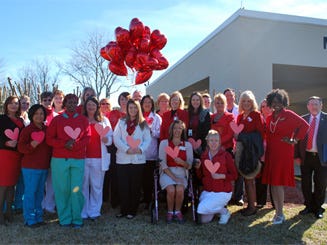
Pictured are Melody Miller-Collete, Chat Long, Gloria Addison, Teresa Lloyd, Nina Perez, Samantha Vi, Carol Barberree, Carrie Bryant, Sherrie Scott, Terri Unger, Carol Richards, Mary Alice Daigneault, Marian McBryde, Angela Carden, Crestview Mayor David Cadle, Valerie Manley, LeAnn Holcombe, Elaine Demandre, Ruth Link, David Fuller, Teresa Balcerak, Jennifer Bray, Dr. Tommy Noggle and Dorothy Weisz.
Special to the News Bulletin

CRESTVIEW — Did you know one in three women annually die of heart disease and stroke?

Raising awareness is the point of the American Heart Association's Go Red for Women.

February is American Heart Month, according to the Centers for Disease Control and Prevention. The national effort aims to prevent 1 million heart attacks and strokes by 2017.

The key?

Ensuring Americans know their blood pressure; if it's too high, the goal should be to control that number, the CDC states.

North Okaloosa Medical Center's staff wore red to bring attention to the issue on Feb. 6.

Learn more about controlling your blood pressure at www.cdc.gov/features/heartmonth.

This article originally appeared on Crestview News Bulletin: NOMC raises awareness for women's heart disease, stroke

Snook to reopen in Gulf state waters

CRESTVIEW — The recreational harvest season for snook reopens March 1 in Florida’s Gulf of Mexico, and in state and adjacent federal waters, including Everglades National Park and Monroe County.

The season will remain open through April 30.

In the Gulf, anglers daily may keep one snook between 28 and 33 inches long. A snook permit is required, along with a saltwater fishing license, unless exempt from the license requirements. Only hook-and-line gear is allowed when targeting or harvesting snook, and it is illegal to buy or sell snook.

Researchers ask anglers who harvest the fish to save the carcasses after the meat is filleted and provide them to the Florida Fish & Wildlife Conservation Commission by dropping them off at a participating bait and tackle store. These donations allow researchers to better determine the age groups being harvested, which makes stock assessments more precise.

Click here, and tap “Saltwater,” “Recreational Regulations” and “Snook" for more information. 

This article originally appeared on Crestview News Bulletin: Snook to reopen in Gulf state waters

Free phone available for Okaloosa residents with hearing loss

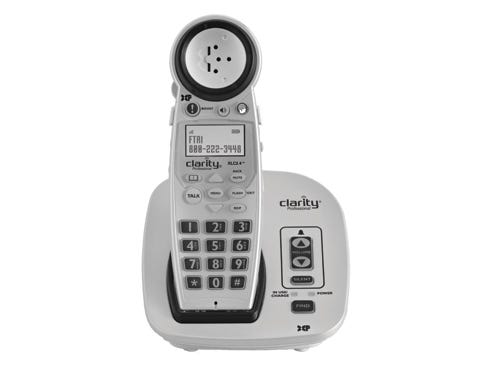
CRESTVIEW — Florida Telecommunications Relay Inc., the non-profit distributor of amplified telephones for people with hearing loss and speech challenges, is offering a new amplified telephone at no cost to Okaloosa County residents with hearing loss.

The XLC3.4, developed by Clarity, is a cordless phone with talking Caller ID and boosts incoming sounds up to 50 decibels. The XLC3.4 is designed to meet varying degrees of hearing loss — from moderate to severe.

Permanent Florida residents certified as having hearing loss can complete an application here or call 1-800-222-3448 to get the phone.

This article originally appeared on Crestview News Bulletin: Free phone available for Okaloosa residents with hearing loss

Beekeeping course available next month in Cantonment, Milton

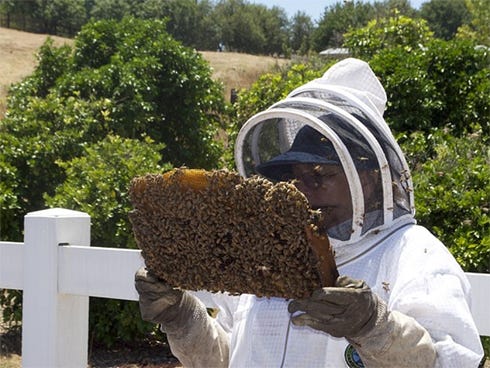
Four classes are available next month for Northwest Florida residents who want to learn more about beekeeping.

A beekeeping short course is scheduled through March in Milton and Cantonment. Classes, as follows, are  6-8 p.m. Mondays and 9 a.m. to noon Saturday:

•March 9: Honey Bee Biology, Anatomy & Hive Structure         

•March 16: Bee Nutrition and Bee Botany (identification of nectar plants)

•March 21: Bee-Yard field day

•March 23: Important Pest and Diseases — Identification and Management

Sessions are by interactive video, except for the March 21 field day.

Registration for all classes — presented by the University of Florida Institute of Food and Agricultural Sciences Extension Panhandle Agriculture Team — is $20 per person, or $30 per family. The fee covers course materials and refreshments.

Contact the Escambia County office — 3740 Stefani Road, Cantonment, 475-5230 — or Santa Rosa office — 6263 Dogwood Drive, Milton, 623-3868 — to register. 

This article originally appeared on Crestview News Bulletin: Beekeeping course available next month in Cantonment, Milton

Here's why food safety should concern North Okaloosa farmers

It's no coincidence that the United States has one of the safest food supplies.

Plenty of work has been put into developing rules that producers, processors and distributors must follow to keep food safe.

Even so, there are plenty of instances when something goes wrong and people fall ill.

On Feb. 12, for example, the Centers for Disease Control and Prevention declared an end to a recent outbreak of Listeria monocytogenes, a bacterial pathogen.

Since October, 35 people in 12 states have fallen ill, and at least three have died, because of contaminated prepackaged caramel apples. Outbreaks such as this can catch the public’s attention — and can cause people to think twice about purchasing similar products, whatever the source.

Listeria — just one pathogen that can cause illness — is most severe when it affects pregnant women or people with weakened immune systems.

As modern medical science allows people to live longer and helps those who are immuno-compromised to survive, it becomes increasingly important to protect our food's quality.

Disease-causing organisms or chemicals may come into contact with food a variety of ways. These include using improperly composted manure, employees practicing poor hygiene, or allowing contaminants to spread to crops from nearby areas.

In 2010, Congress passed the FDA Food Safety Modernization Act. This legislation — which attempts to update food safety laws — is still being implemented. The final rules will be in place by October, though it is still unclear when enforcement will begin.

When it does, farms may be required to have a farm safety plan and undergo inspections, depending on farm size.

A farm safety plan includes a set of standard operating procedures that a farm must follow. These cover topics such as animal husbandry and grazing, water use and quality control, adjacent land use, fertilization, employee hygiene and training, and food security.

LEARN MORE

Visit the Small Farms and Alternative Enterprises team's website to learn more about food safety.

A Food Safety Plan Workshop will be held Feb. 26 at the Duval County Extension Office in Jacksonville.

Contact Dilcia Toro, 386-362-1725, ext. 102, for more information.

This article originally appeared on Crestview News Bulletin: Here's why food safety should concern North Okaloosa farmers

THIS WEEKEND: Quilt show scheduled in Niceville

NICEVILLE — Flying Needles Quilt Guild Inc. will present a show Feb. 27 and 28 at Northwest Florida State College's Student Services Center.

The show — 9 a.m. to 5 p.m. Friday; 9 a.m. to 4 p.m. Saturday at 100 E. College Blvd. — features vendors, demonstrations, a Quilter's Walk and a boutique. Lunch will be available in the cafeteria.

Call 729-7772 for more details.

This article originally appeared on Crestview News Bulletin: THIS WEEKEND: Quilt show scheduled in Niceville

NOMC: Vaccination key to prevent spread of measles

CRESTVIEW — Measles is making a comeback.

The Centers for Disease Control and Prevention reports that 102 cases of measles were diagnosed in 14 states in January.

Most of these cases are linked to a measles outbreak at an amusement park in California.

In 2014, the U.S. experienced the greatest number of measles cases — 644 cases in 27 states — since the virus was declared eliminated here 14 years ago, according to the CDC.

Most of these cases were in people who were not vaccinated.

“Vaccination is an important tool in preventing the spread of measles,” said Lida Deonarine, North Okaloosa Medical Center's director of Infection Control and Employee Health. “CDC research shows that one dose of the measles vaccine is about 93 percent effective at preventing measles if someone is exposed to the virus, and two doses are about 97 percent effective.”

Measles is still common in other countries, and travelers with measles continue to bring the virus to the U.S. An outbreak can occur when the disease reaches a community where groups of people are unvaccinated.

The CDC recommends that every child receive a first dose of the measles vaccination after reaching the age of 12 months. A second dose is recommended for 4- to 6- year-olds.

Vaccination is also recommended for adults who do not have evidence of immunity to the measles. 

This article originally appeared on Crestview News Bulletin: NOMC: Vaccination key to prevent spread of measles

HAPPENINGS: More adventures from California

I recently visited California to spend time with my parents, whom I had not seen for years. My Dad just celebrated his 90th birthday, so it seemed like it was time. 

My first observation? Flying these days is fairly uncomfortable. Airlines pack you into tiny regional jets like sardines, and connections are tight. I almost missed my connection waiting for my gate-checked carry-on. I got exercise that day, walking fast and running for over a half-mile. They held the plane for three of us, thank goodness. 

I had wonderful companions on both flights: a young lady from London was my seat mate on the way to Houston, and a young man born in Northern California but raised in Mexico was my seat mate to Ontario. I love to learn more about others, and it is especially fun to learn about other cultures.

And how wonderful it was to see Dad and Mom; of course, we had several adventures. I wrote a few weeks ago about our trip to the dentist. After that, we visited Knott's Berry Farm and ate at Mrs. Knott's Chicken Dinner restaurant. We have delicious fried chicken here in the South, but — my goodness — their fried chicken, buttermilk biscuits and boysenberry jam? Fabulous! It does seem that we ate out quite a bit, but with the different restaurants, there was always some place new to eat. And no trip to Southern California would be complete without a trip (or two) to In N Out Burgers — fresh burgers and fries!

It isn't as much fun to reflect on the more mundane things like cooking, dishes, laundry, yard work and feeding the pets. My Mom and I got to spend time talking and visiting while we scrapbooked and made cards. It is so much more fun to do crafts with another person.

What are your thoughts on family vacations? Do you enjoy just taking day trips and spending time with your loved ones, or do you prefer to go somewhere, like the beach, the zoo, or a specific destination?

Janice Lynn Crose lives in Crestview with her husband, Jim; her brother, Robb; her two rescue collies, Shane and Jasmine; and two cats, Kathryn and Prince Valiant.

Email listings of upcoming events to NorthOkaloosaHappenings@gmail.com.

This article originally appeared on Crestview News Bulletin: HAPPENINGS: More adventures from California

FINANCIAL FOCUS: Holding investments long term can be less 'taxing'

As we get closer to the April 15 tax-filing deadline, you may be wondering about how your actions can affect the amount of taxes you pay.

Of course, you don’t have total command of some key tax-related components, such as your earned income. But one area in which you do have a degree of control is your investment-related taxes.

And since 2014 was a decent year for the financial markets, you may have some gains.

If you decide to sell some of your investments to “lock in” those gains, what would be the tax consequences?

Essentially, the answer depends on two variables: your tax bracket and how long you’ve held the investments.

Our tax code rewards investors who hold their investments for longer than one year. Consequently, short-term capital gains — earned on investments held for less than one year before being sold for a profit — are taxed at an individual’s ordinary income tax rate, which for 2014 can be as high as 39.6 percent.

However, long-term capital gains, earned on investments held one year or longer, are taxed at just 15 percent for most taxpayers and 20 percent for those in the 39.6 percent bracket. (At this tax bracket, a 3.8 percent Medicare contribution tax may also apply to long-term gains, so the top capital gains rate would be 23.8 percent.) You’ll need to check with your tax adviser on your specific situation.

From a tax standpoint, you may be better off keeping your profitable investments at least one year before selling them. But are there other reasons to hold investments for the long term?

In a word, yes. For one thing, if you are constantly buying and selling investments, you won’t just incur taxes; you’ll rack up commissions and fees that can eat into your investments’ real rate of return.

Also, if you are always buying and selling, you may be doing so for the wrong reasons.

You might be chasing after “hot” investments, even though by the time you buy them, they may already be cooling off. They may not even be right for your needs. Or you might decide you need to “shake things up” in your portfolio because you haven’t liked what you’ve seen on your investment statements for a particular time stretch. But if the overall market is down, it tends to drag everything down with it — even quality vehicles that still have good prospects.

Rather than chasing after hot stocks or reacting to short-term price movements, you may be better off by following a “buy-and-hold” strategy in which you purchase investments appropriate for your needs and then hold those investments for the long term.

Of course, “buy and hold” does not mean “buy and forget.” You may still need to make transactions, but only if it’s really necessary — such as when an investment is no longer appropriate for your investment goals.

If you want to cut down on your capital gains taxes, holding quality investments for the long term makes sense.

As for an investment strategy, a buy-and-hold approach can work well for you — long after tax season has ended.

This article was written by Edward Jones on behalf of your Edward Jones financial adviser. 

This article originally appeared on Crestview News Bulletin: FINANCIAL FOCUS: Holding investments long term can be less 'taxing'

error: Content is protected !!