Please ensure Javascript is enabled for purposes of website accessibility
Skip to main content
Advertisement

Poster entries due Monday for Okaloosa Arts Alliance contest

FORT WALTON BEACH — Okaloosa County School students can depict summer fun for the 6th Annual Okaloosa Arts Alliance School Poster Contest.

Participants must use paper, markers, pencils, paint, pastels, charcoal or crayons. Posters should be 8.5 by 11 inches and should include the artist's name, grade and school name. 

April 20 is the entry deadline; just one entry per student is permitted. Drop off entries at the Arts & Design Society gallery, 17 First St., SE, Fort Walton Beach. Hours are Tuesday through Friday, noon to 4 p.m., and Saturday, 1-4 p.m.

First through third place will be awarded in three categories: kindergarten through fourth grades; fifth through seventh grades, and eighth through 12th grades.

Prizes are a $75 gift card for each first-place winner; a $50 gift card for each second-place winner; and a $25 gift card for each third-place winner.  Additionally, a copy of first-place winners' artwork will be published in the OAA newsletter and on its website. 

All entries will be displayed April 21 to May 1 at the Arts & Design Society. A reception announcing the winners is 6-8 p.m. April 24.

Call 244-1271 or visit www.artsdesignsociety.org for more information, or contact Amy Baty, 499-8335 or amybaty1@gmail.com, if you have questions.

This article originally appeared on Crestview News Bulletin: Poster entries due Monday for Okaloosa Arts Alliance contest

'70s tribute band to perform Thursday at Niceville arts center

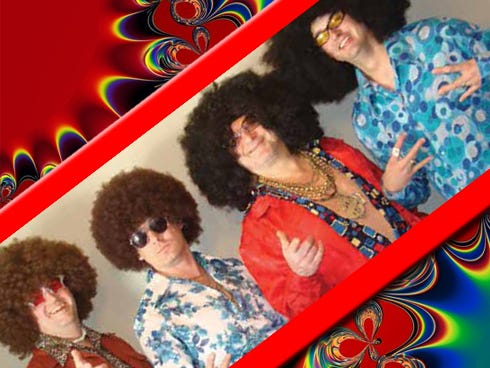
LavaLamp — featuring Lump Dilkins (AKA Dr. Pump), Sugar Valentino (AKA Sugar V), The Right Reverend Turner Brown (AKA DooDoo, AKA Da Rev), Lars Moosecock (AKA The Meat Mallet) — will perform Thursday at Mattie Kelly Fine & Performing Arts Center amphitheater in Niceville.

NICEVILLE — The Niceville Valparaiso Chamber of Commerce and Northwest Florida State College will present LavaLamp, in concert, 7-9 p.m. April 16 at the Mattie Kelly Fine & Performing Arts Center  amphitheater.

Attendees are encouraged to wear their favorite 1970s outfit to participate in a costume contest during intermission.

Open-seating tickets are $10 each for adults, and $5 each for children 12 and younger. Pets are not allowed. Purchase at the chamber office, 1055 E. John Sims Parkway, Niceville; the Mattie Kelly Arts Center Box Office, 100 College Blvd., Niceville; or the night of the concert.

Seats are available first-come, first-served. Concert-goers may also bring picnics, lawn chairs and blankets.

One 20 A Modern Bistro, along with other chamber member restaurants, will sell food throughout the concert for cash only.

Contact the chamber, 678-2323 or events@nicevillechamber.com, or see www.lavalampband.com for more information.

This article originally appeared on Crestview News Bulletin: '70s tribute band to perform Thursday at Niceville arts center

CROSE: Here's why many people don't sympathize with doctors

I have ongoing health issues that make life challenging. I am not complaining; the Lord saved me from death through prayers, doctors and hospitals.

But after I was released from the hospital, finding a primary care physician in Crestview was frustrating. I don't drink, smoke or take drugs, so I am not sure why I was an "unfavorable" patient. One medical practice straight out told me, "Dr. (name withheld) doesn't want you as a patient."

I did finally find a medical practice, and really like my practitioner. However, I dislike some office policies. Since I almost died due to a serious skin infection, I am at risk when I have skin inflammations. And Thursday night, I had a real problem.

Friday morning, I called the doctor's office and was told that I could have an appointment Monday. I asked the receptionist to please give a note to my provider stating what was wrong with me, and asked whether they would please call in some antibiotics.

Absolutely not, she said. "We can't diagnose you over the phone."

I explained that this is an ongoing issue, not a phone diagnosis, but she refused — three times — to take a note.

I finally said, "I will either be dead by Monday due to the infection or I'll be fine."

"Then you need to go to the E.R.," she said.

I understand the receptionist doesn't make the rules, but she certainly enforced them, ensuring I had no access unless I paid for an office visit. It didn't matter that my health was suffering, or that I was an established patient. 

We are still paying off medical bills, and our deductible is astronomical. Since the Affordable Care Act, we no longer have co-pays. Instead, we pay out of pocket for all medical expenses until the deductible is met.  So we don't have funds to run to the E.R. because a doctor's receptionist refuses to notify the appropriate person.

Experiences like this one are why many average citizens don't care if doctors, hospitals and clinics suffer under Obamacare.  They feel the medical establishment doesn't really care about patients — just their finances.

As a former CFO, I realize how much money it takes to keep a medical practice open, but there is room for compassion. 

There are many kind, godly, caring physicians out there, and I thank you for your medical care.

For the rest of you, lighten up on your office wardens.

Janice Lynn Crose lives in Crestview with her husband, Jim; her brother, Robb; her two rescue collies, Shane and Jasmine; and two cats, Kathryn and Prince Valiant.

This article originally appeared on Crestview News Bulletin: CROSE: Here's why many people don't sympathize with doctors

'Passing on the blessings': NWF residents rally for Belizean boy

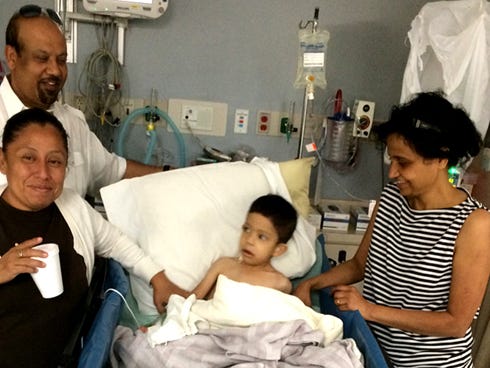
Julio Chi, a 4-year-old from Orange Walk, Belize, recovers from Friday morning surgery. His mother, Angelica; pediatrician, Crestview's Dr. Joseph Peter, and Peter's wife, Bernadine, flank him.

CRESTVIEW — Until today, Julio Chi had a branchial cleft cyst, a congenital abnormality that resulted in a lump on the side of his neck. 

"Because of this, the boy doesn't grow well and he gets repeated respiratory infections — mainly upper respiratory infections," Dr. Joseph Peter, a Crestview pediatrician, said.

The result is what he called global developmental delay: "He doesn't talk now," Peter said. "He just makes some noises here and there."

But three physicians — Peter, of Crestview Pediatrics, along with Dr. Joseph Siefker and Dr. Richard Barnett, of Fort Walton Beach Medical Center — and numerous Northwest Florida residents, want to see a better life for this 4-year-old Belizean boy.

ANNUAL MISSION

Operation Medical Care — a group of Crestview area volunteers including Peter and his wife, Bernadine — visits Belize each year to provide free services for impoverished residents.

Last fall, Angelica Chi walked 5 miles from her Orange Walk home seeking care for her son.

All of Julio's vaccinations — for polio, measles, mumps and rubella — were current, Bernadine said. But the cyst could easily be treated with a corrective surgery unavailable in the Central American nation.

Because of this, and her finances, Angelica said she never imagined that Julio would receive the surgery. The single mother of two — including another son, Juan, 15 — washes people's clothes for a living and takes home the equivalent of $5 U.S. a day.

In addition to lack of funds, she said she lacked emotional support from her children's father.

"When I tell him the baby's sick, he tell me, "I am not a doctor, I don't have no money for him," she said Wednesday.

Little did she know, Northwest Florida residents were determined to care for Julio.  

'GENEROUS PEOPLE'

"Very generous people," including Our Lady of Victory Catholic Church parishioners, the Knights of Columbus and the Engel family raised enough money to cover the Chis' airfare and lodging for what could be a month in America, Bernadine Peter said.

Her husband, along with Siefker and Barnett, are providing health care services at no charge.

Wednesday, the Chis visited Crestview Pediatrics for a blood pressure checkup.

Friday, surgeons performed a fistulectomy, removing a fistulous tract that caused some of the problems. “It’s gone really well,” Siefker said after the surgery.

Additional procedures included removal of Julio’s tonsils and adenoids, and work to correct a defect in his ear tubes. “This child’s adenoids and tonsils were so bad he couldn’t breathe through his nose," Siefker said. "And he’s had so much fluid in his ears, so this is really going to make a marked difference in his life.”

'VERY REWARDING'

Barnett, who participates in annual medical mission trips to South America, said he appreciates the chance to help people like Julio.

“It is very rewarding to help someone who doesn’t have the means to help themselves," he said. "You see what’s out there that people just don’t have access to. “Once you realize that need is out there, it’s hard not to do it.”

Peter said he is optimistic about the surgery's effect on Julio's health.

"Hopefully, after this correction he'll be able to say a few words."

In the meantime, Crestview residents have taken Angelica — who came to America for the first time with just one bag — clothes shopping at Wal-Mart and to meals at places like La Rumba. 

In addition, Melissa Channing Hill donated  some shirts, pants and a jacket after seeing a Facebook post about the need.

Brittany Board  also said she felt compelled to contribute to the effort.

"We had been blessed with quite a few clothes that were given to us for some of our foster children and were not able to use all of them (pants, shirts, etc.) Nothing on this earth really belongs to us anyway so why not give to someone who can use it! By giving to others in need, I feel we are just passing on the blessings that God gave to us."

All that Northwest Florida residents have done for the Chis has left them with a good impression of America, Angelica said.

"It's the first time I come visit here but I like… it's good.

Email News Bulletin Editor Thomas Boni, follow him on Twitter or call 850-682-6524.

Email News Bulletin Staff Writer Brian Hughes, follow him on Twitter or call 850-682-6524.

This article originally appeared on Crestview News Bulletin: 'Passing on the blessings': NWF residents rally for Belizean boy


Crestview cancer survivor: Listen to your body, get tested

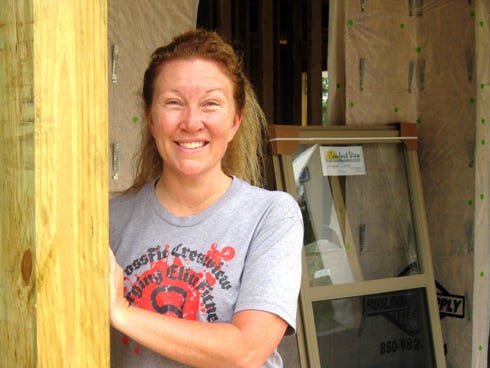
Crestview cancer survivor Jeri Toolan — on a job scene with her family’s construction company — says she maintains her active lifestyle thanks to a colonoscopy that detected her cancer early.

Editor's Note: Cancer survivors, family members and others are preparing for Crestview's American Cancer Society Relay For Life. Teams will have at least one member continuously walking the circuit 6 p.m. to 6 a.m. April 24-25 at Shoal River Middle School. Visit www.relayforlife.org/crestviewfl for more information.

CRESTVIEW — Jeri Toolan credits a family doctor-recommended procedure for nine cancer-free years.

After the 2006 birth of her third child, she initially attributed pain in her abdomen to childbirth's residual effects.

But the pain became more severe.

“I had a sharp pain in my right side, like a knife in my stomach, when I stood up,” Toolan said. “I worked at a desk a lot so I just didn’t stand up as much … I saw my ‘little girl’s’ doctor and he said I had to have a hysterectomy. So I went to my family doctor.”

He ordered a colonoscopy, an exam that detects abnormalities in the large intestine and rectum. As Toolan came out of anesthesia from the procedure, she saw her surgeon, who referred her to a Birmingham surgeon.

The goal was to ensure her colon could be reattached after a cancerous section was removed. “Otherwise, you’re on the (colostomy) bag,” Toolan said, referring to a prosthetic device people wear to collect waste from a surgically created opening.

Though her colon was re-attached, and she avoided having to receive chemotherapy after surgery, she annually must get a colonoscopy, which her insurance carrier only covers every other year.

“I was truly blessed by catching it (cancer) so early,” Toolan said.

Due to early detection, Toolan maintains a busy lifestyle, being a mom, checking progress on her family’s construction company job sites and conducting CrossFit boot camps.

One in 20 people — slightly more men than women — will be diagnosed with colon cancer, the third leading cancer-related death, according to the American Cancer Society.

A colonoscopy can be simple and painless, so Toolan said she is surprised that people still avoid having it done.

“People say, ‘I don’t have a history (of cancer).’ Well, I didn’t have a history.

“… My thought is, if your stomach hurts, you need to have a colonoscopy, plain and simple. You never know. You just never know.”

MORE INFORMATION

Colonoscopy (koe-lun-OS-kuh-pee): an exam that detects changes or abnormalities in the large intestine and rectum.

A long, flexible tube is inserted into the rectum. A tiny video camera at the tube's tip allows the doctor to view the inside of the entire colon.

If necessary, polyps or other abnormal tissue can be removed through the scope, and tissue samples can be taken. — Source: Mayo Clinic

Email News Bulletin Staff Writer Brian Hughes, follow him on Twitter or call 850-682-6524.

This article originally appeared on Crestview News Bulletin: Crestview cancer survivor: Listen to your body, get tested

'Little Women' auditions scheduled

CRESTVIEW — View from the Stage will hold auditions for “Little Women” beginning next week.

Actors can audition 5:30-7:30 p.m.  Friday, April 17 and 2-4 p.m. Saturday, April 18 in the fellowship hall of Palm Chapel, 201 Cadle Drive. 

This Louisa May Alcott classic, adapted for the stage by Emma Reeves, has 15 roles for males and females ranging in age from teen to adult. 

Come prepared to read, with a resume of experience if you have any, a headshot or recent photo and a 60- to 90-second monologue emphasizing emotion.

Performance dates are tentatively set for July 24-26. Visit the Crestview Community Theater Facebook page or www.ViewFromTheStage.com for further details or to become a production sponsor.

This article originally appeared on Crestview News Bulletin: 'Little Women' auditions scheduled

EXTENSION: Here's a hay alternative for livestock feed

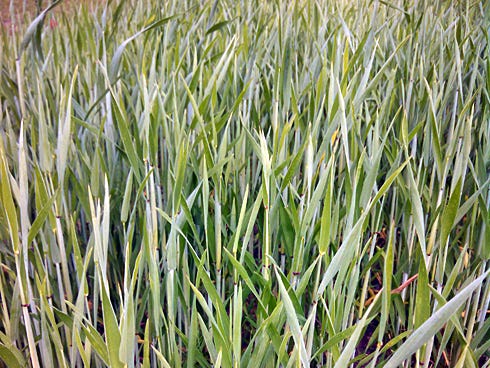
You can learn more about triticale, a cool-season forage, during the University of Florida's Institute of Food and Agricultural Sciences' Cool Season Forages Field Day, scheduled for April 16 at the Okaloosa Extension office in Crestview.

Using cool-season forage is an economical option for livestock feed in the winter and early spring. These forages are usually higher in crude protein and total digestible nutrients.

Our area's cool-season forages include ryegrass, clovers, Austrian winter peas, vetch and cereal grains such as rye, oats, wheat and triticale.

A clean-tilled seedbed is desirable to establish cool-season forages.  Over-seeding can be effective if done properly.

First, remove excess warm-season forages, such as bahiagrass and bermudagrass, as hay or by grazing. Disc bahiagrass pastures to 30 percent disturbance.  Bermudagrass pastures require a pasture drill or no-till drill to plant cool-season forages.

Clovers tend to prefer a heavier clay soil, but white clover mixed with ryegrass can be established on flatwood sandy soils. Legumes such as clovers require correct inoculants on the seed.

Cool-season grasses include small grains and ryegrass. These are higher in nutrients than our warm-season grasses. They provide green forage during most months that our warm-season grasses are dormant.

WHAT: Cool Season Forages Field Day

WHEN: 3-7 p.m. April 16

WHERE: University of Florida's Institute of Food and Agricultural Sciences Extension Office, 3098 Airport Road, Crestview

COST: $10; meal included. 

CONTACT:http://okaloosa.ifas.ufl.edu/ag/, 689-5850 or email bearden@ufl.edu.

This article originally appeared on Crestview News Bulletin: EXTENSION: Here's a hay alternative for livestock feed

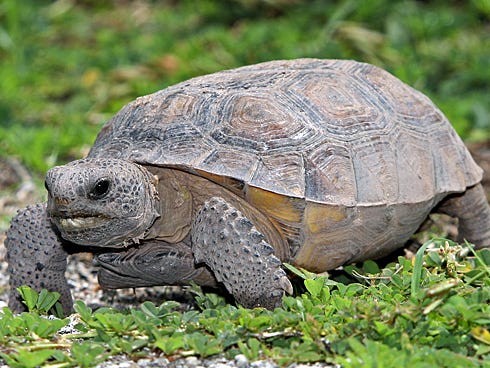
'Helping' this turtle in the water could kill it

If you see a turtle on the beach, don't "help" it into the water, the Florida Fish and Wildlife Conservation Commission states. It may drown.

The Florida Fish and Wildlife Conservation Commission wants residents to know that not all turtles can swim.

The FWC received three reports of well-intentioned good Samaritans incorrectly releasing gopher tortoise hatchlings into the ocean.

Gopher tortoises cannot swim well, and can easily drown. Because gopher tortoises often nest in dunes adjacent to sea turtle nesting beaches, correct identification of these terrestrial animals is important before deciding what action, if any, is necessary.

You can inspect turtles' limbs from a distance to distinguish  gopher tortoises from sea turtles. Gopher tortoises have toes, with claws on each toe. Sea turtles have flippers, with one or two claws present on each foreflipper.

See baby gopher tortoise photos at http://bit.ly/1F63Dep and baby sea turtles at http://bit.ly/1GYGzxB.

All five Florida sea turtles species are federally endangered or threatened and managed under the Endangered Species Act as well as under Florida Statutes; the gopher tortoise is listed under state law.

If you spot any of these species in danger on the beach, call the FWC’s Wildlife Alert Hotline at 888-404-FWCC (3922) or call #FWC or *FWC on your cell phone.

This article originally appeared on Crestview News Bulletin: 'Helping' this turtle in the water could kill it

Here's why Northwest Florida lawns are so frustrating

Why are lawns so difficult or frustrating here? The answer involves a combination of factors.

We are not far enough north to benefit from the better soils, even though the extreme northern portion of Northwest Florida, bordering Alabama, does have richer soils with better water and nutrient holding capacities. These better soils result in a more favorable root environment with roots being more competitive and resilient.

Something else happens in more northern areas. The heavier soils and colder temperatures (sometimes resulting in the soil freezing) are natural means of inhibiting and/or controlling certain soil dwelling pests.

For example, nematodes are not nearly the concern in northern lawns. Many people who move to our area have never heard of these microscopic roundworms that play havoc in our warm, sandy soils. After a lawn has been in place for a number of years, allowing the nematode population to reach a threshold, the lawn begins to decline.

Other soil dwelling pests that northerners don’t have to deal with include ground pearls, small scale-like insects. Mole crickets are not a pest much north of Central Alabama. Years ago, a representative with the company that manufactured the once popular mole cricket insecticide Oftanol told me that in the absence of the state of Florida, they would not sell enough Oftanol to keep it on the market.

We are not far enough north to use the more trouble free northern grasses to create a permanent lawn. These include bluegrasses, fescues and ryegrasses. At best, these grasses can be used to overseed our lawns during the cooler fall and winter months to create a temporary winter lawn. But they will not survive our hot, wet summers.

We are not far enough south to benefit from the lack of freezing temperatures during winter. Late freezes can injure our lawns. A late freeze that occurred on April 8 in Crestview a number of years ago resulted in lawns with seventy percent kill from that late freeze. This typically does not happen in Central and South Florida.

We deal with saltwater issues, high humidity, tropical storms, an array of lawn insects and diseases, extremes in rainfall and temperatures, etc.

It’s no wonder most people become frustrated with their lawns.

Larry Williams is an agent at the University of Florida's Institute of Food and Agricultural Sciences Extension office in Crestview.

LEARN MORE:

LAWN CARE IN NORTHWEST FLORIDA SEMINAR: 10:30 a.m. April 7, Crestview Public Library, 1445 Commerce Drive, Crestview. Coffee and cookies served starting at 10 a.m. 682-4432 or  689-5850.

This article originally appeared on Crestview News Bulletin: Here's why Northwest Florida lawns are so frustrating

Today’s investors have less certainty, but potential opportunities

Today's world is vastly different from the one that existed in, say, 1974.

Innovations such as the Internet, smart phones, tablets and social media have made our lives more enjoyable, efficient and productive in many ways, and have vastly improved our access to the world’s knowledge.

Yet when it comes to investing, many of us may face more challenges today than we might have in the past.

At least two factors are responsible for this apparent regression.

First, following a quarter-century during which U.S. workers’ income rose fairly steadily, “real” wages — wages after inflation is considered — have been flat or declining since about 1974, according to the U.S. Bureau of Labor Statistics.

Second, during this same period, we’ve seen a large drop in the percentage of private-sector workers covered under a “defined benefit” plan — the traditional pension plan in which retired employees receive a specified monthly benefit, with the amount determined by years of service, earnings history and age.

So unlike your 1950s and 1960s counterparts, you may not be able to count on a rise in real wages, and you may not have the promise of a regular pension.

What, then, can you do to improve your prospects for eventually achieving a comfortable retirement?

First, in the absence of a formal pension, you will need to create your own retirement plan. Consider all the opportunities available.

If your employer offers a 401(k) or similar account, such as a 403(b), contribute as much as you can afford — at the very least, put in enough to earn your employer’s matching contribution, if one is offered. And even if you participate in your employer’s plan, you may also be eligible to open an IRA.

If you’re self-employed, you still have options such as an SEP IRA or a “solo 401(k).” While these accounts may differ from each other in terms of eligibility, income restrictions and contribution limits, they both offer the same key benefit: the ability to defer taxes on your earnings for many years, typically until retirement.

As for your next main challenge — the need to compensate for stagnant real wages and the subsequent difficulty of boosting your savings — what can you do?

For one thing, you will need a reasonable percentage of your portfolio — both inside and outside your IRA, 401(k) and other retirement plans — devoted to growth-oriented investments.

The value of growth vehicles, such as stocks and stock-based instruments, will always fluctuate. But you can help control this risk by owning a mix of investments, including stocks, bonds, Treasury bills, certificates of deposit and other securities. Keep in mind, though, that while diversification can reduce volatility's impact on your holdings, it can’t guarantee profit or always protect against loss.

As far as attaining rising wages and enjoying guaranteed retirement payments, we don’t have the “certainties” that many people had in the 1950s and 1960s.

But you can still help brighten your future — through diligence, discipline and determination to explore opportunities available to you.

This article was written by Edward Jones for use by your local Edward Jones financial adviser.

This article originally appeared on Crestview News Bulletin: Today’s investors have less certainty, but potential opportunities

error: Content is protected !!