Please ensure Javascript is enabled for purposes of website accessibility
Skip to main content
Advertisement

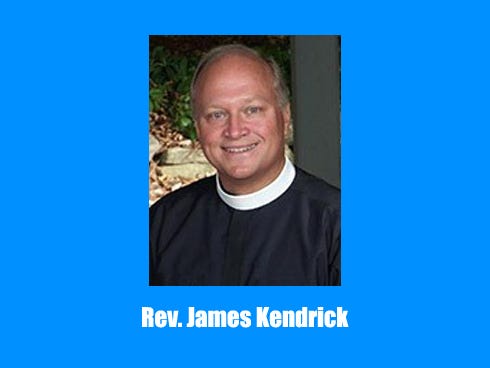
Episcopal bishop-elect to visit Crestview area on Sunday

CRESTVIEW — The Episcopal Diocese of the Central Gulf Coast's bishop-elect will visit Northwest Florida on Sunday.

The Rev. James Russell Kendrick will be at The Episcopal Church of the Epiphany's 10 a.m. service. Epiphany is located at 424 Garden St., off Highway 85 behind the Okaloosa County Teachers Federal Credit Union.

Kendrick will be ordained and consecrated 2 p.m. Saturday, July 25 in the Mobile Civic Center Expo Hall in Mobile, Ala.

The Fort Walton Beach native earned a Bachelor of Arts in architecture and marketing from Auburn University. In 1995, he received a Master of Divinity from Virginia Theological Seminary in Alexandria. He and his wife, Robin, have two children, Aaron and Hannah. 

Kendrick — who served as rector of St. Stephen's Episcopal Church in Birmingham, Ala., from 2007-2015 — was elected bishop of the Episcopal Diocese of the Central Gulf Coast on Feb. 21, 2015.

The Episcopal Diocese of the Central Gulf Coast includes 62 churches and about 20,000 members in southern Alabama and the Florida panhandle.

This article originally appeared on Crestview News Bulletin: Episcopal bishop-elect to visit Crestview area on Sunday

Square and line dance with the Sand Spurs at the Crestview library

CRESTVIEW — The Crestview Public Library is offering a presentation on square and line dancing tomorrow. 

The Sand Spurs, a Northwest Florida Square & Round Dance Association member, will perform 10:30 a.m. July 7 at the library, 1445 Commerce Drive, Crestview. 

Children age 6 through adults can watch or participate in learning basic square and line dancing steps.  Miriam Merriwether and her dance partner will also give a cued ballroom demonstration.

This article originally appeared on Crestview News Bulletin: Square and line dance with the Sand Spurs at the Crestview library

350 children strengthen their faith at Crosspoint church in Crestview

CRESTVIEW — A number of North Okaloosa children are closer to Jesus Christ following Crosspoint's Vacation Bible School, a church spokesperson said.

350 children and 160 volunteers gathered last week at the PJ Adams Parkway church for five days of sessions.

Adults, teenagers and children worshiped, sang, created artistic designs, played and celebrated the theme, "Everest: Conquering Challenges with God's Mighty Power." 

"At Crosspoint, children are the most important members, and raising up this generation to love and obey God is of highest priority," the spokesperson said.

The church's mission is "connecting people to Christ," she said.

Call 678-4411 or see www.yourcrosspoint.org to learn more about the church. 

This article originally appeared on Crestview News Bulletin: 350 children strengthen their faith at Crosspoint church in Crestview

Pace theater schedules 'Lost in Yonkers' performances

PACE — The Panhandle Community Theatre presents "Lost In Yonkers," written by Neil Simon and directed by Gail Ready, July 16-19 and 23-26. Performances are 7:30 p.m., with Sunday matinees at 2:30 p.m.

The cast includes these Northwest Florida residents, listed after their characters' names:

•Grandma Kurnitz, Donna Quinn

•Eddie, Ken Armitage

•Bella, Bonnie Marks

•Louie, Joe Perna

•Gert, Rebecca Frazier

•Jay, Logan Locklear

•Arty, Andrew Mathews

In Brooklyn, 1942, Evelyn Kurnitz has just died following a lengthy illness. Her husband, Eddie Kurnitz, needs to take a job as a traveling salesman to pay off the medical bills incurred, and asks his stern, straight-talking mother if his two early-teen sons, Jay and Arty, can live with her and their Aunt Bella Kurnitz in Yonkers. She reluctantly agrees.

Jay and Arty don't like their new living situation; they're afraid of their Grandma, and find it difficult to relate to their crazy Aunt Bella, whose slow mental state is manifested by perpetual excitability and a short attention span, which outwardly comes across as a childlike demeanor.

Into their collective lives returns one of Eddie and Bella's other siblings, Louie Kurnitz, a henchman for  some gangsters. He is hiding out from Hollywood Harry, who wants what Louie stole and is hiding in his small black bag.

Jay and Arty's mission becomes how to make money fast so that they can help their father and move back in together, which may entail stealing the $15,000 their Grandma has hidden somewhere.

Bella's mission is to find a way to tell the family that she wants to marry Johnny, her equally slow movie theater usher boyfriend; the two could also use $5,000 of Grandma's hidden money to open their dream restaurant.

And Louie's mission is to survive the next couple of days.

WANT TO GO?

WHAT: "Lost In Yonkers," written by Neil Simon and directed by Gail Ready

WHEN: July 16-19 and 23-26; performances include evenings, 7:30 p.m., and Sunday matinees at 2:30 p.m.

WHERE: 4646 Woodbine Road, Pace. Call 221-7599 for directions and more details.

COST: Tickets are $15 each. Order at www.panhandlecommunitytheatre.com/reservations.html

This article originally appeared on Crestview News Bulletin: Pace theater schedules 'Lost in Yonkers' performances

Crestview pediatrics office sets open house

Dr. Joseph Peter

CRESTVIEW — Sacred Heart Medical Group Pediatrics in Crestview will host an open-house reception 10 a.m. to 2 p.m. Thursday, July 16 at 332 Medcrest Drive in Crestview. Lunch will be provided.

The office — which includes Dr. Joseph Peter and advanced nurse practitioner Lindsey Mann-Badyrka — recently joined Sacred Heart Medical Group’s regional network. Two pediatricians — Dr. Jennifer Heegard and Dr. Lisa Currier — have also joined the practice.

Peter has more than 25 years' pediatrics experience, spanning nearly three continents. He has served the Crestview community since 1998 and is known for his community service, particularly annual mission trips to Belize.

•Lindsey Mann-Badyrka is a nurse practitioner with experience working in intensive care and cardiovascular surgery at the University of Alabama at Birmingham.

•Jennifer Heegard is a board-certified pediatrician who previously practiced in San Antonio, Texas, and worked in the pediatric emergency room at the Children’s Hospital of San Antonio.

•Lisa Currier is a board-certified pediatrician who has served as chair of pediatrics and a member of the medical executive committee at Vail Valley Medical Center in Colorado.

This article originally appeared on Crestview News Bulletin: Crestview pediatrics office sets open house

State health department in Okaloosa cautions about dangers of fireworks

CRESTVIEW — The Florida Department of Health in Okaloosa County is cautioning the public to make sure their family is safe this Fourth of July weekend.

Fourth of July is synonymous with barbecues, parades and fireworks displays, but along with all the festivities are plenty of visits to emergency rooms.

In 2013, eight people died and about 11,400 were injured badly enough to require medical treatment after fireworks-related incidents, according to the U.S. Consumer Product Safety Commission. While the majority of these incidents were due to amateurs attempting to use professional-grade, homemade or other illegal fireworks or explosives, 40 percent were from legal, less powerful devices.

Fireworks also are responsible for thousands of home fires each year. The National Fire Protection Association reports that in 2011, fireworks caused about 1,200 structure fires.

DOH-Okaloosa recommends enjoying fireworks at a public display conducted by seasoned professionals and reminds everyone to be responsible when using legal fireworks.

What fireworks are legal in Florida?

The only fireworks legal for use by consumers who don't possess a special permit in Florida are those that fall into the category known as "sparklers." Those include items such as sparklers, fountains, snakes, and glow worms. Florida law prohibits the recreational use of any fireworks that fly through the air or explode, such as Roman candles, bottle rockets and mortars.

Sparklers

Every year, young children can be found along parade routes and at festivals with sparklers in hand, but they are a lot more dangerous than most people think. Parents don't realize they burn at about 2,000 degrees – hot enough to melt some metals. Sparklers can quickly ignite clothing, and many children have received severe burns from dropping sparklers on their feet.

The National Safety Council provides these fireworks safety tips:

•Never allow young children to handle fireworks.

•Older children should use them only under close adult supervision.

•Anyone using fireworks or standing nearby should wear protective eyewear.

•Never light them indoors.

•Only use them away from people, houses and flammable material.

•Only light one device at a time and maintain a safe distance after lighting.

•Never ignite devices in a container.

•Do not try to re-light or handle malfunctioning fireworks.

•Soak unused fireworks in water for a few hours before discarding.

•Keep a bucket of water nearby to fully extinguish fireworks that don't go off or in case of fire.

This article originally appeared on Crestview News Bulletin: State health department in Okaloosa cautions about dangers of fireworks

Russian and Soviet art on display at NWFSC

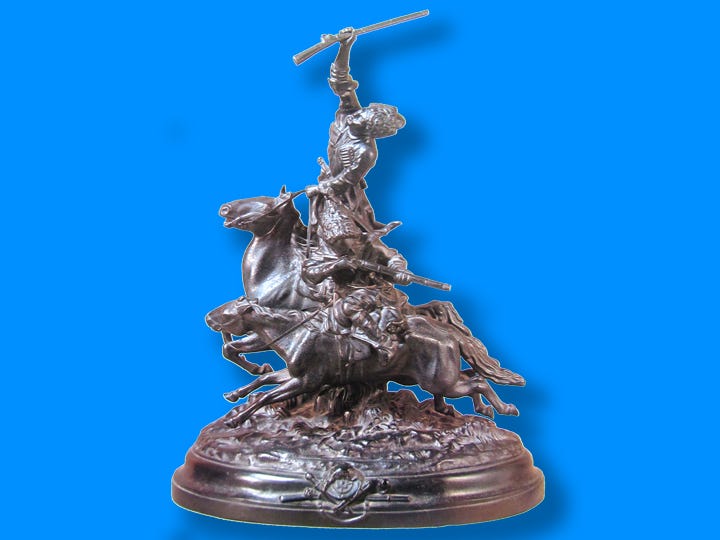
“The Horseriders” is typical of sculptures from the Russian Kasli Ironworks by Evgeni Alexandrovich Lanseray and depicts Caucasian trick riders.

NICEVILLE — From the grandeur of the Russian Imperial era to the darkness of the Soviet Union, visual arts from the region we collectively call “Russia” are on exhibit at Northwest Florida State College Mattie Kelly Arts Center.

See photos from the "Of Empires" exhibit>>

“Of Empires: Russian and Soviet Art” is an exhibition culled from the private Collection of Jim Rabourn, a Fort Walton Beach resident whose U.S. civil service duties took him throughout Asia and Europe over his 39-year career.

At its height, the former USSR encompassed 15 separate republics — fully a sixth of the planet — and more than 100 ethnic groups before its collapse in 1991. Paintings and objects from the former Soviet Union highlight this vastness and cultural diversity.

Among them are paintings by Boris and Luba Brinskih that depict less familiar “Russian” landscapes such as eastern mosques, bazaars and deserts.

Imperial Russian decorative arts include works by influential late-19th-century sculptor Evgeni Alexandrovich Lanseray, whose work influenced the rise of the modern art movement in Europe.

Paintings by Vasily Pukirev depict the class struggles that would lead to the Bolshevik Revolution and ultimately, the establishment of the USSR. His “The Tax Collector” aptly captures that theme.

No collection of Imperial Russian visual art would be complete without pieces from the House of Fabergé, the celebrated jewelers to the last members of the ruling Romanov dynasty.

Exhibited Faberge pieces include a silver sugar basket and gold and jewel-encrusted cufflinks that are attributed to the celebrated studio.

The exhibit, and Raina Benoit’s installation, “The Tree Army” in the neighboring Holzhauer Gallery, are on display until July 18.

WANT TO GO?

WHAT: “Of Empires: Russian and Soviet Art”

WHEN: Weekdays 10 a.m. to 4 p.m. and 90 minutes prior to most Mainstage productions, through July 18

WHERE: McIlroy Gallery, Matty Kelly Arts Center, Northwest Florida State College

COST: Free

NOTES: Paintings, sculpture, Kasli Ironworks and Fabergédecorative arts from the Collection of Jim Rabourn

Email News Bulletin Staff Writer Brian Hughes, follow him on Twitter or call 850-682-6524.

This article originally appeared on Crestview News Bulletin: Russian and Soviet art on display at NWFSC

3 Okaloosa parks receive advisories for hazardous water

FORT WALTON BEACH — Three Okaloosa County parks have potentially hazardous bathing water, the Florida Department of Health in Okaloosa County stated this week.

WaysidePark, Okaloosa Island; Lincoln Park, Valparaiso; and Fred Gannon Rocky Bayou State Park, Niceville failed tests based on EPA-recommended enterococci standards.

Enteric bacteria’s presence indicates fecal pollution from stormwater runoff, pets and wildlife or human sewage.

Call689-7859 or 833-9247 for more information.

This article originally appeared on Crestview News Bulletin: 3 Okaloosa parks receive advisories for hazardous water

BEARDEN: Debunking 3 myths about GMOs

Genetically modified organisms include genes from another plant or bacteria that add a desired trait, like the golden rice grains, right, compared to regular rice.

I’ve started writing this article many times over the past few years. I always pitch the idea since it is so controversial, but it is my job to pass along unbiased scientific knowledge to our county and state's citizens.

So, here I go! All I ask is that you keep an open mind about the subject. 

GMOs, or genetically modified organisms, are plants genetically altered through an unnatural process. Through genetic engineering, one plant or bacteria's genes can be moved into a plant so that it exhibits a desired trait. GMOs' common traits include herbicide resistance and pest resistance.

Many myths surround GMOs — and let’s face it, even the name sounds somewhat sci-fi and scary.Let's talk about those.

Myth: Most fruits and vegetables are GMOs

Actually, there are just eight commercially available GMO crops. Two more genetically modified crops — apples and potatoes — have been approved but aren’t in grocery stores yet. 

GMO crops available now:

•Field and sweet corn

•Soybeans

•Cotton

•Canola

•Sugar beets

•Papaya

•Squash

•Alfalfa

Myth: GMO crops require more pesticides

Actually, herbicide-resistant GMO crops allow farmers to spray certain herbicides on the crop without harming the crop.

Herbicides used on these crops were chosen for this purpose because they are less toxic to humans and animals. They are not very persistent in the environment;  they break down into benign compounds relatively quickly. This has allowed farmers to stop using very toxic chemicals for weed control. 

In the case of pest-resistant GMOs, pesticide sprays have been decreased or eliminated completely. In either case, the goal of genetically modified crops is to reduce the amount of pesticides sprayed and to use less toxic pesticides to control pests such as weeds, insects and fungi.

Myth: GMO crops are linked to disorders and diseases

Actually, no rigorous scientific studies link GMO crops to any disorder or disease. On the contrary, over 1,785 independent health studies on GMO crops demonstrate the opposite.

In addition, each new GMO goes through a rigorous approval process that takes many years. Development of the new genetically modified apple began in 1997 and test orchards were planted in 2003-2005. This new apple was just approved for growers to purchase and plant. 

MORE ON GMOs

See www.biofortified.org, www.geneticliteracyproject.org or www.gmoanswers.com for more information about genetically modified foods.

Jennifer Bearden is an agent at the University of Florida's Institute of Food and Agricultural Sciences Extension office in Crestview.

This article originally appeared on Crestview News Bulletin: BEARDEN: Debunking 3 myths about GMOs

SHANKLIN: Are you prepared for the unexpected?

When you’re working to achieve your financial objectives, you will encounter obstacles.

Some of these can be anticipated — for example, you won’t be able to invest as much as you want for retirement because you have to pay your mortgage.

Other challenges can’t be easily anticipated, but you can still plan for them — and you should.

Obviously, the word “unexpected,” by definition, implies an unlimited number of possibilities. However, at different stages of life, you may want to watch for some “expected” unexpected developments.

For example, during your working years, be prepared for:

•Emergency expenses — If you needed a major car or home repair, could you handle it? What about a temporary job loss?

These events are costly — especially if you are forced to dip into your long-term investments to pay for them.

To help guard against these threats, try to build an emergency fund containing six to 12 months’ living expenses, held in a liquid, low-risk account.

•Investment risk and market volatility — Extreme price swings are unpredictable, and they can affect your investment success.

To defend yourself against wild gyrations in the market, build a diversified portfolio containing quality investments.

While diversification, by itself, can’t protect against loss or guarantee profits, it can help reduce the effect of volatility on your portfolio.

And here’s one more thing you can do to cope with the ups and downs of investing: Maintain a long-term perspective. By doing so, you won’t be tempted to overreact to short-term downturns.

•Long-term disability — One-third of all people between ages 30 and 64 will become disabled at some point, according to the Health Insurance Association of America.

Disabilities can be economically devastating.

As part of your benefits package, your employer may offer some disability insurance, but you may need to supplement it with private coverage.

•Premature death — None of us can really predict our longevity. If something happens to you, would your family be able to stay in your home? Could your children still attend college?

To protect these goals, you need adequate life insurance.

As you approach retirement, and during your retirement years, you may want to focus on these challenges:

•Living longer than expected — You probably don’t think that “living longer than expected” is necessarily a bad thing.

However, a longer-than-anticipated life span also carries with it the risk of outliving your money.

Consequently, you may want to consider investment solutions that can provide you with an income stream that you can’t outlive.

Also, you’ll need to be careful about how much you withdraw each year from your various retirement and investment accounts.

•Need for long-term care — If you had to stay a few years in a nursing home, the cost could mount to hundreds of thousands of dollars.

These expenses could jeopardize your financial security, so you’ll need to protect yourself.

You could “self-insure,” but as that would be extremely costly, you may want to “transfer the risk” to an insurance company. A financial professional can help explain your choices.

None of us can foresee all the events in our lives. But in your role as an investor, you can at least take positive steps to prepare for the unexpected — and those steps should lead you in the right direction as you move toward your important goals.

This article was written by Edward Jones for use by your local Edward Jones financial adviser.

This article originally appeared on Crestview News Bulletin: SHANKLIN: Are you prepared for the unexpected?

error: Content is protected !!