Sure, pampering yourself — getting massages, facials and other treatments — makes you feel like royalty, but it brings serious health benefits, too.
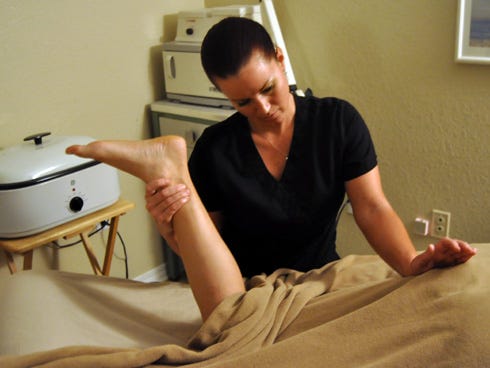
1. Massages provide balance. "Massage helps the body to maintain homeostasis," said Lisa Hiekel, a massage therapist at Adiva Day Spa in Crestview. That means "the well-being of the body, because (massage) works with all the different systems, helps relieve the muscles, helps circulation, helps promote metabolism.
WATCH: Experts explain the benefits of pampering yourself>>
"It helps to de-stress the body, which the mind and the body obviously work together."
Hiekel said she has had the satisfaction of seeing visible relief from pain on her clients' faces in as little as an hour.
Shoshanna Richardson, massage therapist at Hello Beautiful Salon in Crestview, said massage "is really helpful for people who have chronic pain, lower back pain," plantar fasciitis and shin splints. "It can help athletes increase blood flow and oxygen to the muscles," in addition to providing general relaxation, she said.
Massage therapy after the first trimester helps pregnant women address stress, neck and shoulder issues, Richardson said.
"Stress causes so many illnesses … the older we get, the harder we have to try to (perform at those previous levels)," said April Hinton, owner and stylist at Hello Beautiful.
2. Facials help remove toxins. People notice your face first, so it's important to keep it looking good, regardless of your age, says Diana Hill, a skin care specialist at Hello Beautiful.
But people get facials for more reasons than vanity.
"Facials increase circulating blood under the skin to aid in ridding the skin of waste that causes puffiness," she said.
By stimulating the lymphatic system, "facials help to detox lymph node waste, smooth fine lines, and promote collagen and elastin production" — considered "building blocks" that support the skin and help reduce wrinkles and sagging — she said.
"Facials truly do slow down the aging process and allow your face to look smother, healthier and more radiant," Hill said.
The procedure also exfoliates dead skins cells and "optimizes the benefits of skin care products," she said.
In addition to deep cleaning the face, facials "promote cellular regeneration," says Denee Manchester, of Adiva Day Spa.
"So our cells are constantly turning over, and constant cell renewal is what prevents age spots, wrinkles, losing elasticity in the skin — we want our skin to be in constant exfoliation just to help with that all-the-time glow," she said.
3. Salon and spa services make us feel better. "Women come here to enjoy themselves and relax," Blonde Bellagio owner and stylist Sherry Seymour said. "Relaxing and getting pampered is a stress reliever."
She said many of her customers with headaches find relief and re-energize after getting shampoos and scalp massages.
"Clients can be having a bad day and getting a good hairdo will improve their whole day," Nancy McLaney, the salon's receptionist, said.
"We like to make every woman in the world know she's beautiful."
This article originally appeared on Crestview News Bulletin: 3 health benefits for pampering yourself in Crestview (VIDEO)