Please ensure Javascript is enabled for purposes of website accessibility
Skip to main content
Advertisement

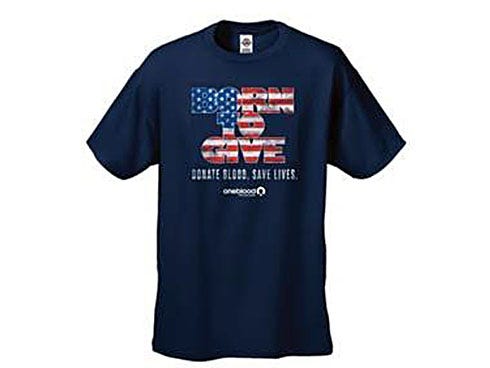
Donate blood, save lives this Labor Day weekend

CRESTVIEW — Sept. 4-7, blood donors will receive a “Born To Give” T-shirt, a $10 gift card and a wellness check-up of blood pressure, pulse, temperature and iron count, along with a cholesterol screening.

OneBlood's blood mobile will be available 4-9 p.m. Saturday, Sept. 5 at Marquis Cinema 10, 2828 Richbourg Lane, Crestview. Donors also get two free movie tickets.

Alternatively, you may donate at the OneBlood Donor Center, 2400 S. Ferdon Blvd., Crestview.

Hours are:

●Noon to 5 p.m. Sundays

●10 a.m. to 5:30 p.m. Mondays and Thursdays

●8 a.m. to 5:30 p.m. Tuesdays and Fridays

Generally healthy people age 16 or older who weigh at least 110 pounds can donate blood. A photo ID is required.

This article originally appeared on Crestview News Bulletin: Donate blood, save lives this Labor Day weekend

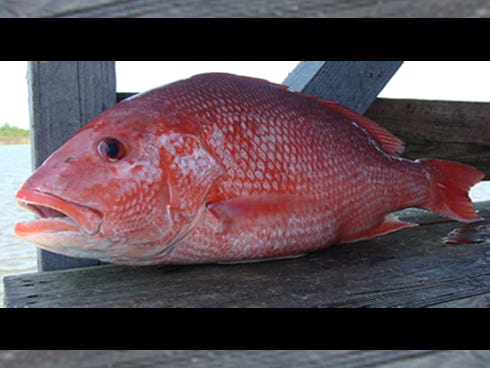
Red snapper season reopens Labor Day weekend

The 70-day recreational red snapper season for Gulf state waters opens Labor Day weekend, Sept. 5-7. It will remain open Saturdays and Sundays in September and October; harvest ends Sunday, Nov. 1.

State waters in the Gulf include the shore up to 9 nautical miles; federal waters extend 200 nautical miles from that point.

Northwest Florida anglers targeting red snapper from a private boat must sign up for the Gulf Reef Fish Survey before fishing at a local retail store, tackle shop or tax collector’s office. Call 1-888-FISHFLORIDA (347-4356) or see http://www.myfwc.com/license for details.

This article originally appeared on Crestview News Bulletin: Red snapper season reopens Labor Day weekend

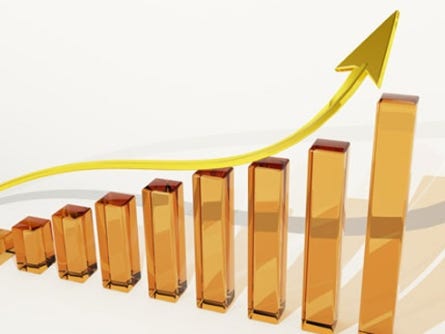
Keep income producers working hard — even when rates are low

Next week, we observe Labor Day, which honors all the hard-working men and women in the United States.

As an investor, you’d like to think all your investments are working hard, too — including the ones producing income. But can your income-oriented investments be productive when short-term interest rates are at historic lows? Or can you find other investment possibilities that could potentially boost your cash flow?

The answer to both these questions is yes — but you may have to take a closer look at where you stand on the risk-reward spectrum.

For example, you might need to consider longer-term income producers, which typically pay higher yields than shorter-term equivalents. Longer-term fixed-rate securities, such as bonds, must pay these higher rates to reward investors, who face interest-rate risk — possibility that interest rates will rise, causing the existing bonds' value to fall — and inflation risk, the threat of losing purchasing power by the time long-term bonds have matured. Still, you may be willing to accept these risks in exchange for higher yields.

However, you may be looking for income producers that can work hard for you without having to hold them for a long period to maturity. This is because the “yield curve” — the line that plots the relationship between yield and maturity — is fairly steep right now, which, in English, means you can gain noticeably higher yields by modestly increasing your investments' maturity.

Your financial adviser can suggest some short-term and intermediate-term vehicles that may be appropriate for your needs. While these rates will still not be as high as those offered by longer-term vehicles, they do offer flexibility — along with less interest-rate risk and inflation risk.

You can also help protect yourself from these risks by building a “ladder” of short-, intermediate- and longer-term bonds and certificates of deposit. Your ladder can help you weather changing interest-rate environments. When market rates are low, you’ll still have your longer-term bonds and CDs earning higher interest rates. And when market rates rise, you’ll be able to reinvest your maturing short-term investments at the higher levels. If you need the cash, you can liquidate the maturing bonds and CDs.

Thus far, we’ve only looked at fixed-rate investments — but you may also be able to boost your income by owning dividend-paying stocks. Some companies have paid — and even increased — their stock dividends for many years in a row. If you’re not in need of the cash, you can reinvest the dividends and boost your ownership stake, which is a key to increasing your wealth. But if you do need the money, you can take the dividends as cash.

Keep in mind that income producers are not a “sure thing” because companies can decide to reduce, or even discontinue, their dividends at any time. In addition, history tells us that you may experience more price volatility from stocks, and they can be worth more or less than the original investment when sold.

As you can see, you can find ways to keep income-producing investments working hard for you, despite prevailing low interest rates. So consider your options, weigh the risks — and then work with your financial advisor to make choices right for you.

This article was written by Edward Jones for use by your local Edward Jones financial advisor.

This article originally appeared on Crestview News Bulletin: Keep income producers working hard — even when rates are low

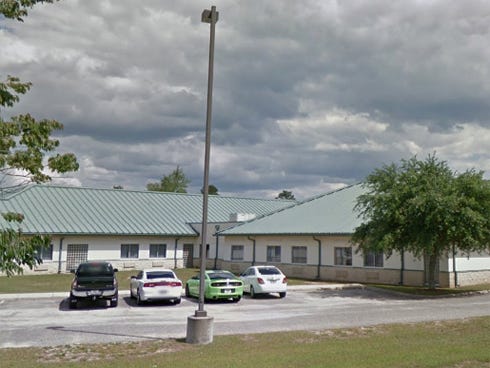
Crestview nursing home recognized for excellence

TALLAHASSEE – Shoal Creek Rehabilitation Center is among nine Florida nursing homes recognized with a Governor’s Gold Seal Award. The long-term care facilities deliver consistently excellent quality of care to their residents, according to the Agency for Health Care Administration.

Other recipients include Bridgeview Center, Ormond Beach; Brooksville Healthcare Center, Brooksville; The Chateau at Moorings Park, Naples; Concordia Manor, Saint Petersburg; Conway Lakes Health & Rehabilitation Center, Orlando; Highlands Lakes Center, Lakeland; Melbourne Terrace Rehabilitation Center, Melbourne; and Riverwood Center, Jacksonville.

Gold Seal recipients must be in operation a minimum of 30 months before the date of application and the facility must:

•Meet high quality of care standards that places them in the top 15 percent in their region or top 10 percent in the state

•Have no Class I or II deficiencies within 30 months before application

•Provide evidence of financial soundness and stability

•Participate in a consumer satisfaction process involving residents, family members and guardians

•Involve families and members of the community in the facility on a regular basis

•Have a stable workforce

•Have an outstanding record with the State Long Term Care Ombudsman Council within the 30 months preceding application

•Provide targeted in-service training to meet training needs identified.

The Gold Seal Award program was developed and implemented by the Governor’s Panel on Excellence in Long Term Care, which includes people appointed by the Governor’s Office, Agency for Health Care Administration, Department of Health, Department of Elder Affairs, Leading Age Florida, Florida Health Care Association, Florida Life Care Residents Association and the State Long Term Care Ombudsman.

This article originally appeared on Crestview News Bulletin: Crestview nursing home recognized for excellence

SHANKLIN: Diversify your investment risk

All investments carry risk. But, as an investor, one of the biggest risks you face is that of not achieving your long-term goals, such as enjoying a comfortable retirement and remaining financially independent throughout your life. To help reach your objectives, you need to own a variety of investment vehicles — and each carries its own type of risk.

If you spread your investment dollars among vehicles that carry different types of risk, you may increase your chances of owning some investments that do well, even if, at the same time, you own others that aren’t. As a result, you may be able to reduce the overall level of volatility in your portfolio. (Keep in mind, though, that diversification can’t guarantee a profit or protect against all losses.)

To diversify your risk factors, you first need to recognize them. Here are some of the most common types of investment risk:

• Market risk — This is the type of risk that everyone thinks about — the risk that you could lose principal if

the value of your investment drops

and does not recover before you sell it. All investments are subject to market risk. You can help lessen this risk by owning a wide variety of investments from different industries and even different countries.

• Inflation (purchasing power) risk — If you own a fixed-rate investment, such as a certificate of deposit (CD), that pays an interest rate below the current rate of inflation, you are incurring purchasing power risk. Fixed-income investments can help provide reliable income streams, but you also need to consider investments with growth potential to help work toward your long-term goals.

• Interest-rate risk — Bonds and other fixed-income investments are subject to interest-rate risk. If you own a bond that pays 4 percent interest, and newly issued bonds pay 5 percent, it would be difficult to sell your bond for full price. So if you wanted to sell it prior to maturity, you might have to offer it at a discount to the original price. However, if you hold your bonds to maturity, you can expect to receive return of your principal provided the bond does not default.

• Default risk — Bonds, along with some more complex investments, such as options, are subject to default risk. If a company issues a bond that you’ve bought and that company runs into severe financial difficulties, or even goes bankrupt, it may default on its bonds, leaving you holding the bag. You can help protect against this risk by sticking with “investment-grade” bonds — those that receive high ratings from independent rating agencies such as Standard & Poor’s or Moody’s.

• Liquidity risk — Some investments, like real estate, are harder to sell than others. Thus, real estate is considered more “illiquid” than many common investments.

Make sure you understand what type of risk is associated with every investment you own. And try to avoid “overloading” your portfolio with too many investments with the same type of risks. Doing so will not result in a totally smooth journey through the investment world — but it may help eliminate some of the “bumps” along the way.

This article was written by Edward Jones for use by your local Edward Jones Financial Advisor.

This article originally appeared on Crestview News Bulletin: SHANKLIN: Diversify your investment risk

HELMS: God has prepared us for life's storms

With meteorology and modern technology, we can react to storms well before they affect us, the Rev. Richard Helms says. But natural disasters, like this week's Tropical Storm Erika, aren't the only threats out there. Life's storms — financial difficulties, marital problems, struggles at work, and physical and mental problems — also are brewing around us. Reading the Bible helps people survive these events, Helms says.

While I was writing this column, there was a storm brewing south of us.

It dissipated and did not affect Northwest Florida, but please pray for the Island of Dominica, which was devastated.

It got me thinking: With weather events, many people worry; others prepare.

For some people, natural disasters are a good reason to visit friends or relatives in other areas. Others believe we are safe and comfortable where we are; they wait it out. 

With meteorology and modern technology, we can react to storms well before they affect us. But natural disasters aren't the only threats out there. Life's storms — financial difficulties, marital problems, struggles at work, and physical and mental problems — also are brewing around us.

But does anything signal life storms?

Yes: God's Word.

We are warned that spiritual storms can, and will, result in physical storms with great damage. Yet God has already seen the approaching storm, and has provided strength, healing and deliverance for us in Jesus Christ's atoning work.

Why would He do this? 

Because we are His creation and He loves us, enough to allow His Son to die that we might have salvation; that we might have a more abundant life. 

There are things we do not understand; events we would rather not face, but who better to depend on than He, who sees all, knows all, and is in all places? 

For years, I struggled with God, not understanding why He took my grandfather with cancer.

One day, I allowed Him to get in a word or two, and He showed me that He had indeed answered my prayer and healed my grandfather, for he would never again face the pain, or see things that I would do that would have hurt him more than the cancer. 

As Paul stated, to be absent in the body is to be in the Lord's presence.

My friend, your storm is being limited by God and your obedience to Him. Make your preparations to meet Him now, not later. 

Get to a place of confidence with Him that when you see your storms, you can know he has prepared you; has a greater plan; and this storm is just an inconvenience to be overcome and brought through. 

Be safe; God is watching over you.

The Rev. Richard Helms serves at Miracle Acres Ministries, 3187 E. James Lee Blvd., in Crestview.

This article originally appeared on Crestview News Bulletin: HELMS: God has prepared us for life's storms

Life Line health screens scheduled at Crestview church

First United Methodist Church will host medical screenings by Life Line Screening 8 a.m. to 5 p.m. Sept. 11 at the church, 599 8th Ave., Crestview.

Five screenings will be offered that scan for potential health factors that lead to strokes, heart disease, bone density and more. 

Register for a Wellness Package which includes 4 vascular tests and osteoporosis screening from $149 ($139 with our member discount). 

All five screenings take 60-90 minutes to complete. To register and receive a $10 discount off any package priced above $129, call 1-888-653-6441 or visit www.lifelinescreening.com/community-partners.

This article originally appeared on Crestview News Bulletin: Life Line health screens scheduled at Crestview church

CROSE: Listening is a lost skill

Listening has become a lost skill. It seems like an easy thing to do, listen, but I believe it has become complicated by our need to show we are prepared at all times.

Being prepared is a good thing; not paying attention when one should be listening is not.

I do not generally count myself as a good listener; I talk too much. My grandmother used to say, "God gave you one mouth and two ears, so that you can listen twice as much as you talk." Of course, that was lost on a little child.

As I get older, though, I am learning to listen more and trying to develop listening as a skill.

Many of us, when we should be listening, instead are thinking about how we want to respond, so we fail to truly listen to what is being said.

In workplace meetings, we don't want to seem unprepared, so rather than concentrating on what is being said, and the accompanying facial expressions and other nuances that go along with the words, we concentrate on formulating our response. 

We all want to look intelligent when asked a question; and while I don't advocate being surprised and unaware for the inevitable questions, I do advocate listening and watching carefully. Many times, we can learn as much from the unspoken facial expressions of others as we do from the spoken words. It is amazing what one can learn just by watching and listening.

What has gotten me to thinking about listening is visiting with our elderly family members, friends and church members. Many times what they want is for someone to just listen.

They don't need answers, just a kind person to listen to their concerns and their remembrances of days gone by. When I take the time to really listen to an elderly person, it is an eye-opening and joyous moment.

Take time to truly listen and spend time with your elderly family members. They have so much wisdom to impart. You will be amazed at the knowledge they can share if you will take the time to sit down, listen and let them speak without interruption.

Share some kindness this week, by truly listening to others.

If you see me on my jaunts around town, please say "hi."

Janice Lynn Crose lives in Crestview with her husband, Jim; her two rescue collies, Shane and Jasmine; and two cats, Kathryn and Prince Valiant.

This article originally appeared on Crestview News Bulletin: CROSE: Listening is a lost skill

OKALOOSA COUNTY CENTENNIAL: Carpooling to church with Miss Maude

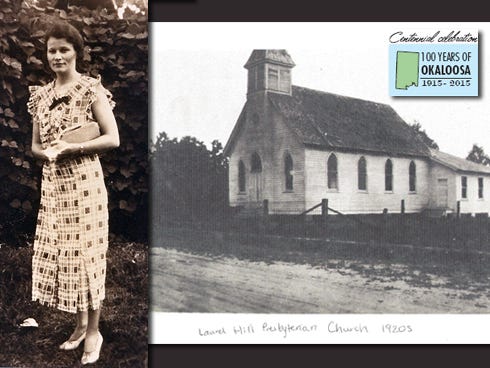
For decades, Maude Campbell, known to legions of Laurel Hill Sunday school children as Miss Maude, gathered youngsters in her two-door Ford and took them to Laurel Hill Presbyterian Church, seen in the 1920s.

LAUREL HILL — Folks in present-day Okaloosa County have been attending area churches since the early 1940s. One of the earliest churches in the entire state was Yellow River Baptist Church, constituted June 14, 1840, in Oak Grove.

Getting to church wasn’t always easy, for both the faithful and the pastor. Neighbors would load into one another’s wagons, or, if they lived within walking distance, would make the trek on foot.

The advent of the automobile made church-going easier, though no less bouncy, especially over rural Okaloosa County’s rough roads.

In Laurel Hill, countless residents still remember riding to church and Sunday school with “Miss Maude,” who was a devout member of the Presbyterian church.

Throughout the late 1930s, 1940s and until she married and left town in 1957, Maude Campbell drove around the community every Sunday morning, gathering children, packing them into her two-door Ford sedan and whisking them off to church.

KIDS’ GIRLFRIEND

“She was our girlfriend,” the Rev. Donnie Cadenhead said. “At that time she was probably in her fifties, but she was our girlfriend.”

Cadenhead, today pastor of Victorious Life Church on Blueberry Curve north of Crestview, said it was thanks to her and her family that he is where he is today.

“Our parents weren’t active in a church so we most likely wouldn’t have gone to church if it hadn’t been for Miss Maude,” he said. “She had a great influence on us.”

Cadenhead still has fond memories of Sunday mornings packed like sardines in the two-door Ford.

“I think one Sunday we had 23 kids in that car,” he said. “We would all sit in one another’s laps. We didn’t have seatbelts in those days.”

Cadenhead said Maude Campbell wasn’t the only member of her family who influenced many a Laurel Hill child.

“Miss McDonald Campbell and her mother, Miss Christian, and Miss Bertie Ann Campbell, who became a school teacher, had a great influence,” he said. “And there were Mr. Clyde and Miss Louise Campbell, who ironically, didn’t have children of their own.

“The Campbell family really had a lot of influence on us.”

LIPSTICK MEMORIES

Maude Campbell purposely wore a heavy coat of lipstick to leave her mark as she’d give the children affectionate kisses when she’d drop them off after church.

“She made sure we got some of that lipstick on our little cheeks,” Cadenhead said. “We made like we didn’t like it, but we loved that lipstick and wore it home proudly.”

One day in 1957, Archie Champion, a salesman who sold goods to Miss Maude’s grocery section of Campbell Company, won her hand, and legions of young Sunday school children were devastated.

“She got married on us and it broke our hearts,” Cadenhead said.

From then on, Laurel Hill’s children of God were in the loving hands of Miss Maude’s relatives.

This article originally appeared on Crestview News Bulletin: OKALOOSA COUNTY CENTENNIAL: Carpooling to church with Miss Maude

KATRINA 10 YEARS LATER: Crestview community opened hearts, homes and churches for storm evacuees (PHOTOS)

CRESTVIEW — On Friday, Aug. 26, 2005, Hurricane Katrina tracking aimed the storm directly at Okaloosa County. The county emergency management team went into full emergency mode.

But instead, the Category 3 typhoon veered west and another storm hit the area.

Starting that weekend, a steady tide of storm evacuees — and later, refugees — streamed into the county, many of them to the Crestview area.

Residents responded, opening homes, churches, hearts and wallets to people from Louisiana and Mississippi, many of whom had been rendered homeless, jobless or both, literally overnight.

The Crestview Wal-Mart’s parking lot became an impromptu RV camp as Gulf Coast evacuees sought refuge from the storm.

Veronica Myers welcomed more than two dozen New Orleans relatives to her Crestview home, and is about to do so again.

“I had 27 people staying with me then, and they’re coming back next week to celebrate the 10-year anniversary,” she said.

“To me it was a good experience,” Myers said. “I’d come home from work and my house would be cleaned and dinner would be cooked.

“You’d think there’d be arguments and complaints, but everybody worked together and they enjoyed it. I enjoyed the company. And it was fun.”

A MIGHTY ROC

Almost 300 evacuees moved into Central Baptist Church’s Recreation Outreach Center, staying for three or more weeks, Mary Jo Woodruff, the ROC’s facilities manager at the time, recalls.

“Honestly, we received a blessing because we had the opportunity to help them,” Woodruff said. “When they came in there, they were mighty sad people. Many of them didn’t know if they lost their homes or family members.

“They’d get up early and watch the TV we’d set up for them. They’d just cry and say, ‘Oh that’s my aunt or my kinfolks, or their house.’”

A Sept. 3, 2005, News Bulletin article by reporter Ken Nielsen describes an outpouring of help, from daily pastry deliveries by Publix to ERA Realty’s donation of dozens of air mattresses.

Cox Communications hooked up cable service to a TV donated by a Fort Walton Beach appliance rental store, and internet service to a pair of donated computers.

City government under former mayor George Whitehurst, the Crestview Area Chamber of Commerce and other area churches joined the relief effort, Woodruff said.

COMMUNITY OUTPOURING

“There wasn’t a church in Crestview that didn’t come forth and help and donate,” Woodruff said. “Even one of the animal societies set up a place for (evacuees’) pets outside.”

“Pastor (Dwight) Baggett from the Macedonia Baptist Church …has sent me over here to…pick up dirty laundry, wash it, dry, and bring it back,” Nielsen reported Mary Jones told Central Baptist’s Rev. Derrick Boring.

Woodruff said many of the refugees pitched in to help their hosts with cleaning, cooking and other chores at the ROC.

“They didn’t just come in and want us to wait on them,” she said.

Woodruff said though volunteers’ tasks first appeared overwhelming, the outpouring of community support made their mission a success.

“The Lord provided everything we needed there,” Woodruff said. “It was almost unbelievable what was done. I still every now and then hear from the evacuees.”

The Crestview hosts vow that if a similar situation arises, they’d do it all over again.

“To this day, if something would happen, we’d still open our doors,” Myers said.” You never know what will happen.”

This article originally appeared on Crestview News Bulletin: KATRINA 10 YEARS LATER: Crestview community opened hearts, homes and churches for storm evacuees (PHOTOS)

error: Content is protected !!