Please ensure Javascript is enabled for purposes of website accessibility
Skip to main content
Advertisement

DUNNING: Tracking Florida's early native plant uses
September's fourth Friday is set aside to honor and celebrate Native Americans. 

So on Sept. 25, let’s reflect on how Northwest Florida tribes used plants native to the area. This science is referred to as ethnobotany.

Generally, we can group plants' ethnobotanical uses into six applications: food, fiber, medicinal, construction materials, transportation and miscellaneous uses.

 INDIGENOUS PLANTS'  INFLUENCE

 Let's focus on the first three applications, so you can grasp native plants' influence.

Food: Many plants were food sources for Native Americans and early settlers in Florida.

Food plants included fruits, nuts, roots, grains and greens that varied by habitat, region and time of year.

Two examples of important food plants are fruits from saw palmetto, and starch from coontie roots. The heart of the cabbage palm — commonly called swamp cabbage — is still eaten in many rural areas. 

Fiber: Various plants' fiber was used for many purposes. For instance, cordage (rope) makes baskets, clothing and other everyday materials. Muscadine grapes' long stems were used to make deer snares. Palms provided fiber and construction material for shelters. Other fiber sources included wire grass and switch grass.

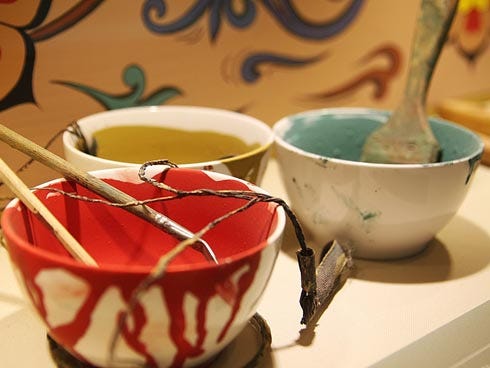
Dyes — which played important roles in Native American life, just as they do today — were used in coloring textiles, in craftwork (for pottery and basketry) and in ceremonies (for face painting and objects). Tickseed, Goldenrod and Wax Myrtle are used to create yellow hues. Elderberry and Pokeweed produce rosy red colors. 

Medicinal purposes: Perhaps one of  ethnobotany's most intriguing aspects is the use of native plants for medicinal purposes.

Red Maple was used for liver and skin disorders. Witch-hazel could be used to treat hemorrhoids and insect bites, as well as for teething infants.  Black-eyed Susan could be used to treat a cold, soothe earaches or ease pain and swelling from snakebites.

But don't attempt to replicate traditional herbal remedies. Many traditional herbal medicines are complex mixtures of different plant parts that must be gathered and prepared at different times of the year, mixed in specific proportions, and administered in scheduled doses of particular size and dilution. 

LOST INFORMATION

In the southeastern United States, including Florida, evidence indicates indigenous tribes traded or exchanged goods throughout eastern North America.

During the Mississippian Culture Period (1000 to 1700 A.D.), transfer of goods continued, and these uses began to be better documented. This provided information currently available about plants and their uses.

Spanish explorers, missionaries and settlers also brought new plants and information to Florida.

However, Native American peoples who lived in Florida during European settlement were destroyed by introduced diseases, forced labor, physical conflicts and other factors.

As a result, information on native plant species, and how they were used, was lost or destroyed.

Sheila Dunning is a commercial horticulture agent at the University of Florida's Institute of Food and Agricultural Sciences Extension office in Crestview.

As much as half of popular pharmaceuticals today reportedly have ethnobotanical origins. For instance, aspirin comes from willow trees' bark.

However, in the United States, herbal remedies are classified as nutritional supplements, rather than drugs, because most companies supplying herbal remedies cannot or will not pay for extensive clinical testing that the U.S. Food and Drug Administration requires.

DID YOU KNOW?

This article originally appeared on Crestview News Bulletin: DUNNING: Tracking Florida's early native plant uses


BROADHEAD: Let your speech convey God's greatness

The Letter of James describes the tongue as “a restless evil, full of deadly poison" — it certainly can be, the Rev. Mark Broadhead says. But the tongue is not the whole problem; after all, it simply conveys what is in the mind and heart. "And what is in our hearts condemns us," Broadhead says.

Verbal communication has three components: words, tone and body language.

Words make up 7 percent of the message; tone makes up 38 percent; and body language makes up 55 percent. When all three components convey the same message, our communication is fully integrated.

However, when talking on the telephone, we cannot see body language so we lose over half of our ability to communicate effectively.

When texting, emailing or writing, we lose 93 percent of our ability to communicate. Punctuation, capitalization, formatting and emoticons help, but do not make up the difference.

How about that!

Is it any wonder there is so much misunderstanding and miscommunication in the world?

Words are extremely important. The words we use can build up or tear down. They can stain lives and do irreparable damage; they can create enemies; they can cause strife; and they can break hearts.

The Letter of James describes the tongue as “a restless evil, full of deadly poison" — it certainly can be. But the tongue is not the whole problem; after all, it simply conveys what is in the mind and heart.

And what is in our hearts condemns us.

Jesus said, “What comes out of the mouth proceeds from the heart, and this is what defiles.”

James almost sounds fatalistic when he says, “But no one can tame the tongue — a restless evil, full of deadly poison. With it we bless the Lord and Father, and with it we curse those who are made in the likeness of God. From the same mouth come blessing and cursing.”

Are people really that double-minded? It seems like it.

You have heard people who one minute praise God for all his blessings; the next, they complain about not having enough. One minute, they praise God for the life they have in Jesus Christ; later, they complain when they face trials. One minute, they give thanks for food on their table; later, they complain that they have to work to pay the bills.

James makes an obvious admonition: “My brothers and sisters, this ought not to be so.”

How true.

If we are to bless our Lord, if we are to recognize we are children of God — as is everyone — our words must convey this. We must let God's loving presence permeate our whole life. And all our words need to reflect the loving grace we have received from God through Jesus Christ our Lord.

We ought not speak contradictory messages. Your words, your thoughts, your hearts all need to be integrated in such a way that you convey, in all times and places, God's greatness.

Remember: 55 percent of your message is through body language — what you do. How you live your life, the words you choose and how you say them convey what is in your heart.

The Rev. Mark Broadhead is pastor at Laurel Hill Presbyterian Church and First Presbyterian Church of Crestview.

This article originally appeared on Crestview News Bulletin: BROADHEAD: Let your speech convey God's greatness

CROSE: Mid-Bay Bridge Authority should explain tolls

Crestview resident Janice Lynn Crose says she's concerned about the Mid-Bay Bridge. "I have read the newspaper reports and still cannot figure out why principle payments were not made, while debt was substantially increased," she says. "A family couldn't run their household in this manner."

While I realize the Mid-Bay Bridge doesn't affect all of us in Crestview, it seems most of us go to Destin at one time or another and many use the bypass and bridge. 

Alas, the Mid-Bay Bridge Authority is once again raising tolls. 

I have read the newspaper reports and still can't believe how the debt ballooned the way it did.

As taxpayers, as well as users of the bridge, we deserve clear answers, not ambiguous excuses.

Blaming Regions Bank and the Florida Department of Transportation doesn't cut it. Why doesn't MBBA executive director Van Fuller have more answers?

Salaries are meant to be earned. Why, with a budget of millions, is the MBBA unaccountable to county commissioners, the taxpayers or the state?

What are other MBBA directors' salaries? I'll sign up to be a director — and you can be sure that consistent principle payments would be made.

It is time for the MBBA to open its books and be accountable for all the money it collects and spends.

In the meantime, I think many of us will space our trips across the bridge farther apart and come up with alternative places to shop and eat, further decreasing the amount of tolls collected.

My husband and I travel to Destin for the cats' veterinarian appointments, and occasionally for dinner and shopping, but when we return home, Jim inevitably takes U.S. Highway 98.

It's a circuitous route, but a pretty drive with no tolls. 

Janice Lynn Crose lives in Crestview with her husband, Jim; her two rescue collies, Shane and Jasmine; and two cats, Kathryn and Prince Valiant.

This article originally appeared on Crestview News Bulletin: CROSE: Mid-Bay Bridge Authority should explain tolls

Silvercrest in Crestview recognized for outstanding customer satisfaction

CRESTVIEW — Silvercrest Health and Rehabilitation Center in Crestview is celebrating an Excellence in Action award from My Inner View, a National Research Corporation program that focuses on long term care standards and expertise.

The honor recognizes long term care and senior living organizations that achieve the highest overall employee or resident satisfaction scores that fall within the top 10 percent of the My Inner View product Database.

A NRC spokesperson said the award is for providers of patient-centered care for an organization's residents, families and employees.

Silvercrest president Jamey Richardson said,  "We are thankful to our associates, who are committed to exceeding the service expectations of the patients and people we touch every day. As a company, we will continue to place associate and patient satisfaction as our highest priority."

Silvercrest has won the national award every year since 2011. For more information about the company, call 682-1903.

This article originally appeared on Crestview News Bulletin: Silvercrest in Crestview recognized for outstanding customer satisfaction

Women of Valor conference planned in Crestview

CRESTVIEW — Women of Valor, a group of women dedicated to mentoring females of all ages, will have a conference at 8:30 a.m. Sept. 19 at the Crestview Community Center.

Sherrell Compton, Women of Valor founder, said, "Our goal is to both model and teach Biblical principles so that each generation will know Jesus Christ." Each year, the group hosts two different workshops for girls ages 4-12 and 13-20.

"We have different professionals come in from our community, and they share their life experiences in the form of workshops," covering topics such as beauty, etiquette, respect and more, Compton said. This is all to help the girls understand the importance of proper life choices and that true beauty comes from within.

Workshops for the females, referred to as Beautiful Ones, are held in June and July. "Once they complete those," Compton said, "then we have the older girls do community outreach programs." They prepare and deliver toiletries and needed things to local nursing homes and hospice patients.

This year's community outreach was a partnership with Covenant Hospice, wherein WV trainees helped fulfill the wishlist of a 5-year-old hospice patient. "They usually go out into the community and we prepare things to take to different patients at the different nursing homes," Compton said. This gave them the "experience to minister to a person that is young."

This is a final requirement for them to be crowned "Beautiful Ones" at the annual WV conference in September. 

They share what they have learned over the summer with conference attendees and will be presented in a public forum and crowned by the reigning Miss Emerald Coast, Aisha Scott.

The conference includes guest speakers Robyn Helt and Jackie Colmon, both of Crestview, and music by Baker gospel group Gracefully Yours.

The program and conference are funded by local and surrounding communities through donations. Compton said, "We count it a privilege to be trusted with this endeavor each year."

For more information on the Women of Valor, visit www.thewomenofvalor.org.

Editor's Note: This story has been revised due to some incorrect information in the first article. Changes include the age range of older trainees and that all ages of women are mentored, as well as editing some wording for brevity and clarity.

Mattie Kelly Arts Center Galleries participating in The Smithsonian magazine's National Museum Day

NICEVILLE — Smithsonian magazine's Museum Day Live! is a one-day event on Sept. 26 highlighting the benefits of museum visits. On that day, with a ticket from the Smithsonian website, the public may visit participating venues free of charge.

The Mattie Kelly Arts Center Galleries at Northwest Florida State College, 100 College Blvd., Niceville is one of the Northwest Florida venues that are participating in the national project.

Artwork on display in the MKAC's Holzhauer Gallery includes items by Atlanta-based mixed media artist, Linda Mitchell. The McIlroy Gallery will feature a selection of New Guinea artifacts from the MKAC permanent collection.

In case people aren't sure of where we are, we're in the art section of NWFSC in Niceville. Our signs will be put to signify where we are and that we're open that particular Saturday. Feel free to use any additional information and pictures from our Facebook page.

To get a free Museum Day Live! ticket, visit http://bit.ly/1uWP9YA on the Smithsonian website.

This article originally appeared on Crestview News Bulletin: Women of Valor conference planned in Crestview

Crestview Manor cat senses residents' impending death (PHOTOS, VIDEO)

CRESTVIEW — Resident deaths are inevitable at nursing homes.

But at Crestview Manor, the dying, their family members and caregivers, along with facility staffers, receive comfort from an unexpected member of the facility’s staff.

Newman, one of the Manor’s two housecats, has a knack for identifying residents nearing the end of their lives, and he visits those in particular, according to staffers.

“He actually knows when our people are going to Jesus before we do,” director Becky Brice-Nash said Monday morning. “We thought it was a fluke, but he’s done it eight or 10 times now.

“We have a lady who’s probably on the bridge to go home. He immediately came in, comforted the hospice nurse and got on the bed with the resident.”

Danielle Crider, a nurse with the facility's partner, Emerald Coast Hospice, said she has seen Newman selectively visit dying residents too many times to call it a coincidence.

“It’s only when they’re to the point that they’re getting ready to pass away that he arrives,” Crider said.

'IT'S A COMFORT'

Manor staffers say Newman is Crestview’s version of Oscar, a cat who prowls Steere House Nursing and Rehabilitation Center's hallways in Providence, Rhode Island. Since 2007, Oscar has accurately visited more than 100 residents during their final hours.

Doctors throughout the country have offered a number of explanations for the phenomena. These range from a cat's sense of smell for odors associated with death; terminal patients' lack of movement; and dying people's lack of noise.

Brice-Nash said Newman’s presence isn't feared; it's seen as soothing. “With some who are crossing the bridge, when the family comes in and he’s there to greet them, it’s a comfort,” she said. “He comforts the residents, he comforts the staff and he comforts the family.”

“I’ve had a family tell me, ‘You know, that cat told us she (their loved one) was ready,’” Crider said.

'IT'S A WONDERFUL THING'

Newman came to Crestview Manor four years ago as an abused shelter kitten. He joined Sadie, an older cat who does not have the same sense of impending death.

He spends much of the day dozing on a bench in front of his favorite window when not patrolling the corridors. When he suddenly decides to visit a terminal resident, it signals that the end is near.

“It’s only when they’re transitioning that he shows up,” Crider said. “He finds his way to their room and comes in. He’ll circle my legs when I’m with them.”

“It’s his choice if he decides to go in with a resident,” Brice-Nash said. “When Newman goes into a room, we just think it’s a wonderful thing.”

'CLOSEST TO GOD'

Brice-Nash said when Crider was upset that her patient was dying, Newman comforted her nurse, too. “That’s the cool thing about Newman,” she said. “He knows who is in need of comfort.”

“He’ll just start roaming the halls,” Manor chaplain Bud Morgan said. “He stops and looks in a room and moves on. But sometimes, he’ll go into the room.”

Residents enjoy having Newman and Sadie as part of the manor’s family, Brice-Nash said.

“I like him,” resident Russell Bety said. “I just like cats, but he’s very special.”

Brice-Nash said it’s sad that many facilities don’t allow pets, particularly since studies show their presence can help people.

“It comforts the residents and helps them live longer,” she said. “We have to clean up a little cat hair, but we can deal with that.

"Dogs are very loving, but cats are closest to God.”

NEWMAN, THE CAT

Crestview Manor’s housecat — named after late Hollywood actor Paul Newman because “his eyes are like blue marbles" —  was an abused rescue kitten found on Okaloosa Island with a gaping sore on his side, Becky Brice-Nash, the facility's director, said.

She went into Petsmart four years ago “to buy goldfish food for the residents’ aquarium and I came out with $200 worth of cat.” Newman, who recovered from his injuries, now is a resident at the manor, where residents and staffers appreciate his companionship. “He’s such a good-tempered cat,” Brice-Nash said.

OSCAR

Oscar, a death-predicting cat at Steere House Nursing and Rehabilitation Center in Providence, Rhode Island, preceded Newman's talents.

“Within a half-hour the family starts to arrive," Dr. David Dosa described in the July 26, 2007, New England Journal of Medicine. "Chairs are brought into the room, where the relatives begin their vigil. The priest is called to deliver last rites. And still, Oscar has not budged, instead purring and gently nuzzling Mrs. K.

"A young grandson asks his mother, ‘What is the cat doing here?’ The mother, fighting back tears, tells him, ‘He is here to help Grandma get to heaven.’ Thirty minutes later, Mrs. K. takes her last earthly breath. With this, Oscar sits up, looks around, then departs the room so quietly that the grieving family barely notices.”

This article originally appeared on Crestview News Bulletin: Crestview Manor cat senses residents' impending death (PHOTOS, VIDEO)

SHANKLIN: When is it time to make portfolio changes?

The kids are back at school and summer vacations are now fading memories, so it must be autumn.

But the seasons don’t just move on the calendar — they also change in your life.

And, speaking of changes, you’ll have to make many of them as you move through the years — and that includes changes to your investment portfolio.

But how will you know when it’s time to take action?

Just as Mother Nature sends “signals” to indicate a change in seasons — blooming flowers, falling leaves, warmer or colder temperatures, and longer or shorter days — your portfolio will frequently “tell” you when you need to make adjustments.

Here are a couple of indicators you may want to heed:

• Out-of-balance portfolio — Even the best stocks can lose value when the overall market is down, but if you only own stocks, you could take a big hit during a downturn — and if it happens repeatedly, you may find it hard to even stay invested.

After all, stocks will always fluctuate in value, and protection of your principal is not guaranteed. Yet you can at least help defend yourself against market volatility by balancing your portfolio with a mix of stocks, bonds, government securities, certificates of deposit and other investments, with the percentage of each type of asset based on your individual goals, time horizon and risk tolerance.

• “Overweighting” of individual investments — Related to the point made above, you can also have too much money kept in a single investment, such as an individual stock or bond.

Sometimes, this “overweighting” can happen almost on its own, as when a stock, or stock-based vehicle, has increased so much in value that it now takes on a larger percentage of your portfolio than you had intended — possibly bringing with it more risk than you had intended, too.

As a general rule, no single investment should take up more than a small percentage of your entire portfolio.

Your own life may also send you some messages regarding changes you may need to make to your investment and financial strategies.

Here are just a few of the milestones that may trigger necessary moves:

• New child — You’ll need to review your life insurance to make sure it’s sufficient to help provide for a newborn or newly adopted child, should anything happen to you. You may also want to begin investing in a college savings vehicle, such as a 529 plan.

• New job — Assuming your new job offers you a retirement plan, such as a 401(k) or similar vehicle, you’ll have some choices to make. How much can you afford to contribute? How should you allocate your dollars among the investment choices offered in the plan? How can you best integrate your 401(k) or other plan into your overall investment portfolio to avoid duplication?

• Impending retirement — As you enter retirement, you may want to adjust your portfolio to help reduce its short-term fluctuations and to provide more current income opportunities. At the same time, you may still need to invest for growth — you could be retired for two or three decades, and you’ll need to stay ahead of inflation.

Pay close attention to the messages coming from your portfolio — and from your life. These “signals” will give you a good idea of when it’s time to make the right investment-related moves.

This article was written by Edward Jones for use by your local Edward Jones financial advisor.

This article originally appeared on Crestview News Bulletin: SHANKLIN: When is it time to make portfolio changes?

ANDERSON: Prevent this fungus from killing Okaloosa trees

Hypoxylon canker usually appears as pale patches on the tree's trunk, where bark is missing. Unfortunately, once it becomes enough of a problem to be noticeable, there are no easy options to fix it. In fact, the fungus itself is almost always a secondary problem; it moves in when other factors weaken the tree.

Many Okaloosa County residents have had problems with their oak trees this year.

Some trees have declined in health; others died. Several factors contribute to this issue, and not every tree may be suffering from the same combination of things.

However, one major culprit is hypoxylon canker, which is caused by a fungus normally present in oak trees' outer bark and usually doesn’t hurt them.

When other sources of stress weaken the tree, the fungus can quickly take over and eventually kill it.

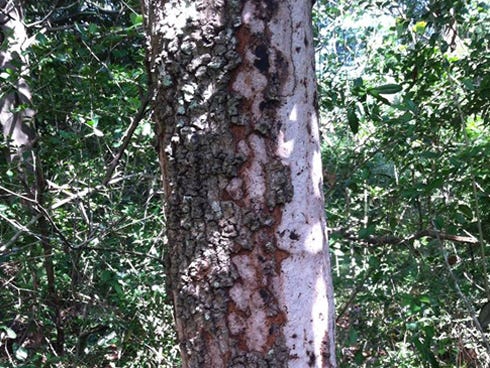
Hypoxylon canker usually appears as pale patches on the tree's trunk, where bark is missing.

Unfortunately, once it becomes enough of a problem to be noticeable, there are no easy options to fix it. In fact, the fungus itself is almost always a secondary problem;  it moves in when other factors weaken the tree.

Instead of trying to treat the canker, it is better to prevent sources of stress that could lead to disease such as hypoxylon canker taking over.

When planting trees, choose a location that's not too close to other trees, gets plenty of sunlight, and is not waterlogged or too dry.

Owners of pastures where animals — such as cattle or horses — graze should ensure that soil around the tree does not become too compacted. Exclude animals from the area where most roots are present or by aerating the soil.

Controlling moisture levels, if possible, can also help; too much or too little water for an extended period can cause stress.

If a tree succumbs to the disease, remove it. Dispose of the debris by burning to avoid spreading spores to other nearby plants.

Evan Anderson is an agent at the University of Florida's Institute of Food and Agricultural Sciences Extension office in Crestview.

This article originally appeared on Crestview News Bulletin: ANDERSON: Prevent this fungus from killing Okaloosa trees

North Okaloosa County church events announced

Send your church’s announcements to news@crestviewbulletin.com.

WOMEN'S BIBLE STUDY: The Eglin Chapel Protestant Tuesday Ladies' Bible study begins 9:30-11 a.m. Sept. 15 at the West Gate Chapel Annex, Eglin Boulevard, Eglin Air Force Base. Topic: "The Call of God." Details: Janette Gregg, 863-4264. 

ALL GOD’S CHILDREN & THE LIVING WORD WORSHIP CENTER REVIVAL: 7 p.m. nightly Sept. 16-18, 40 S. John Sims Parkway, Valparaiso. Guest: Evangelist Randy Fobbs of Word of Fire Ministries. Details: Deacon Victor King, 678-7632.

STRENGTH TEAM EVENT AT WOODLAWN: 6 p.m. Sept. 17-20, Woodlawn Baptist Church, 824 N. Ferdon Blvd., Crestview. Free admission. Strength Team members perform demonstrations of physical prowess and spiritual strength.

DAUGHTERS OF ZION CHOIR 18TH ANNIVERSARY: 5 p.m. Sept. 19, Eglin Chapel Center Annex, 202 N. 8th St., Eglin Air Force Base. Everyone with base access may attend. Linda Moore, 678-1938, or Sandy West, 279-4403.

TAILGATING PARTY: noon Sept. 27,  Eglin Chapel Center Annex parking lot, 202 N. 8th St., Eglin Air Force Base. Free food, games and music for anyone with base access. You may also attend the 9:30 a.m. service, if you wish. Wear flip flops and your favorite team attire, and bring lawn chairs. 882-0851.

JUSTIFIED TRIO CONCERT: 6 p.m. Oct. 12, Central Baptist Church, 951 S. Ferdon Blvd., Crestview. $10 donation at the door suggested. Libby White, 682-5525, www.LibbyAndFriendsGospelConcerts.com.

This article originally appeared on Crestview News Bulletin: North Okaloosa County church events announced

CROSE: Is your focus on heavenly or earthly gain?

"For all the saints, who from their labors rest…" is a hymn we sing at church. 

From what labors did you rest on Labor Day? 

Many of us enjoyed the day off work, but we still labored in different ways, such as cleaning the house or mowing the lawn. Others enjoyed barbecues, playing at the beach and shopping. (In my case, I wrote a newspaper article.)

Many people, especially those in retail, worked on Labor Day.

That's fine, too, because our hard work is a gift from God.

In the Bible, Ecclesiastes 3:13 states, "Every man who eats and drinks sees good in all his labor — it is the gift of God."

My husband and I have always felt that, whatever job we have, we are to do our work as unto the Lord, as it also states in the Bible.

Colossians 3:23-24 states, "Whatever you do, do your work heartily, as for the Lord, rather than for men; knowing that from the Lord you will receive the reward of the inheritance. It is the Lord Christ whom you serve." 

We may have a job we don't love, or a boss who can be difficult, but the Lord will bless the work of our hands when we work for His glory. 

This verse also applies to household chores we hate, such as scrubbing floors, cleaning litter boxes, doing laundry, yard work and so forth. 

It also applies to those who work or volunteer at churches, including nursery workers, Sunday school teachers, choir members, Bible study leaders and those who cook meals.   

As a Christian, I am to work for the Lord and, after my career is finished, I am to continue to do the Lord's work, bringing others to Christ.

Our labor on behalf of the Kingdom of God should never cease; God created us with a purpose; we are to please and enjoy Him with our entire being.

So, for whom do you work?  Where is your focus — on the prize of heaven, or earthly gain?

Janice Lynn Crose lives in Crestview with her husband, Jim; her two rescue collies, Shane and Jasmine; and two cats, Kathryn and Prince Valiant.

This article originally appeared on Crestview News Bulletin: CROSE: Is your focus on heavenly or earthly gain?

error: Content is protected !!