Please ensure Javascript is enabled for purposes of website accessibility
Skip to main content
Advertisement

Crestview church youth group exceeds goal to feed the hungry

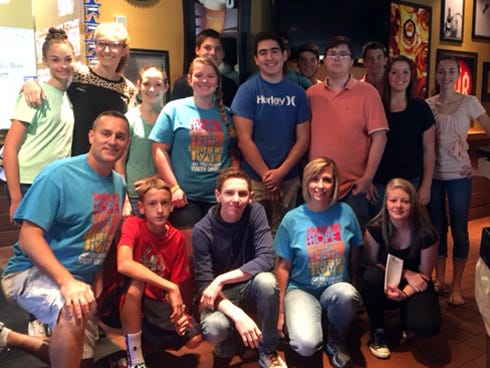
Joy Fellowship Pastor Joe Butryn gathers with the church's Senior High Youth Group members who recently collected 5,300 pounds of food for the poor. Bottom row, after Butryn: Bailey Palmer, Christian Watkins, April Butryn and Brooklyn Layfield. Top row: Marissa Butryn, Katelyn Chessher, Jewel Brooks, Crislynn Giles, Isaac Howard, Jordan Englebright, Chris Goodwin, Austin Walters, Brandon Prine, Hunter Phillips, Megan Ayala and Haleigh Butryn.

CRESTVIEW — The Joy Fellowship Senior High Youth Group has exceeded its goal: to collect 5,000 pounds of food for the poor.

Youth group members collected 5,300 pounds of food and donated it to the Crestview Pregnancy Center, New Beginnings Mission Center and to Sharing and Caring, according to a church spokesperson.

They completed the mission sooner than expected, too, meeting their deadline — to collect food from Jan. 1 to Dec. 31 — the last week in September.

"Our group is trying to make a difference in our community by putting others first and recognizing that there is a mission field in our own community," a church spokesperson said.

This article originally appeared on Crestview News Bulletin: Crestview church youth group exceeds goal to feed the hungry

Donate blood in Crestview, get this cool, spooky T-shirt

CRESTVIEW — A commemorative T-shirt from the One Blood organization is available to Northwest Florida residents who donate blood Oct. 19-31 at any donor center or bloodmobile.

To make a donation locally, visit the Crestview donor center at 2400 Ferdon Blvd. S., Suite B, Crestview as follows:

●10 a.m. to 5:30 p.m. Oct. 19, 22, 26, 29

●8 a.m. to 5:30 p.m. Oct. 20, 23, 27, 30

●noon to 5 p.m. Oct. 25

You may also visit these Big Red Bus bloodmobile locations:

●8 a.m. to 3 p.m. Oct. 28, Baker School, 1369 14th St., Baker

●noon to 3 p.m., Oct. 30, Coldwell Banker, 2514 Ferdon Blvd. S., Crestview

●12:30-4:30 p.m. Oct. 31, Hideaway Pizza, 326 Main St. N., Crestview

A One Blood spokesperson said, "This year’s 'Got Blood' T-shirt will no doubt fly off the shelves. It is one of the most highly prized blood donor T-shirts each year, and this year is no exception."

For other locations and hours or to set an appointment, visit oneblooddonor.org or call 1-888-936-6283.

Generally healthy people age 16 or older who weigh at least 110 pounds can donate blood. Photo ID is required. To learn more about the importance of blood donation and how donors can target the power of their blood type visit oneblood.org.

 Every two seconds someone in the U.S. needs a blood transfusion. Blood that is donated today will likely be transfused into a patient within two to three days.

This article originally appeared on Crestview News Bulletin: Donate blood in Crestview, get this cool, spooky T-shirt

North Okaloosa residents rally for breast cancer awareness

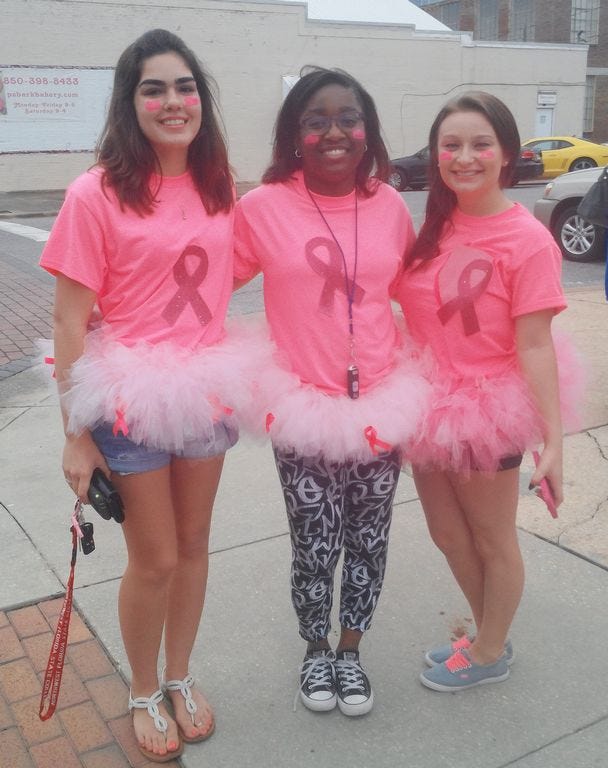
Northwest Florida State College students Shiloh Raymond, Jasmine Knox and Brittany Fahn are among Crestview area residents showing their support for Breast Cancer Awareness Month. Attending North Okaloosa Medical Center's Oct. 1 Pink Street Party on Main Street was one way to stand up for friends and loved ones diagnosed with cancer, they said.

CRESTVIEW — Women should check their breasts at least monthly, according to Dr. Kevin McIntosh, OB/GYN for North Okaloosa Physician Group.

"There's a couple of ways to do it," McIntosh says. "There's a circular pattern … where you go from interior to exterior around the breast, or you can do a linear pattern, where you just go up and down.

"The main thing is to just make sure all the breast is covered."

Examining breasts once a month — and a week after a menstrual cycle — is one way to detect abnormalities early, McIntosh said. Waiting five days after a period helps because hormonal changes could spur temporary — and misleading — thickening in the breast, according to WebMD.

Area residents can expect to hear many more tips throughout Breast Cancer Awareness Month.

Observances kicked off Oct. 1 during North Okaloosa Medical Center's Healthy Woman program and the Main Street Crestview Association's Pink Street Party, which featured vendors, information booths and guest speakers. In addition, the group set the gazebo beside Okaloosa County's courthouse aglow with pink lights.

Events continue with Making Strides of the Emerald Coast's Making Strides Against Breast Cancer walk, 9 a.m. Oct. 17 at Uptown Station, 99 Eglin Parkway NE, in Fort Walton Beach.

Raising awareness is important, particularly when cancer affects someone you love, Shiloh Raymond, a Northwest Florida State College student, said.

"I'm supporting my mom because she had breast cancer twice; it metastasized into bone cancer, so that's why I'm here supporting the cause," she said during the Pink Street Party. 

A simple self-examination could help women spot symptoms sooner, and early detection increases the likelihood of successful treatment, according to WebMD.

The American Cancer Society recommends that women should schedule an annual mammogram, which is an imaging test on the breasts, when they turn 40 years old.

But the woman and her physician can determine what is best for her individual case, local doctors said.

41 percent of breast cancer diagnoses originate in the breast's upper left area

34 percent of breast cancer diagnoses come from the nipple area

Source: North Okaloosa Physician Group

BY THE NUMBERS

This article originally appeared on Crestview News Bulletin: North Okaloosa residents rally for breast cancer awareness

LETTER: God arrived in time for Crestview City Council decision

Dear editor,

"Right then, God showed up." Do you remember this line from the film "Forrest Gump?"

Sept. 28, we saw God answer a simple invocation: "Lord, tonight we pray that our leadership will recognize that those who make their decisions according to the opinions of others tend to become slaves to those opinions. 

"Help our leadership to know that God rarely uses a person whose main concern is what others are thinking. As we have done in the past, we pray our leadership will know Your wisdom through the power of Your Holy Spirit. Bring us all home safely (Thursday). Thank You Lord. Amen."

Quickly into the meeting, the City Council was tied, 2-2, over the millage rate and next the city budget.

The elements were first a state requirement — to have the millage rate established by Oct. 1; next, without the recommended millage rate, the city would face a $1 million budget shortfall, plus a promised raise for city employees.

After a bunch of back and forth, the millage rate passed and the city budget and the promised employee raises resulted.

For all you Christians who were not present, I am sure that by reading the invocation and considering the results, you will be able to take a moment and see that God did in fact arrive at that meeting. 

A good thing.

What's your view? Write a letter to the editor or tweet us.

This article originally appeared on Crestview News Bulletin: LETTER: God arrived in time for Crestview City Council decision

FSU College of Medicine Auditorium named for late Crestview physician

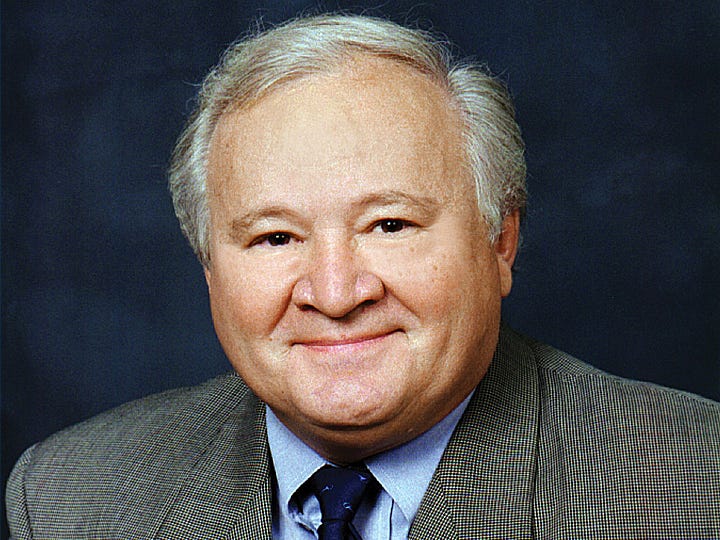
TALLAHASSEE — Florida State University's College of Medicine has named its auditorium for the late Florida Sen. Durell Peaden, a Crestview physician who sponsored legislation creating the medical school in 2000.

The naming ceremony will take place 4:30 p.m. Oct. 5 at FSU College of Medicine Auditorium, 1115 W. Call St., Tallahassee.

FSU President John Thrasher, Florida’s House speaker at the time, will be present, as will numerous other current and former legislators.

Also being named for Peaden is the college’s Rural Medical Education Program.

Peaden was concerned for years that not enough new physicians were available to replace aging doctors in the Florida Panhandle's rural towns. In the late 1990s, he began conversations with FSU administrators that ultimately led to the College of Medicine’s establishment.

Previously, in FSU’s Program in Medical Sciences, students completed their first year of medical school and transferred to the University of Florida to complete their studies.

Like PIMS, the College of Medicine targets a diverse array of students, including those from traditionally underserved communities, and stresses primary care, patient-centered medicine and hands-on learning directly from community physicians.

The College of Medicine’s first class graduated in 2005. Almost 270 current and former students have come to the medical school from Panhandle towns, and more than 50 alumni now practice in the Panhandle.

This article originally appeared on Crestview News Bulletin: FSU College of Medicine Auditorium named for late Crestview physician

GARCIA: National Hispanic Heritage Month wraps Oct. 15

Here's your last chance to celebrate National Hispanic Heritage Month (Sept. 15 through Oct. 15) — at no charge.

The Crestview Public Library has many resources to help you learn about Hispanic and Latin cultures and people, and we can help Spanish speakers learn English or English speakers learn Spanish. 

The library has Spanish brochures from Federal Student Aid and a local bilingual newspaper, La Costa Latina. 

In addition, Crestview library card holders can access electronic resources to research topics in Spanish and English. For instance, Informe Académico provides access to newspapers and magazines in Spanish and Portuguese.

There is also Rocket Languages, a language learning resource  recognized with PC Mag and Bessie Awards. 

We also have bilingual picture books, great novels and adult non-fiction books. 

Marie Garcia is the Crestview Public Library's assistant director.

This article originally appeared on Crestview News Bulletin: GARCIA: National Hispanic Heritage Month wraps Oct. 15

SHANKLIN: 4 steps to save for retirement

National Save for Retirement Week is observed Oct. 18-24 this year.

And this week has some weight behind it, as it is recognized by the U.S. Senate for its importance in encouraging Americans to prepare themselves financially for retirement.

Are you doing all you can?

Many of your peers aren’t. About a third of working adults have no retirement savings or pension, according to a survey by the Federal Reserve.

And more than half of workers report that the total value of their household’s savings and investments, excluding the value of their primary home and any defined benefit plan (such as a traditional pension), is less than $25,000, according to the Employee Benefit Research Institute’s 2015 Retirement Confidence Survey.

Such figures help explain why many people are unsure if they’ll ever be able to retire. Almost 40 percent of respondents in the Federal Reserve’s study have no intention to retire or plan to keep working for as long as possible.

Of course, if you enjoy your career, or just simply like to work, you may be in no hurry to retire. But you may want to put yourself in a position someday when work is optional — not mandatory.

To reach that point, consider taking these steps:

Estimate your cost of retirement. At what age do you plan to retire? When you do retire, will you stay home and pursue your hobbies, or will you travel the world? Will you do some consulting or other part-time paid work, or will you volunteer?

By answering these and other questions, you can at least estimate your costs during your retirement years.

Contribute to your 401(k). Contribute as much as you can afford each year to your employer-sponsored retirement plan, such as a 401(k).

At a minimum, put in enough to earn your employer’s matching contribution, if one is offered.

A 401(k) or similar plan is a great way to put money away for retirement, because your earnings can grow on a tax-deferred basis. And you may have a dozen or more investment vehicles within your 401(k), so you can build a portfolio that’s appropriate for your goals and risk tolerance.

In 2015, you can contribute up to $18,000 to your 401(k), or $24,000 if you’re 50 or older.

Fully fund your IRA. Even if you participate in a 401(k) or other employer-sponsored retirement plan, you’re probably still eligible to contribute to an IRA as well.

In 2015, you can contribute up to $5,500 — or $6,500, if you’re 50 or older — to an IRA. A traditional IRA offers tax-deferred earnings, while Roth IRA earnings can grow tax free, provided you don’t start taking withdrawals until you’re 59 1⁄2 and you’ve had your account at least five years.

Plus, you can fund your IRA with virtually any type of investment you choose. Try to “max out” your IRA every year.

Control your debts. Control your debts as much as possible. Every dollar that doesn’t go into a debt payment could be invested for your retirement.

These aren’t the only steps that can help you move toward a comfortable retirement — but they can certainly help get you on the right path.

This article was written by Edward Jones for use by your local Edward Jones financial adviser.

WHAT: "Social Security: Your Questions Answered," featuring Edward Jones financial adviser Yvonne Shanklin and Destin Cobb, a certified public accountant with Carr, Riggs and Ingram

WHEN: 6 p.m. Oct. 13

WHERE:Samuel's Roadhouse, 114 John King Road, Crestview; dinner will be served

CONTACT: Space is limited. Call Yvonne Shanklin, 682-2497, to make a reservation.

WANT TO GO?

This article originally appeared on Crestview News Bulletin: SHANKLIN: 4 steps to save for retirement

BEARDEN: 5 ways to keep field-to-table meat safe

DID YOU KNOW? Food safety begins with an accurate shot, according to Jennifer Bearden, with the University of Florida's Institute of Food and Agricultural Sciences office in Crestview. Hunters should aim carefully to help prevent the digestive tract's contents from touching the meat, she says. A gut shot can quickly ruin meat and make cleaning the animal harder.

When hunting, food safety begins in the field. The goal is to have safe meat for you and your family to eat.

Here are some ways to keep your food safe:

1. Shot placement. Food safety begins with an accurate shot. Your goal should be to prevent the digestive tract's contents from touching the meat. A gut shot can quickly ruin meat and make cleaning the animal harder.

2. Quickly chill the meat. Improper temperature is meat’s No. 1 enemy. The recommended storage temperature to prevent bacterial growth is 35 to 40 degrees Fahrenheit.

3. Handle the knife with one hand and the carcass with the other. The hide can harbor dirt and pathogens, so be careful to prevent contamination of the meat.

4. Have vinegar water and chlorine water on hand. Spray a solution of half vinegar and half water on areas where hair or hide touch the meat. Rinse hands and tools periodically in a bucket of sanitizing solution of 1 tablespoon of chlorine per gallon of water.

5. Think food safety through the whole process. Prevent cross contamination by keeping anything from contacting the meat unless it has been sterilized. Keep the digestive tract intact and prevent its contents from contacting the meat. Chill the meat as quickly as possible. When further processing, always use sterile surfaces and tools.

Jennifer Bearden is an agent at the University of Florida's Institute of Food and Agricultural Sciences Extension office in Crestview.

WHAT: "Wild About Deer: Game Processing," a lesson on field-to-table food processing safety; includes a home-cooked venison meal

WHEN: 10 a.m. to 2 p.m. Nov. 14

WHERE: 3098 Airport Road, Crestview

COST: $20; call 689-5850 to pre-register.

WANT TO GO?

This article originally appeared on Crestview News Bulletin: BEARDEN: 5 ways to keep field-to-table meat safe

HELMS: Consistent prayer is key

Mankind looks upon consistent performers favorably.

Think about it: Inconsistent financial performance makes people nervous. High school sports fans expect great games. A business that provides good service and has a steady stream of support attracts more customers.

Similarly, you cannot be inconsistent in your walk with God. It ruins your testimony when you incorrectly show your temper; when words from your mouth are not words you would speak in church. 

Being inconsistent does not draw men and women to Christ. You cannot represent life and spew death at the same time.

The Bible can help you in your daily walk. If you were following a road map — or a GPS on your phone — and it kept telling you the wrong way to go, you would soon discard it. 

To not stay steady before God is to give off a wrong direction to others, which could lead to their spiritual death. 

Consistent prayer, consistent reading and consistent worship are keys to a life fitting to be called as one of His. 

The Rev. Richard Helms serves at Miracle Acres Ministries, 3187 E. James Lee Blvd., in Crestview.

This article originally appeared on Crestview News Bulletin: HELMS: Consistent prayer is key

Mobile Health Clinic brings scheduled care to Okaloosa teachers

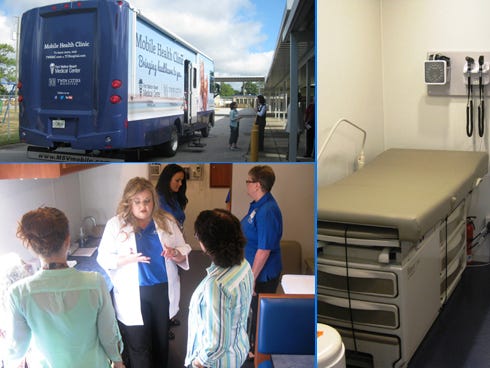
Clockwise from left: The Mobile Health Clinic — a service of Fort Walton Beach Medical Center, Twin Cities Hospital and Niceville Family Practice — visits each Okaloosa County School District property on a regular rotating schedule, bringing urgent care center services to educators.
The Mobile Health Clinic has two examination and treatment rooms.
Northwood Arts and Science Academy educators learn about the Mobile Health Clinic from nurse practitioner Kimberley Smith.

CRESTVIEW — If Northwood Arts and Science Academy Title 1 teacher Tracey McGann needed to run to the doctor, it once meant a student would lose reading time with her.

Now, the doctor’s office comes to McGann’s school.

The Mobile Health Clinic — a service of Fort Walton Beach Medical Center, Twin Cities Hospital and Niceville Family Practice, unveiled Wednesday at Northwood — offers basic medical services, including minor illness and injury exams and vaccinations.

The van — actually the size of an RV — travels to each Okaloosa County school on a rotating schedule. Educators who need to see a nurse practitioner or medical technician can visit it at a nearby school if it’s not at theirs when they need it.

The mobile clinic is a first for the area and participating hospitals, along with its parent company, Hospital Corporation of America, according to Dave Whalen, Twin Cities Hospital’s chief operating officer.

The concept is simple — “Think of it as a mobile urgent care service,” HCA North Florida director of business health Rod Whiting said.

And it solves a longstanding problem: dedicated, sick teachers weren’t always visiting a doctor's office, educators said.

A poll of Okaloosa County teachers found almost 50 percent didn’t have, or couldn't identify, a primary care physician, according to Mitch Mongell, Fort Walton Beach Medical Center CEO.

That raises concerns because "the teachers are the ones affecting our future by teaching our students,” Mobile Health Clinic nurse practitioner Kimberley Smith said.

In addition, Okaloosa Schools Superintendent Mary Beth Jackson said, "Healthy employees are a good thing to have. When you invest in someone — to the practical, H.R. side of me — you want to keep them healthy and you want to keep them around.”

McGann appreciates the convenience.

“Its biggest benefit is that we don’t have to take time away from our children to make a doctor’s appointment,” she said.

“For us, it’s great because it’s right here. Our children need extra reading time and we don’t want to take that away from them for doctor’s visits.”

This article originally appeared on Crestview News Bulletin: Mobile Health Clinic brings scheduled care to Okaloosa teachers

error: Content is protected !!