Please ensure Javascript is enabled for purposes of website accessibility
Skip to main content
Advertisement

SHANKLIN: Put your tax refund to work

In 2014, the average tax refund was about $2,700. If you got that much this year, what would you do with it?

You can probably think of a lot of things you might do with $2,700. You might decide to splurge and buy some big-ticket item you've been eyeing.

Or you could use the money to pay down some bills, which might be a good idea, especially if it helps improve your cash flow.

As an alternative, though, you might want to consider investing the money.

You might not think $2,700 would make that big a difference to your investment portfolio. But if you invested that $2,700 in a tax-advantaged account, such as an IRA, and you left the money alone, what might you earn?

After 30 years, your $2,700 would have grown to more than $20,500, assuming no further contributions and a hypothetical 7 percent annual return. That's not a fortune, of course, but it would help boost your retirement savings somewhat — and since it originated from a tax refund, it was accumulated pretty effortlessly from your point of view.

Now, suppose you put in the same amount — $2,700 — to your IRA each year for 30 years. Again, assuming that same hypothetical 7 percent annual return, your money would have grown to more than $272,000. And that amount can indeed make a rather big difference in your retirement lifestyle.

Keep in mind that you'd eventually have to pay taxes on that $272,000 if you had been investing in a traditional IRA, which is tax-deferred but not tax-free. It is possible, however, that if you start taking withdrawals when you retire, you'll be in a lower tax bracket.

If you meet income guidelines for contributing to a Roth IRA, though, you could avoid the tax issue all together on your $272,000. That's because Roth IRA earnings grow tax-free, provided you don't start withdrawals until you're 59½ and you've had your account for at least five years.

Thus far, we've only talked about putting your tax refund to work in your IRA — which, as we've seen, can be a very good idea. But suppose you've already developed the excellent habit of "maxing out" on your IRA each year by contributing a set amount each month?

You can currently only put in up to $5,500 per year to your IRA, or $6,500 if you're 50 or older. So you could fully fund your IRA by putting in about $458 per month (or $541 per month if you're 50 or older).

Those amounts are not unreasonable, especially as you move deeper into your career and your salary increases. If you do reach these limits each month, what could you do with your tax refund?

You can start by looking closely at your portfolio to see if any gaps exist.

Could you, for example, use your tax refund to further diversify your holdings? While diversification can't guarantee profits or prevent losses, it can reduce the impact of volatility on your portfolio — and the less you feel the effects of volatility, the more likely you may be to stick with your long-term strategy rather than over-reacting to short-term price drops.

So when Uncle Sam sends you that refund, consider investing it one way or another. You'll be putting it to good use.

This article was written by Edward Jones for use by your local Edward Jones financial adviser.

This article originally appeared on Crestview News Bulletin: SHANKLIN: Put your tax refund to work


GARCIA: Crestview library sets Amnesty Day for overdue books

You will rarely find a patron who has never had an overdue fine, and we at the Crestview Public Library understand that life can be busy. Forgetting to bring back library items on their due date is just one thing that makes us human.​

On Monday, Feb. 29, the Crestview library will waive fines for overdue materials returned in good condition. Fines on each returned, overdue item will be waived on this day only.

So, if you have been avoiding the library because of a book that was due back six months  —  or six years  —  ago, we will gladly waive your fines.

We hope that all will take advantage of this day to return overdue materials so that others may share all our wonderful library resources.

 Marie Garcia is the Crestview Public Library's assistant director.

This article originally appeared on Crestview News Bulletin: GARCIA: Crestview library sets Amnesty Day for overdue books

Crestview Knights of Columbus group schedules fish fry dinners

CRESTVIEW — Knights of Columbus Council 7968 is sponsoring weekly fish fry dinners at Our Lady of Victory Church Hall.

Times are 4:30-6:30 p.m. Feb. 26, and March 4, 11 and 18 at 550 Adams Drive, Crestview.

The menu features all-you-can-eat fried fish, French fries, hush puppies, cole slaw, cheese grits, green beans and iced tea, lemonade or coffee. Desserts are available for donations.

The meals cost $10 per adult, $7 for a fillet-only adult plate, $5 for children ages 6-13, and free for children 5 and younger. Proceeds benefit North Okaloosa County charity and scholarship services.

This article originally appeared on Crestview News Bulletin: Crestview Knights of Columbus group schedules fish fry dinners

OneBlood proactive in safeguarding blood supply from Zika virus

ORLANDO — As an additional proactive and precautionary measure, OneBlood will begin implementing additional Food and Drug Administration recommendations to further protect the blood supply from the Zika virus.

 OneBlood is providing donors with educational materials to include the risk factors and signs and symptoms of the Zika virus.

These are the FDA recommendations OneBlood has in force:

●Donors with a history of Zika infection should self-defer for four weeks after the resolution of symptoms.

●A donor who exhibits signs and symptoms of Zika infection within two weeks of departure from an area where Zika is active should self-defer for four weeks after the resolution of symptoms.

●A donor should self-defer for four weeks after their last sexual contact with a man who has been diagnosed with Zika or who traveled to or resided in an area with active transmission of Zika in the three months prior to that instance of sexual contact.

●Donors with a history of recent travel to, or who resided in an area with active Zika virus transmission, will be advised to inform the blood center promptly if they are diagnosed with Zika virus or if they develop symptoms of Zika infection within two weeks following donation.

●The donor history questionnaire every donor is required to answer will be updated to include questions specific to the Zika virus.

Although Florida is not experiencing active transmission of the Zika virus, OneBlood plans to implement a nucleic acid test for Zika to be used for blood donor screening. This test will be implemented as soon it becomes available and the FDA allows OneBlood to use it under current regulations.

This article originally appeared on Crestview News Bulletin: OneBlood proactive in safeguarding blood supply from Zika virus

Baucham guest speaker at Crestview church

Voddie Baucham

CRESTVIEW — Speaker, author and apologist Voddie Baucham will be speaking in Crestview soon.

He will answer many of today’s cultural and social challenges to biblical Christianity and explore how believers are developing a biblical world view at 9 a.m., 10:30 a.m., and 6 p.m. Sunday, Feb. 21 at First Baptist Church, 171 East Hickory Ave., Crestview. The event will be followed with a question-and-answer session at 7 p.m.

A First Baptist Church spokesperson said, "This is an outstanding opportunity to hear someone with unique understanding."

This article originally appeared on Crestview News Bulletin: Baucham guest speaker at Crestview church

BRESLAWSKI: Okaloosa Saves to make Home Show visit

America Saves Week is here, and Okaloosa Saves will celebrate the event from Feb. 22-27.

The campaign promotes automatic savings, building wealth and reducing debt. You can take the pledge to save by visiting okaloosasaves.org and clicking the "Take the Okaloosa Saves Pledge" button.

The website offers great tips on, among other things:

●Saving for your future

●How to avoid scams

●Building for retirement

The Okaloosa Saves organization will be at the Building Industry Association of Okaloosa & Walton Counties' Feb. 27 Home Show to provide more information, sign up savers, and help you enter to win prizes.

In addition, we are sponsoring the Youth and the Corporate Piggy Bank Challenge (vote for your favorite piggy bank) and financial seminars on identity theft, understanding Social Security and building credit, and information on Volunteer Income Tax Assistance tax preparation.

From 10 a.m. to 2 p.m., Shred It will be at the Home Show with their truck, ready to shred your personal documents.

Visit us at the 2016 BIA Home Show, 9 a.m. to 5 p.m. Saturday, Feb. 27 at the Emerald Coast Convention Center.

Contact me at 689-5850 or jbreslawski@ufl.edu for more information.

Jill Breslawski is an agent at the University of Florida's Institute of Food and Agricultural Sciences Extension office in Crestview.

This article originally appeared on Crestview News Bulletin: BRESLAWSKI: Okaloosa Saves to make Home Show visit

MYERS: Plant a pollinator garden and enjoy the many benefits

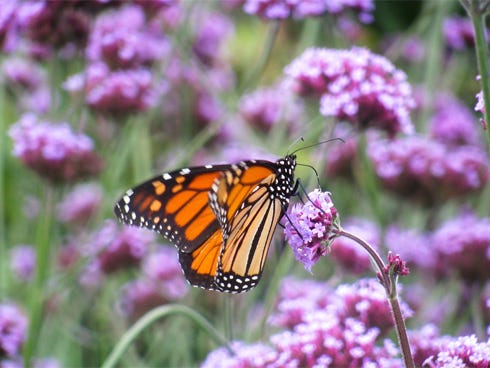
Whether planting a garden, enjoying the beauty of your landscape or sitting down to a delicious meal, you have bees, butterflies and other pollinators to thank. These essential members of our ecosystem are responsible for much of the food and beauty we enjoy each day.

Unfortunately pesticides and habitat loss are threatening their existence. There is something you can do to help. Turn your garden, backyard or balcony into a pollinator's habitat.

Plant a variety of flowering plants that provide nectar and pollen throughout the season. Planting masses of natives, herbs and other pollinator favorites like sedum, zinnias, alyssum, cosmos, and columbine will attract these beauties to your landscape. Include a variety of day and night blooming flowers in a variety of colors and shapes to support the widest range of pollinators. But don't let a lack of space dissuade you; even a window box of flowers can help.

Keep your plants healthy and blooming with proper care. Match the plants to the growing conditions, provide needed water and fertilize with an organic nitrogen fertilizer like Milorganite (milorganite.com) when needed. You'll promote slow steady plant growth that is less susceptible to drought and pests. Plus the slow release low nitrogen won't interfere with flowering which is essential to the health and well being of our pollinators.

Supplement pollinators' diets with a bit of rotten fruit. And be sure to provide trees, shrubs, parsley, dill and other plants that caterpillars, grubs and the immature stage of other pollinators prefer to feed upon. Put away the pesticides and tolerate a few holes in the leaves of their favorite plants. With a diversity of plants you can easily overlook the temporary leaf damage. Plus, this is a small price to pay for all the benefits they bring to the garden.

Provide pollinators with shelter from predators and the weather. Include a variety of trees, shrubs and perennials. Leave patches of open soil for ground nesting bees and some leaf litter to shelter some butterflies, bumblebees and other pollinating insects. Supplement natural shelter with commercial or homemade nesting boxes. You'll find do-it-yourself plans on the internet from various educational sources.

Puddles, fountains, birdbaths and even a damp sponge can provide needed water. Include water features with sloping sides or add a few stones to create easier access. Or sink a shallow container of sand in the ground. Keep it damp and add a pinch of sea salt for the butterflies and bees.

Maximize your efforts by teaming up with your neighbors. Together you can create a larger more diverse habitat that provides pollinators with the resources they need to thrive.

Your efforts will be rewarded with greater harvests, beautiful flowers and colorful birds and butterflies visiting your garden.

Gardening expert, TV/radio host, author and columnist Melinda Myers has more than 30 years of horticulture experience and has written over 20 gardening books, including "Small Space Gardening" and the "Midwest Gardener's Handbook." She hosts The Great Courses "How to Grow Anything: Food Gardening For Everyone" DVD set and the nationally syndicated Melinda's Garden Moment TV & radio segments. Myers is also a columnist and contributing editor for Birds & Blooms magazine and spokesperson for Milorganite. Myers' web site, http://www.melindamyers.com, offers gardening videos and tips.

This article originally appeared on Crestview News Bulletin: MYERS: Plant a pollinator garden and enjoy the many benefits

Why you should quit chewing smokeless tobacco

FORT WALTON BEACH — Okaloosa County Tobacco Free Partnership and the Florida Department of Health's Bureau of Tobacco Free Florida are raising awareness about the dangers of smokeless tobacco, like chew and dip, during Through with Chew Week, Feb. 16-22.

The campaign was created to reduce the use of smokeless tobacco among young people and help combat this deadly addiction. Tobacco Free Florida aims to help combat this deadly addiction, especially within baseball.

 "Athletes are common role models for youths," stated Dr. Karen Chapman, Florida Department of Health director in Okaloosa County. "Youths often mimic the behaviors that their role models display—including tobacco use. Smokeless tobacco has several harmful chemicals that can lead to severe health concerns."

To raise awareness about the dangers of smokeless tobacco use in baseball, Okaloosa County Tobacco Free Partnership is hosting a Through with Chew awareness initiative at Northwest Florida State College. The initiative will display a banner at the NWFSC baseball fields highlighting the dangers of smokeless tobacco during Through with Chew Week.

Although youth cigarette smoking rates in Florida are at an all-time low, 7.8 percent of high school students in Okaloosa reported current use of smokeless tobacco products in 2014, according to the Florida Youth Tobacco Survey.

Professional baseball players, who have traditionally had high levels of smokeless tobacco use, serve as role models for impressionable youth. Since the 2012 season, professional baseball players have been prohibited from carrying tobacco tins in their uniforms and using smokeless tobacco during televised interviews, at autograph signings and other events where they meet fans, or at team-sponsored appearances. However, these restrictions did not eliminate smokeless tobacco use on the field or in the dugout.

At least 28 cancer-causing chemicals have been identified in smokeless tobacco. Smokeless tobacco users have an 80 percent higher risk of oral cancer and a 60 percent higher risk of esophageal cancer and pancreatic cancer compared to non-users.

Currently, there is no scientific or medical evidence that proves smokeless tobacco use is an effective method to help people quit smoking. Floridians who want to quit any form of tobacco have access to the state's free and proven-effective resources.

CALL: 1-877-U-CAN-NOW to speak with a quit coach who will help you assess your addiction and help you create a personalized quit plan.

CLICK: http://www.tobaccofreeflorida.com/webcoach.

This article originally appeared on Crestview News Bulletin: Why you should quit chewing smokeless tobacco

SHANKLIN: 5 reasons not to be a 'do-it-yourself' investor

These days, you can go online and invest for modest fees. You can also visit various websites for research and watch numerous cable shows for investment recommendations.

So, why shouldn't you be a "do-it-yourself" investor rather than work with a financial professional?

Actually, there are at least five good reasons why a financial adviser can help make you a better investor.

A financial adviser can:

Ask the right questions. If you try to invest on your own, you may find yourself asking the wrong questions, such as: "What's the 'hottest' investment out there?"

A financial professional can help frame better questions, such as: "Given my individual risk tolerance and long-term goals, which investments should I consider to help me build a balanced portfolio?"

In other words, a financial professional can help you ask the questions that can lead to better results.

Look at your situation objectively. No matter how hard you try, you won't be able to take all the emotion out of your investment choices. After all, your investment success will play a large role in some key areas of your life, such as your ability to enjoy a comfortable retirement.

Consequently, if you think you're not making the progress you should with your investments, you may be tempted to make a hasty decision to give your portfolio a "jolt." Frequently, though, such choices can backfire.

When it comes to investing, it's better to invest with your head, not your heart. A financial adviser can analyze your situation, assess your risk tolerance and make appropriate recommendations.

Show a deeper understanding of investment research. You can look up many types of financial data on your own. But do you know how to put all these pieces together into a cohesive picture?

A financial professional, with years of experience and training, is generally more capable of finding the research sources and making the most sense out of the results.

Put experience to work in making portfolio recommendations. Even if you've been investing for many years, you might be surprised at all the underlying influences that should go into making investment decisions.

But a financial professional understands market patterns, the nature of diversification and other factors necessary in helping you make the right choices for your situation.

Spend time looking for opportunities. Even if you enjoy the process of investing, the chances are quite good that you can't spend as much time on it as a financial professional.

That means, among other things, you aren't constantly on the lookout for new investment opportunities. Nor are you always looking within your own portfolio for opportunities to rebalance or make other adjustments that can help you move forward toward your goals.

But when you work closely with a financial adviser, he or she is exploring the financial markets for new investment prospects while regularly reviewing your portfolio for possibilities of upgrading quality, increasing diversification or making adjustments in response to changes in your life.

The "do-it-yourself" route may be fine for home repairs. But when it comes to managing your investment situation, there are benefits to working with a professional.

This article was written by Edward Jones for use by your local Edward Jones financial adviser.

This article originally appeared on Crestview News Bulletin: SHANKLIN: 5 reasons not to be a 'do-it-yourself' investor

Horticulture group to tour Walton's coastlines

GRAYTON BEACH — The Tri-County Horticulture Studies Group will meet at 9:30 a.m. Feb. 25 at Grayton Beach State Park.

Attendees will meet at the picnic pavilion/shower area by the parking lot and begin a 10 a.m. walking tour followed by a discussion in the pavilion. Participants unable to walk the trail are welcome to join the post-tour discussion at the pavilion.

Laura Tiu, Marine Science Agent for Walton and Okaloosa County's University of Florida Institute of Food and Agricultural Sciences Extension office, will guide the group on a walking tour of Walton County's coastal lines. 

Attendees will learn about the “Jewels of 30A," a rare ecosystem that exists in just a few places around the world. In addition, Tiu will discuss the dune lakes' ecology including  terrestrial and aquatic plants, fish and wildlife, and the impact of urban growth around these rare ecosystems.

The group's meetings are free for the public to attend. The park is on Highway 30A at 357 Main Park Road in Santa Rosa Beach. 

Afterward, participants may join the group for lunch at The Vue on 30A, 4801 County Road 30A, Santa Rosa Beach. Email gbaltz47@yahoo.com or denisetalley99@yahoo.com to make a lunch reservation.

If the weather is poor, the group will meet at the Valparaiso Library, Room 3, to see Elam Stoltzfus' film, “Jewels of Florida’s Emerald Coast,” followed by a discussion with Tiu. 

This article originally appeared on Crestview News Bulletin: Horticulture group to tour Walton's coastlines

error: Content is protected !!