Please ensure Javascript is enabled for purposes of website accessibility
Skip to main content
Advertisement

CROSE: Chamber's new intern reflects Crestview's 20-year relationship with France

I recently had the pleasure of having breakfast with Crestview Area Chamber of Commerce intern Théo Toulat, from the University of Nantes, France. 

This polite young man is here as a result of the Crestview Sister City program's relationship with Noirmoutier, France. 

Here’s more about that relationship.

Last fall, the Sister City Program and local families hosted 21 French students — who temporarily attended Crestview High School — and many adults. All the families involved learned about our cultural similarities and differences.

But that was just one of many trips between the two areas the past 20 years.

Northwest Florida State College has developed a relationship with Noirmoutier and, as a result, we have a relationship with the University of Nantes.

A Noirmoutier area dance troupe, Grain de Sable Dance Company from Soullans, France, is coming to dance with NWF State College dancers. They arrive April 15, and will attend master classes for four days.

Dance Facets 2016 will be presented 7:30 p.m. Friday, April 22 and Saturday, April 23, at the Mattie Kelly Arts Center. Tickets will be $15 for adults and $10 for youth. 

And that’s not all.

In the fall, six French business students will attend classes at NWF State College.

Additionally, NWF State College takes their choirs to Noirmoutier to perform and interact with residents.

We will again host friends from Noirmoutier  beginning Oct. 12 as the local Sister City Program’s 20th anniversary continues.

I anticipate the celebration, as the people I have met from Noirmoutier are as friendly and loving as anyone could be; your life will be enriched by getting to know them.

Janice Lynn Crose, a former accountant, lives in Crestview with her husband, Jim; her two rescue collies, Shane and Jasmine; and two cats, Kathryn and Prince Valiant.

DID YOU KNOW?

The idea of developing friendships with those in other countries originated with Gen. Dwight D. Eisenhower (later President Eisenhower), who felt that a citizens diplomacy initiative would let people from other countries get to personally know each other, overcoming the failure of professional diplomats to prevent World War II. He hoped these relationships would keep countries from warring with one another.

WANT TO JOIN?

Crestview Sister City Program dues cost $20 per individual, $30 per family and $2 per student.

Contact Pam Coffield, 682-8437, or Jim and Isabelle Mills, 682-8215, for more information.

Crestview Sister City Program dues cost $20 per individual, $30 per family and $2 per student.

Contact Pam Coffield, 682-8437, or Jim and Isabelle Mills, 682-8215, for more information.

DID YOU KNOW?

The idea of developing friendships with those in other countries originated with Gen. Dwight D. Eisenhower (later President Eisenhower), who felt that a citizens diplomacy initiative would let people from other countries get to personally know each other, overcoming the failure of professional diplomats to prevent World War II. He hoped these relationships would keep countries from warring with one another.

WANT TO JOIN?

This article originally appeared on Crestview News Bulletin: CROSE: Chamber's new intern reflects Crestview's 20-year relationship with France

TIU: Oil Spill Science — Five years later, what have we learned?

Here's an estimate of what happened to approximately 200 million gallons oil from the Deepwater Horizon oil spill. Data from Lehr, 2014.

The Deepwater Horizon oil spill occurred about 50 miles offshore of Louisiana in April 2010. Approximately 172 million gallons of oil entered the Gulf of Mexico. Five years after the incident, locals and tourists still have questions. This article addresses the five most common questions.

1: Is Gulf seafood safe to eat?

Ongoing monitoring has shown that Gulf seafood harvested from waters that are open to fishing is safe to eat. Over 22,000 seafood samples have been tested and not a single sample came back with levels above the level of concern. Testing continues today.

2: What are the impacts to wildlife?

This question is difficult to answer as the Gulf of Mexico is a complex ecosystem with many different species — from bacteria, fish, oysters, to whales, turtles, and birds.  While oil affected individuals of some fish in the lab, scientists have not found that the spill impacted whole fish populations or communities in the wild. Some fish species populations declined, but eventually rebounded. The oil spill did affect at least one non-fish population, resulting in a mass die-off of bottlenose dolphins. Scientists continue to study fish populations to determine the long term impact of the spill.

3: What cleanup techniques were used, and how were they implemented?

Several different methods were used to remove the oil. Offshore, oil was removed using skimmers, devices used for removing oil from the sea’s surface before it reaches the coastline.  Controlled burns were also used, where surface oil was removed by surrounding it with fireproof booms and burning it. Chemical dispersants were used to break up the oil at the surface and below the surface. Shoreline cleanup on beaches involved sifting sand and removing tarballs and mats by hand.

4: Where did the oil go and where is it now?

The oil spill covered 29,000 square miles, approximately 4.7 percent of the Gulf of Mexico’s surface. During and after the spill, oil mixed with Gulf of Mexico waters and made its way into some coastal and deep-sea sediments. Oil moved with the ocean currents along the coast of Texas, Louisiana, Mississippi, Alabama, and Florida. Recent studies show that about 3-5 percent of the unaccounted oil has made its way onto the seafloor.

5: Do dispersants make it unsafe to swim in the water?

The dispersant used on the spill was a product called Corexit, with doctyl sodium sulfosuccinate (DOSS) as a primary ingredient. Corexit is a concern as exposure to high levels can cause respiratory problems and skin irritation. To evaluate the risk, scientists collected water from more than 26 sites. The highest level of DOSS detected was 425 times lower than the levels of DOSS known to cause harm to humans.

For additional information and publications related to the oil spill, visit https://gulfseagrant.wordpress.com/oilspilloutreach/.

Laura Tiu is an agent at the University of Florida's Institute of Food and Agricultural Sciences Extension office in Crestview. This article was adapted from "Oil Spill Science: Top 5 Frequently Asked Questions about the Deepwater Horizon Oil Spill," published in 2015 by Emily Maung-Douglass, Monica Wilson, Larissa Graham, Chris Hale, Stephen Sempier, and LaDon Swann.

This article originally appeared on Crestview News Bulletin: TIU: Oil Spill Science — Five years later, what have we learned?

'Gala in Paradise Gardens' is May 14

VALPARAISO — The Valparaiso Garden Clubis planning a gardening gala.

The "Gala in Paradise Gardens" is 2-4 p.m. May 14 at the Heritage Museum, 115 Westview Ave., Valparaiso.

Paradise Gardens is an outdoor exhibit, created and maintained by the Valparaiso Garden Club, which supports pollinators in our environment, including bees, butterflies, hummingbirds, and other pollinators.

 Come to the gala to learn about pollinators and how gardeners and citizens can help and protect them at a lecture by Master Gardener and author Marie Harrison at 2:15 in the Blue Room of the Museum.

Then move out to the garden to see host plants for butterflies, nectar and pollen plants for many pollinators, and a plethora of beautiful blooming annuals and perennials that do well in our area.

At the event, attendees may:

●Shop the club’s plant sale to purchase seeds and plants for pollinators and add them to your garden.

●Learn to register your garden and “Bee One in a Million” pollinator gardens across the United States.

●Study educational exhibits and receive handouts to help you get started helping our imperiled pollinators.

Helping pollinators will enable us to continue to have the fruits, vegetables, and other plants that enrich our lives and provide one in every three bites of food we eat.  

For more information, contact Marie Harrison, 678-2842, or Gina Marini, 678-2615.

This article originally appeared on Crestview News Bulletin: 'Gala in Paradise Gardens' is May 14

Okaloosa health department releases water quality results

FORT WALTON BEACH — The Florida Department of Health in Okaloosa County has announced water quality test results for local parks.

Four Okaloosa County parks have potentially hazardous bathing water, the Florida Department of Health in Okaloosa County stated April 4.

Garniers Park, Fort Walton Beach; East Pass, Okaloosa Island; Fred Gannon Rocky Bayou State Park, Niceville; and Emerald Promenade, Okaloosa Island failed tests based on EPA-recommended enterococci standards. Enteric bacteria's presence indicates fecal pollution from stormwater runoff, pets and wildlife or human sewage.

Parks with moderate instead of good water quality are Liza Jackson Park, Fort Walton Beach; Poquito Park, Shalimar; Henderson Beach, Destin; and James Lee Park, Destin.

This article originally appeared on Crestview News Bulletin: Okaloosa health department releases water quality results

April 22 seminar scheduled on hidden dangers in food

NICEVILLE — Dr. Dean Jacks will present information on hidden food dangers in a free seminar.

Topics include:

●learn how food manufacturers are tricking us

●find out if your food is a chemistry project

●find out the 10 worst ingredients manufacturers put in their foods

The seminar is 11:15 a.m. April 22 at Core Chiropractic, 1550 John Sims Parkway E., Niceville.

It is open to the public but RSVPs are required. Call 678-8048 to reserve your space.

This article originally appeared on Crestview News Bulletin: April 22 seminar scheduled on hidden dangers in food

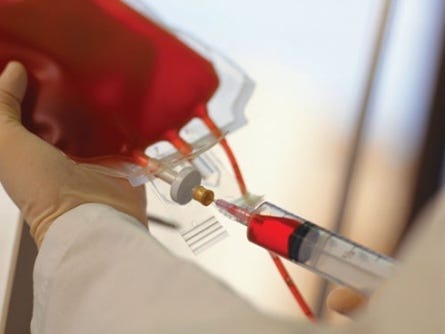
OneBlood ensures safe blood as Zika threat looms

ORLANDO — OneBlood stands ready to face the Zika virus if and when the mosquito-borne disease emerges in Florida or the surrounding Southeast states it serves.

OneBlood anticipates the Food and Drug Administration granting the blood center approval to use a new investigational test to screen blood donations for the Zika virus. Approval is expected in the coming months and likely sooner if there is an active outbreak of the virus in OneBlood’s service area.

“We are not waiting for the virus to appear, we are putting proactive plans in place now,” said Dr. Rita Reik, OneBlood chief medical officer. 

“Once the FDA approves OneBlood to implement the Zika test we will begin testing a certain percentage of our inventory and have blood that has tested negative for the Zika virus available for hospitals to use for their high risk patients, such as pregnant women, women of child-bearing age and immune-compromised patients."

OneBlood remains in direct communication with the Florida Department of Health and will be notified as soon as possible if and when a suspected case of local Zika transmission is identified.

Proactive response to the situation

Additional proactive steps OneBlood implemented earlier this year to protect the local blood supply from the Zika virus remain in effect, including enacting additional donor deferral guidelines, updating the donor history questionnaire to include Zika specific questions and issuing educational materials to donors.

Last month blood centers in Puerto Rico were unable to collect blood after the FDA ordered the blood centers in that area to cease collections until the Zika test was made available.

In an effort to ensure blood was still available for the people of Puerto Rico during this unprecedented time, OneBlood stepped in to help and has been shipping blood products to the island on a regular basis.

In recent days, the FDA approved Puerto Rico to begin using the new Zika test and the blood centers on the island have been able to resume blood collections after being shut down for more than a month.

This article originally appeared on Crestview News Bulletin: OneBlood ensures safe blood as Zika threat looms

April 7 audubon society meeting planned

myrtle warbler

NICEVILLE — Members of the Choctawhatchee Audubon Society will meet April 7.

Retired Federal Fishery biologist Dave Clausen will present a program on the flora and fauna of Lord Howe Island, a U.N. World Heritage Site off the coast of eastern Australia.  Clausen visited the island in 2015 and will report on many of the unique, endemic species of wildlife.

The meeting starts with socializing at 6:30 p.m. in Room 130 of the new Student Services Building at Northwest Florida State College, 100 College Blvd., Niceville. The program begins at 7 p.m.

Admission is free and open to the interested public. For more information, contact Don Baltz, 22-252-2760 or dbaltz46@yahoo.com

This article originally appeared on Crestview News Bulletin: April 7 audubon society meeting planned

Military-themed church camp set April 15-17 in Jay

JAY — Military chaplains will preach, and current and former service members will give testimonies during “For God and Country,” a three-day church camp coming to Northwest Florida.

The April 15-17 event is at New Bethel Baptist Church, 10995 Chumuckla Highway, Jay. The schedule is as follows:

April 15:

●5:30 p.m., meal

●7 p.m., worship service

April 16:

●4 p.m., music program

●5:30 p.m., meal and worship

●7 p.m., worship service

April 17:

●10 a.m., military testimonies

●11 a.m., worship service

●12 p.m., meal and fellowship

●5 p.m., worship service

●6 p.m., meal and fellowship

Guest speakers:

●April 15, U.S. Navy Chaplain Roy Fondren (NAS Whiting Field)

●April 16, U.S. Army National Guard Chaplain Heath Flowers (Alabama Unit)

●April 17, U.S. Army Reserve Chaplain Matthew Dobson (Alabama Unit)

●April 17, U.S. Navy Chaplain John Gibson (Florida)

This article originally appeared on Crestview News Bulletin: Military-themed church camp set April 15-17 in Jay

Pensacola seminar to focus on varicose veins

PENSACOLA — West Florida Healthcare will offer a free seminar, “Solutions for Varicose Veins,” 5:30-6:30 p.m. Tuesday, April 12 at the West Florida Medical Group office, 1190 E. 9 Mile Road, Pensacola. 

The featured speaker will be Jon Moore, M.D., general surgeon.

Varicose veins are enlarged, twisted veins caused by valves that do not work properly. Veins most likely to become varicose are those in the legs and feet, mainly because standing and walking upright increases pressure in the veins of the lower body. 

For many people, varicose veins and spider veins — a common, mild variation of varicose veins — are simply a cosmetic concern. For others, however, varicose veins can cause aching pain and can lead to serious problems. 

Call 494-3212 to register.

This article originally appeared on Crestview News Bulletin: Pensacola seminar to focus on varicose veins

error: Content is protected !!