Please ensure Javascript is enabled for purposes of website accessibility
Skip to main content
Advertisement

Okaloosa health department releases water quality results

FORT WALTON BEACH — The Florida Department of Health in Okaloosa County has announced water quality test results for local parks.

No Okaloosa County parks have potentially hazardous bathing water, the Florida Department of Health in Okaloosa County stated April 11.

Only two, Garniers Park, Fort Walton Beach and Marler Park, Okaloosa Island, had moderate quality instead of good quality ratings.

The tests are based on EPA-recommended enterococci standards. Enteric bacteria's presence indicates fecal pollution from stormwater runoff, pets and wildlife or human sewage.

This article originally appeared on Crestview News Bulletin: Okaloosa health department releases water quality results

Baker church's three-part end-of-life series begins May 3

BAKER — Pyron Chapel Baptist Church will host a three-class series on end-of-life decisions.

Hospice nurse Timothy Jordan will speak on the topic, using realistic scenarios, 6-8 p.m. May 3, 10 and 17 at the church, 6498 William Gary Johnson Road, Baker.

Topics are:

●May 3:  How to talk to your family about your decision

●May 10:  How to put it in writing so everyone knows

●May 17:  When to ask for hospice   

Call 902-5896 for more information.

This article originally appeared on Crestview News Bulletin: Baker church's three-part end-of-life series begins May 3

Crestview group sets April 30 pastor appreciation luncheon

CRESTVIEW — The Concerned Citizens of Crestview want to recognize men who serve a higher power.

Northwest Florida pastors and their wives may attend the group’s April 30 pastor appreciation luncheon, 1 p.m. at Mount Zion A.M.E. Church, 502 McDonald St., Crestview.

Contact Pearl Bess, 682-5733, for more information.

This article originally appeared on Crestview News Bulletin: Crestview group sets April 30 pastor appreciation luncheon

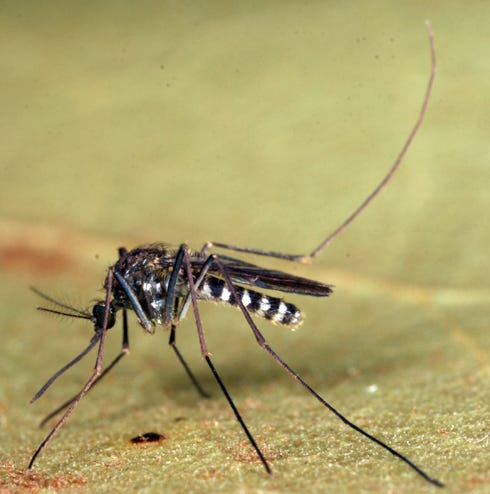
This mosquito may play a key role in transmitting a lethal virus

The Culex erraticus mosquito may be just as important in transmitting EEE because it's more abundant, especially in the Southeast, according to assistant professor Nathan Burkett-Cadena.

GAINESVILLE — A mosquito species that’s very abundant in the Southeast may play a more significant role in transmitting Eastern equine encephalitis than originally thought, according to a University of Florida scientist.

Nathan Burkett-Cadena, an assistant professor of entomology at the UF Institute of Food and Agricultural Sciences, helped investigate the role of the mosquito species known as Culex erraticus and Culista melanura, the latter of which is most commonly associated with spreading the potentially lethal virus.

“Our study shows us how a mosquito that is a relatively poor transmitter of the virus can actually have a huge impact on human health, due to its overwhelming abundance,” Burkett-Cadena said.

The study, published recently online in the Journal of Medical Entomology, was led by Thomas Unnasch, distinguished professor of global health at the University of South Florida.

Culex erraticus is more abundant than Culiseta melanura, the study shows. So it may be more important than scientists originally thought in transmitting EEE virus, at least in the Southeast. EEE virus, transmitted through the bite of an infected mosquito, can be passed to a wide range of animals including birds, reptiles and mammals. But once infected, horses and humans appear to suffer the most adverse effects.

The researchers combined data from field and laboratory studies in Florida with that collected earlier at Tuskegee National Forest in Alabama, where Culex erraticus is common and Culiseta melanura relatively rare.  Their laboratory studies showed Culex erraticus was about half as effective as Culiseta melanura in transmitting the virus in the laboratory.

Even though it’s not as efficient in transmitting EEE virus in a lab, there are a lot more Culex erraticus mosquitoes in the Southeast than Culiseta melanura. Culex erraticus also feeds on a wider variety of animals than Culiseta melanura, which feeds almost exclusively on birds for its blood meals.

The disease caused by EEE virus is rare in humans — with approximately five to 10 cases reported yearly to the U.S. Centers for Disease Control and Prevention – but more than a third who contract the illness die and many who survive suffer severe brain damage. EEE virus poses a greater threat to horses (70 to 90 percent fatality rate), with Florida reporting 136 cases in 2014, the most of any state. No vaccine is approved for human use, and although a vaccine exists for horses many go unvaccinated.

Brad Buck is a University of Florida Institute of Food and Agricultural Sciences science writer.

This article originally appeared on Crestview News Bulletin: This mosquito may play a key role in transmitting a lethal virus

SHANKLIN: Can you make your investments less 'taxing?'

Tax Freedom Day, which typically occurs in late April, according to the Tax Foundation, is when the nation as a whole has earned enough money to pay off its total tax bill for the year.

So you may want to use this opportunity to determine if you can liberate yourself from some investment-related taxes in the future.

Actually, Tax Freedom Day is something of fiction, in practical terms, because most people pay their taxes throughout the year via payroll deductions. Also, you may not mind paying your share of taxes, because your tax dollars are used in many ways — such as law enforcement, food safety, road maintenance, public education, and so on — that, taken together, have a big impact on the quality of life in this country.

Still, you may want to look for ways to reduce those taxes associated with your investments, leaving you more money available to meet your important goals, such as a comfortable retirement.

So, what moves can you make to become more of a “tax-smart” investor? Consider the following:

Know when to hold ’em. If you sell an investment that you’ve held for less than one year, any profit you earn is considered a short-term capital gain, and it will be taxed at the same rate as your ordinary income. (For 2016, ordinary income tax rates range from 10 percent to 39.6 percent.)

But if you hold the investment for longer than one year, your profit will be taxed at the long-term capital gains rate, which, for most taxpayers, will be just 15 percent.

If at all possible, then, hold your investments at least long enough to qualify for the lower capital gains rate.

Look for dividends. Similar to long-term capital gains, most stock dividends are taxed at 15 percent for most taxpayers. Thus, dividend-paying stocks can provide an additional source of income at a tax rate that’s likely going to be lower than the rate on your ordinary earned income.

As an added benefit, many dividend-paying stocks also offer growth potential. With some research, you can find stocks that have paid, and even increased, their dividends over a period of many years. (Be aware, though, that companies are not obligated to pay dividends, and can reduce or discontinue them at their discretion.)

Use tax-advantaged accounts. Virtually all retirement accounts available to you, whether you’ve set them up yourself or they’re made available by your employer, offer some type of tax advantage.

With a traditional IRA, or a 401(k) or similar employer-sponsored retirement plan, your contributions are typically tax-deductible and your earnings can grow tax deferred.

Contributions to a Roth IRA, or a Roth 401(k), are never deductible, but earnings can grow tax free, provided you meet certain conditions.

The bottom line? Contribute as much as you can afford to the tax-advantaged plans to which you have access.

Tax Freedom Day is here and then it’s gone. But by making some tax-smart investment decisions, you might reap some benefits for years to come.

This article was written by Edward Jones for use by your local Edward Jones financial adviser.

This article originally appeared on Crestview News Bulletin: SHANKLIN: Can you make your investments less 'taxing?'

Florida leads nation with Guardian ad Litem volunteers

TALLAHASSEE — The Guardian ad Litem Program has exceeded its goal of more than 10,000 volunteers.

In Okaloosa County, the Guardian ad Litem Program's dedicated Child Advocacy teams, which include members of a dedicated and diverse group of Volunteer Child Advocates, provide a critical voice for more than 340 of Northwest Florida's most vulnerable citizens.

Bryan Carter, director for the First Judicial Circuit Guardian ad Litem Program, credits the program's success to the partnership of community advocates and professional staff coming together to make a difference for abused, abandoned and neglected children.

Click here for a video from the GAL program>>

Carter said, "It's about coming together as that proverbial village to create a better future for our children. With 56 newly certified Volunteer Child Advocates joining the First Circuit Guardian ad Litem Program since January, we are working diligently towards a time when every abused, abandoned or neglected child can realize a brighter day and a safe and permanent home – all because someone cared enough to make it happen."

Florida GAL Executive Director Alan Abramowitz, recently revealed that the state's GAL program has exceeded its goal of 10,000 volunteers who advocate for abused, neglected and abandoned children in courts throughout the state. Abramowitz made the announcement in recapping the agency's success during the recently adjourned Florida Legislative Session. Although most states have a GAL Program of some kind, Florida's success in recruiting volunteers sets the record for the nation.

Abramowitz reported that a count of total volunteers at the end of February 2016 reveals that 10,056 Florida GAL citizen volunteers are trained and certified to work with children who are removed from their parents due to safety concerns. Most volunteers represent two or more abused children, visiting them at least once a month, and advising child welfare judges on options for assuring the child's best interests.

"Our dedicated volunteers are the heart and soul of the GAL Program," Abramowitz said. "They speak for vulnerable, innocent children and hold government and private sector agencies accountable for their safety, security and best interests. Our volunteers receive nothing in return but the knowledge that they are making a difference in the lives of children."

This article originally appeared on Crestview News Bulletin: Florida leads nation with Guardian ad Litem volunteers

University of Florida offers healthier way to keep shrimp juicy, tasty

GAINESVILLE — When you eat a shrimp, you probably want it to be juicy. That’s why University of Florida Institute of Food and Agricultural Sciences researchers are trying to find alternatives to phosphates to lock in that texture and savory flavor.

Normally, phosphate or table salt is used to retain moisture in meat and seafood, said Paul Sarnoski, a UF/IFAS assistant professor of food science and human nutrition. But adding salt to the food puts more salt in a person’s diet, and that’s unhealthy, Sarnoski said. Additionally, phosphates are relatively expensive, he said.

In a study recently published in the Journal of Food Science, Sarnoski and his colleagues found that phosphate alternatives such as polysaccharides – a type of carbohydrate often used as a food additive – can help retain water in shrimp. Scientists tested the shrimp using phosphates and polysaccharides. They boiled, froze and dried the crustaceans to see how much water the shrimp lost.

For this study, researchers tested Atlantic white shrimp, which, in addition to being tasty and nutritious, are a vital component to the United States economy. In 2012, 118 million pounds of the shrimp were harvested, according to the National Oceanic and Atmospheric Administration. Additionally, shrimp accounts for almost 30 percent of all the seafood the U.S. imports, according to NOAA.

Atlantic white shrimp are often cited as being popular because of their sweet taste, according to a 2006 study led by the University of Georgia. They’re also a good source of protein, niacin, iron, phosphorus, zinc and a very good source of vitamin B12.

“The study showed there are some polysaccharides that will likely not change the way the shrimp tastes, feels or looks to the consumer,” Sarnoski said. Researchers discovered this through taste tests by consumer panelists at the UF Center for Smell and Taste.

Polysaccharides are usually inexpensive, and in the long run, cost less for the food processor, restaurant operator – and theoretically, the consumer — than phosphates.

Brad Buck is a University of Florida Institute of Food and Agricultural Sciences science writer.

This article originally appeared on Crestview News Bulletin: University of Florida offers healthier way to keep shrimp juicy, tasty

RECALLED: These chicken nuggets may contain plastic

Pilgrim’s Pride Corp., a Waco, Texas establishment, is recalling approximately 40,780 pounds of fully cooked chicken nugget products that may be contaminated with extraneous plastic materials, the U.S. Department of Agriculture’s Food Safety and Inspection Service announced today.

The fully cooked chicken nugget products were produced Oct. 5, 2015.

The following products are subject to recall:

20-lb. cardboard boxes containing two, 10-lb. clear plastic bags of fully cooked chicken nuggets labeled as “GOLD KIST FARMS Fully Cooked Whole Grain Popcorn Style Chicken Patty Fritters.”

The products subject to recall bear establishment number “EST. P-20728” inside the USDA mark of inspection and include package codes 5278105021, 5278105022, 5278105023, 5278105000, and 5278105001.

These items were shipped for institutional use to Arizona, California, Colorado, Florida, Georgia, Kansas, Kentucky, North Carolina, Nebraska, Oklahoma, Tennessee, Texas, and Utah.

The problem was discovered after the firm received several consumer complaints regarding plastic contamination of the chicken nuggets. The firm notified FSIS personnel of the issue on April 6, 2016.

There have been no confirmed reports of adverse reactions due to consumption of these products. Anyone concerned about an injury or illness should contact a healthcare provider. 

Consumers who have purchased these products are urged not to consume them. These products should be thrown away or returned to the place of purchase.

This article originally appeared on Crestview News Bulletin: RECALLED: These chicken nuggets may contain plastic

GARCIA: 5 things you can do with your Crestview library card

We all know that you can check out popular books on a variety of subjects and genres at the Crestview Public Library, but did you also know that with your library card you can…

●Check out or place a hold on new movies.

●Take a proctored exam, whether it’s for a distance learning course or for certification.

●Have full access to all six member libraries within the Okaloosa County Public Library Cooperative (Crestview, Mary Esther, Valparaiso, Niceville, Destin and Fort Walton Beach). The OCPLC also offers free courier service, which means you can have items sent to your local library for pickup.

●Download free eBooks and eAudiobooks.

●Get free one-on-one tutoring for basic computer skills or help with your tablet or other mobile device.

We also have many ongoing programs for people of all ages and interests, from Story Time and Lap Sit to open-mic poetry jams. 

Our electronic resources offer a wealth of authoritative information, from free legal forms to interactive language learning programs. 

Check out our website, www.cityofcrestview.org/library.php, visit us at 1445 Commerce Drive (behind the post office), or give us a call at 682-4432. 

Marie Garcia is the Crestview Public Library's director.

This article originally appeared on Crestview News Bulletin: GARCIA: 5 things you can do with your Crestview library card

Last call for Crestview Dance for Life tickets

CRESTVIEW — Fred Astaire Dance Studio of Crestview will host the 6th Annual Dance for Life, an evening of ballroom dance to benefit Covenant Care, on Saturday, April 16.

The event — 7 p.m. in Crestview High School’s auditorium — will feature amateur and professional dancers from across the Emerald Coast.

Tickets are $15 for general admission and $50 for VIP admission, which will include reserved seating for the show and a post-event cocktail party. Tickets are on sale at Fred Astaire Dance Studio, 544 Main St. in Crestview, or by phone at 682-1455.

“Dancing is truly a celebration of life, and Covenant Care is all about quality of life, helping patients and their families make the most of every moment,” David Colon, owner of the local Fred Astaire Dance Studio, said. “It is such a worthy cause and a rewarding partnership for both organizations to come together for Dance for Life.”

Covenant Care is a not-for-profit organization that provides comprehensive, compassionate services to patients and loved ones.

Events such as Dance for Life help fund Covenant Care’s under-funded and non-reimbursed hospice programs in Okaloosa and Walton Counties. These programs include charity care, as no one is turned away due to the inability to pay; grief support; children’s support services; and spiritual support services.

Covenant Alzheimer’s programs include support groups, respite care and Project Lifesaver, a GPS device worn by patients prone to wander. 

Note: This article was updated April 11, 2016 to correct the ticket prices for the event.

This article originally appeared on Crestview News Bulletin: Last call for Crestview Dance for Life tickets

error: Content is protected !!