Please ensure Javascript is enabled for purposes of website accessibility
Skip to main content
Advertisement

Florida dune lake screenings set May 5

The Choctawhatchee Audubon Society will host a short film on Florida’s coastal dune lakes. Admission is free and open to the public.

Award winning film-maker Elam Stoltzfus has provided a stunning view of the scenery, ecology, and importance of 15 lakes that are extraordinary features of the panhandle’s coast. While the lakes are not unique, similar systems are found in only a few other places around the world.

The event is 6:30 p.m. May 5 at Northwest Florida State College, 100 College Blvd., Niceville, in building 350, room 110.

Professor Jon Bryan, NWFSC science department chair, will be on hand to discuss the lakes’ geology. Brandy Foley of the Choctawhatchee Basin Alliance will also describe the pivotal role that CBA has taken in ensuring the preservation of the lakes’ ecological integrity.

Contact Dr Don Baltz for more information at 225-252-2760 or dbaltz46@yahoo.com.

This article originally appeared on Crestview News Bulletin: Florida dune lake screenings set May 5

Girl Scouts walking in Crestview Relay for troop-mate with cancer

Seralyn Welch, 7, a Brownie in Girl Scout troop 1318, has rare childhood cancer, and will march in Friday's Relay for Life in Crestview.

CRESTVIEW — Seralyn Welch’s mom is matter-of-fact. Within 15 years, the 7-year-old will develop so many polyps in her colon that treating the malignant ones will be difficult.

Soon thereafter, her lower intestine will have to be removed.

“She will wind up with a colostomy bag at 30,” Christy Welch said.

Which is better than the alternative should the cancerous polyps not be detected.

“If they’re not caught, she will be dead by 20,” Welch said.

But Seralyn, whose rare hepatoblastoma was diagnosed at 8 months old, is a fighter.

“I’m a survivor,” she says in a video on her Girl Scout troop’s Relay for Life page. “I roar against cancer. ROAR!”

She can’t wait to take to the Crestview High School track for Friday’s 12-hour relay, which commemorates the longest night of a cancer patient’s life: when he or she receives the diagnosis.

“She is 7 and active and loves everything and thinks Relay for Life is the best birthday party,” Welch said. “She tickled everybody last year because she kept saying, ‘This is the best party I ever had.’ 

EARLY DETECTION

Welch said she and her husband, Okaloosa EMS paramedic William Welch, noticed the first sign of Seralyn’s cancer when she was 2 days old.

“We were rubbing her back and found bumps on her back,” Christy Welch said. “She was my fifth baby, so I am quite experienced with babies and this was not normal.”

A battery of tests began, beginning with an ultra sound, which proved inconclusive, so doctors followed up with an MRI.

“They found pocket masses, one at the top of her neck at her spine, one underneath her right shoulder blade and one on her spine at her lower back,” Welch said.

William’s paramedic partner’s  sister lost a child to hepatoblastoma, so the disorder was on their radar.

“The odds of someone actually knowing someone whose baby was lost to this thing are so huge,” Christy said. “We kept pushing the doctors to test for it. ‘Can we test for it? Can we test for it?’ They said it was so rare it was impossible.”

‘GOD GUIDED OUR HANDS’                     

Biopsy results on one of the masses were inconclusive. Then the oncologist found something while examining Seralyn.

“He grabbed the MRI and realized it was on her liver,” Welch said.

He found a 2-by-2-centimeter mass.

“In seven weeks, it grew to about the size of a golf ball,” Welch said. “Because of the rapid growth they were very concerned.”

The family took Seralyn to have the mass removed, and that’s when the hepatoblastoma cancer was discovered.

“They didn’t even let us go home,” Welch said. “It was supposed to be a minor surgery. We decided to do chemo that night because it’s a very aggressive.”

Seralyn’s hepatoblastoma is a symptom of Gardner’s syndrome, a genetic disorder that causes usually benign tumors to form in various organs. She currently has about 70 polyps in her colon and 30 in her stomach, and has annual colonoscopies to assure none are cancerous.

However, neither Christy or William carry the gene.

“Hers was a mutation, which is 1 in 7 million chance,” Christy said.

When it came time to have Seralyn’s liver resectioned when she was 5 months old, the family believe God led them to the University of Florida’s Shands Cancer Hospital in Gainesville.

“We found the most amazing surgeon,” Christy said. “God guided our hands. The doctor was beyond fabulous.”

‘SHE IS STILL FIGHTING’

Seralyn has hearing loss and some vision loss from the chemo treatment, “and some developmental issues,” Christy said. “At school she’ll hit little bumps, and we have to figure out what’s happening. It is very normal for infants with this.”

Seralyn’s Crestview Girl Scout Troop 1318 looks forward to the Relay for Life and supporting their friend, Christy said.

Because Girl Scout rules prohibit troops from raising money for other causes, Christy said the girls are treating their It’s a Girl Thing team’s participation as a community service.

“But that doesn’t mean they can’t donate,” she said.

Seralyn will march around the track Friday night just as eagerly as her troopmates.

“Her journey is not over,” Christy said. “She is still fighting cancer. It’s a crazy story. We really believe she has a special purpose to be here.”

WANT TO GO?

WHAT: Crestview Relay for Life

WHEN: 7 p.m. to 7 a.m., April 22-23

WHERE:  Crestview High School, 1250 Ferdon Blvd. N.

Notes: 38 teams with 303 participants will walk the high school track in the annual American Cancer Society fundraiser. Visit http://bit.ly/1Ve5Z2B for information on volunteering, walking or donating.

BY THE NUMBERS

2 days: Serlayn Welch’s age when parents discovered abnormal bumps on her back

5 months: Age when she had a liver resection

8 months: Age when she was diagnosed with hepatoblastoma

150: Total cases of hepatoblastoma annually diagnosed in the U.S.

300: Total cases of hepatoblastoma annually diagnosed in the world

1 in 7 million: Chances of a child having hepatoblastoma when neither parent carries the gene

WHAT IS HEPATOBLASTOMA?

Hepatoblastoma is a rare tumor (an abnormal tissue growth) that originates in cells in the liver. It is the most common cancerous liver tumor in early childhood.

Hepatoblastoma cancer cells also can spread (metastasize) to other areas of the body. The most common site of metastasis is the lungs.

Hepatoblastoma primarily affects children from infancy to about 5 years of age. Most cases appear during the first 18 months of life.

Hepatoblastoma affects white children more frequently than black children, and is more common in boys than girls up to about age 5, when the gender difference disappears. It occurs more frequently in children who were born very prematurely (early) with very low birth weights.

Source: The Children’s Hospital of Philadelphia

WANT TO GO?

WHAT: Crestview Relay for Life

WHEN: 7 p.m. to 7 a.m., April 22-23

WHERE:  Crestview High School, 1250 Ferdon Blvd. N.

Notes: 38 teams with 303 participants will walk the high school track in the annual American Cancer Society fundraiser. Visit http://bit.ly/1Ve5Z2B for information on volunteering, walking or donating.

BY THE NUMBERS

2 days: Serlayn Welch’s age when parents discovered abnormal bumps on her back

5 months: Age when she had a liver resection

8 months: Age when she was diagnosed with hepatoblastoma

150: Total cases of hepatoblastoma annually diagnosed in the U.S.

300: Total cases of hepatoblastoma annually diagnosed in the world

1 in 7 million: Chances of a child having hepatoblastoma when neither parent carries the gene

WHAT IS HEPATOBLASTOMA?

Hepatoblastoma is a rare tumor (an abnormal tissue growth) that originates in cells in the liver. It is the most common cancerous liver tumor in early childhood.

Hepatoblastoma cancer cells also can spread (metastasize) to other areas of the body. The most common site of metastasis is the lungs.

Hepatoblastoma primarily affects children from infancy to about 5 years of age. Most cases appear during the first 18 months of life.

Hepatoblastoma affects white children more frequently than black children, and is more common in boys than girls up to about age 5, when the gender difference disappears. It occurs more frequently in children who were born very prematurely (early) with very low birth weights.

Source: The Children’s Hospital of Philadelphia

Want to Go, By the Numbers and more on hepatoblastoma

This article originally appeared on Crestview News Bulletin: Girl Scouts walking in Crestview Relay for troop-mate with cancer


Okaloosa health department observes Infant Immunization Week April 16-23

FORT WALTON BEACH — The Florida Department of Health in Okaloosa County (DOH-Okaloosa) is observing April 16-23 as National Infant Immunization Week (NIIW). Babies need immunizations to protect against dangerous diseases like measles, whooping cough, and polio.

“National Infant Immunization Week is an opportunity for us to highlight the importance of immunizations to protect the public’s health,” Dr. Karen A. Chapman, DOH-Okaloosa director, stated. “Through immunization, we can now protect infants and children from 14 vaccine-preventable diseases in the United States.”

One example of the seriousness of vaccine preventable diseases is an increase in measles cases or outbreaks that were reported in 2014. The United States experienced a record number of measles cases, with 667 cases from 27 states. This was the greatest number of cases in the U.S. since measles was eliminated in 2000.

“It's easy to think of these as diseases of the past, but the truth is they still exist,” continued Dr. Chapman. “Children in the United States can—and do—still get some of these diseases.”

Communication between parents and health care professionals is critical. If parents or caregivers have any questions about the safety of immunizations, they should talk to their health care provider. Parents and caregivers can also learn more about immunizations at www.FloridaHealth.gov or http://www.CDC.gov/vaccines.

This article originally appeared on Crestview News Bulletin: Okaloosa health department observes Infant Immunization Week April 16-23

CROSE: Have a great time at this Laurel Hill festival

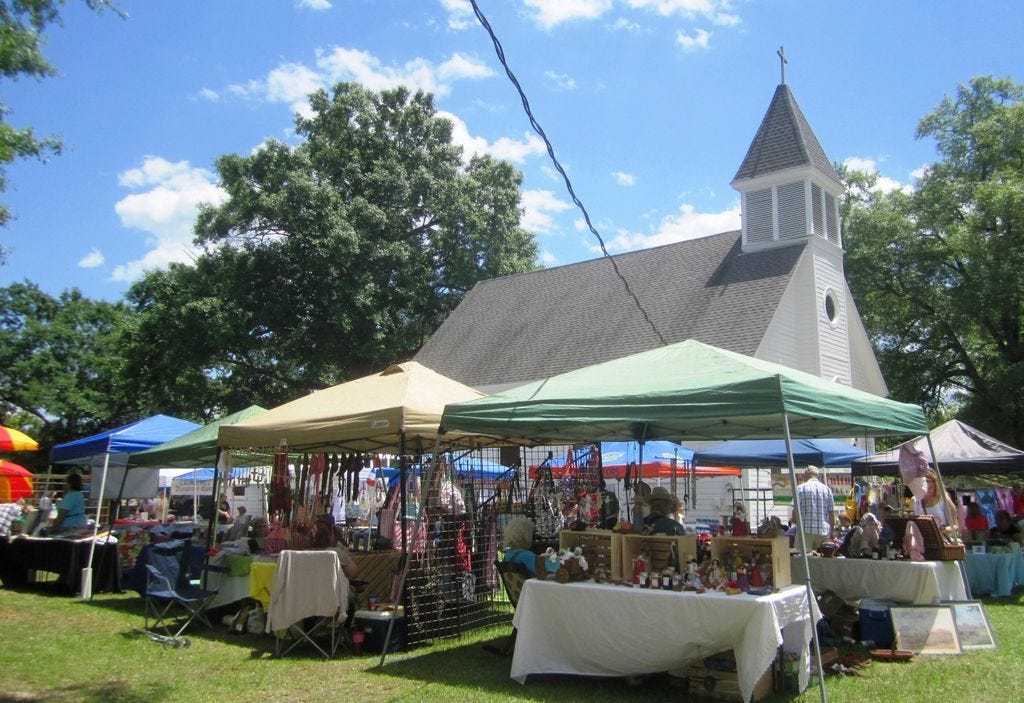
Artists, crafters, heritage displays and classic cars fill historic Laurel Hill Presbyterian Church's spacious side and rear yard during the town's 2015 Arts and Heritage Festival.

The Laurel Hill Spring Arts and Heritage Festival will be held 11 a.m. to 3 p.m. April 30 at Laurel Hill Presbyterian Church, 8115 Fourth St.

This festival is open to the public and has free admission. There will be a variety of vendors — from local artisan and crafters to community service organizations, musicians, and the OneBlood bus.

All types of musical groups will perform — the Northwest Florida State College Jazz ensemble, guitarists, an electric bass player, Emerald Coast Pipes and Drums, several talented vocalists, and the Wesley Boys and Wesley Girls from Crestview First United Methodist.

There will also be a demonstration from Gordon Martial Arts, which is sure to be informative as well as entertaining.

Over 15 artisans and crafters will display their wares and demonstrate their crafts — so much to see and learn! There will be everything from woodworking, jewelry and tote bags to beautiful paintings.

Delicious baked goods will also be offered for sale, with some of them so beautifully decorated one doesn't want to eat them. There will also be locally made jams, jellies and even salsa.

For the kids, there will be a bounce house and an archery range, as well as yummy treats.

The grounds of the church are quite pretty, and kids generally have a blast running around and playing outside.

The Baker Block Museum/North Okaloosa Heritage Association will be there, and Laurel Hill history will be on display, as will the University of West Florida’s Florida Public Archeology exhibit. 

In addition, Friends of the Arts will have a display, so you can get a better idea of the wonderful arts opportunities we have in Crestview, Laurel Hill and North Okaloosa County.

Bring the entire family to this wonderful festival.  You will have a great time, meet some new friends and thoroughly enjoy yourself. 

I look forward to seeing you there!

Janice Lynn Crose, a former accountant, lives in Crestview with her husband, Jim; her two rescue collies, Shane and Jasmine; and two cats, Kathryn and Prince Valiant.

This article originally appeared on Crestview News Bulletin: CROSE: Have a great time at this Laurel Hill festival

Florida citrus growers: 80 percent of trees infected by greening

The completed surveys by Florida citrus growers who operate approximately 30 percent of Florida's citrus acreage estimate greening has reduced their yield by 41 percent.

GAINESVILLE — Florida’s citrus growers say as much as 90 percent of their acreage and 80 percent of their trees are infected by the deadly greening disease, which is making a huge dent in the state’s $10.7 billion citrus industry, a new University of Florida Institute of Food and Agricultural Sciences survey shows.

The survey, conducted in March 2015, shows the first grower-based estimates of both the level of citrus greening in Florida and the impact of greening on citrus operations in Florida.

“Even though the industry acknowledges that greening has reached epidemic proportions across the state, estimates of the level of infection and its impact on citrus operations are scarce,” the researchers wrote in the paper.

Assistant professor Ariel Singerman and associate professor Pilar Useche, faculty members in the UF/IFAS food and resource economics department, surveyed about 200 growers to estimate their losses from the disease. They obtained about 76 completed surveys; those growers operate approximately 30 percent of Florida’s citrus acreage. They also estimate greening has reduced their yield by 41 percent.

Surveyed growers said, on average, 90 percent of citrus acreage and 80 percent of trees in their operations had been infected, on average, in any given operation in Florida.

Singerman and Useche conducted their survey at the UF/IFAS Citrus Research and Education Center, where Singerman conducts his research. Useche works at the UF Gainesville campus.

Their results are outlined in an Extension document, http://edis.ifas.ufl.edu/fe983.

Greening was first detected in Florida in 2005 and threatens to destroy Florida’s citrus industry. Florida has lost about $7.8 billion in revenue, 162,200 citrus acres and 7,513 jobs to citrus greening since 2007, according to

UF/IFAS researchers. Orange production dropped from 242 million to 104 million boxes in 2014, UF/IFAS researchers say.

The greening disease bacterium first enters a citrus tree via the tiny Asian Citrus Psyllid. When introduced into the plant by leaf feeding, the bacteria then move through the tree via the veins of the tree. The disease starves the tree of nutrients, damages its roots and the tree produces fruits that are small and misshapen and have reduced quality, making it unsuitable for sale as fresh fruit or, for the most part, juice.

Brad Buck is a University of Florida Institute of Food and Agricultural Sciences science writer.

This article originally appeared on Crestview News Bulletin: Florida citrus growers: 80 percent of trees infected by greening

BRESLAWSKI: Here are 5 tips for successful home canning

USDA Complete Guide for Home Canning chart

Right around this time of year, for me, the phone calls begin asking about preserving fresh foods using methods of canning, so I thought it would be appropriate to write a short article of tips to keep in mind for canning season success.

1. Check the condition of your canners on a seasonal basis. Pressure canners should be tested to make sure they are holding the correct pressure and the rubber seal is in good shape. Water bath canners should be free from dents and cracks.

2. Use glass jars that are clean, and free of scratches, cracks, or nicks. Lids are not re-usable and lose their ability to seal after one just use, so you must use a new one each time. Bands can be reused as long as they are in good condition.

3. There are two types of approved canning methods: water bath and pressure canning. Using the incorrect method for canning can result in food-borne illness.

In 2015, home-canned potato salad was pinpointed as the cause for over 20 cases of botulism. This resulted in one death and several hospitalizations. It was determined that the botulism toxins were not killed, because the potato salad was not canned using the correct method.

Generally, high-acid foods can be water bath canned, and low-acid foods should be pressure canned. Refer to the chart from the USDA Complete Guide for Home Canning for direction.

4.       Follow the recipe directions exactly as written. The recipe times and temperature have been carefully calculated to reduce risk of food-borne illness. Adjusting these times or temperatures, or other parts of the recipe, could increase the likelihood of getting sick or food spoilage.

5. When in doubt call your extension agent. Okaloosa County Extension can help you determine which type of canning method to use, make an appointment to test your pressure canner, and help you answer any questions you have about canning.

Good luck this year preserving the bounty!

For more information, contact me at 689-5850 or jbreslawski@ufl.edu.

Jill Breslawski is an agent at the University of Florida's Institute of Food and Agricultural Sciences Extension office in Crestview.

This article originally appeared on Crestview News Bulletin: BRESLAWSKI: Here are 5 tips for successful home canning

Baker groups plan free mobile dental clinic with May 6 screenings

BAKER —  Low-income families may participate in a free mobile dental clinic sponsored by the Baker Area Ministerial Association and the Baker Lion's Club.

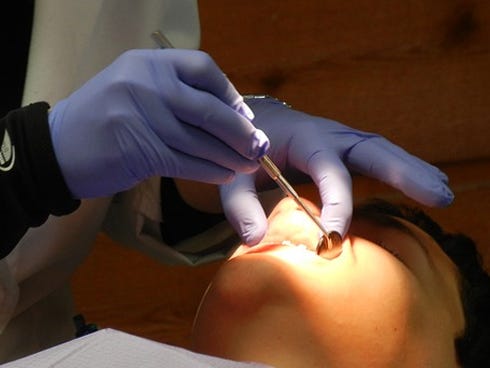
Local dentists and their assistants will provide fillings or extractions to those who qualify after screenings.

The screenings are 8 a.m. to 4 p.m. May 6 at the Baker Area Recreation Center, 5503 Highway 4. Appointments will then be set for the week of May 9-13.

Qualifications are:

●Patients must be age 6 or older.

●Patients must attend the May 6 screening to schedule an appointment.

●Family income is at or below 200 percent poverty guideline.

The van is provided by the Florida Baptist Convention.

For more information, contact Project Director Mary Ann Henley, 865-3144.

This article originally appeared on Crestview News Bulletin: Baker groups plan free mobile dental clinic with May 6 screenings

DREADEN: Several spring home improvement resources available at Crestview library

Spring resources in the library's home improvement collection cover outdoor and indoor projects.

Are you enjoying springtime? Is home improvement on your to-do list?

Then take a look at the Florida Electronic Library’s Home Improvement Collection for access to articles on everything from landscaping and gardening to building a bookcase, plans included. You can even search through the most recent editions of magazines like “Timber Home Living”, “Architectural Digest,” “House Beautiful,” “Popular Woodworking,” and “Mother Earth News.”

The Home Improvement Collection puts the research of hobbyists and professionals alike on a solid foundation with more than five million articles from more than 200 home improvement-focused publications, covering topics including architectural techniques, tool and material selection, zoning requirements, and much more.

From the library website at www.cityofcrestview.org/library.php, go to the Electronic Resources page, click on the Home Improvement Collection icon and enter your library barcode number.

You may also go to the Florida Electronic Library at www.flelibrary.org, choose “All Resources” and scroll down to the same icon.

Sandra Dreaden is the Crestview Public Library's reference librarian.

This article originally appeared on Crestview News Bulletin: DREADEN: Several spring home improvement resources available at Crestview library

Medical group relocates Crestview office

CRESTVIEW — The Renalus Center for Kidney Care is moving its Crestview office to a new, state-of-the-art practice location.

The center's new address is 221 Redstone Ave. E., near the North Okaloosa Medical Center.

“We are very excited to have moved to our new state-of-the-art Crestview facility,” Dr. Christopher Reid said. “Our new space allows us to improve our care, patient satisfaction, and overall patient experience while continuing to provide the latest technological advancements.”

The physician-owned and managed nephrology practice treats various kidney conditions and provides expansive services for kidney health and education. Services include treatment of chronic kidney diseases, dialysis, transplant, hypertension and anemia, as well as consultation for second opinions.

The Renalus Center for Kidney Care’s medical team includes Doctors Christopher Reid, Nicholas Nagrani, Derek Jimenez, James Martin and F. Duncan Scott; and nurse practitioners Misty Willis, Amy Dugger and Kathy Curry.

For a complete list of services, treatments, and locations, visit www.renalus.com.

This article originally appeared on Crestview News Bulletin: Medical group relocates Crestview office

SHANKLIN: What golf can teach you about retirement planning

If you’re a golfer, you know the joys (and occasional frustrations) of the game. But you might not realize that some of the lessons you learn on the links can carry over to other areas of your life – such as retirement planning.

So whether you’re already retired or are planning to retire in the next few years, consider the following suggestions:

• Try to overcome the “yips.” When you miss those short puts – the ones you know you should be making – you might be in the grip of your old friend, the “yips.” As you know, it’s not always easy to shake this problem, but many golfers have benefited by working to improve their concentration, especially by adhering to a strict pre-shot and in-shot step-by-step routine. When investing for retirement, or managing their portfolios during retirement, many people can get the investment version of the yips – that is, they get nervous during market downturns, and then they make mistakes, such as selling quality investments when their price has dropped. (Remember the first rule of investing: Buy low and sell high.)

To overcome this type of yips, the solution is the same as for golf: Maintain your focus and concentrate on making appropriate moves, such as building and maintaining a diversified portfolio that’s suitable for your needs, goals and risk tolerance.

• Forget about that hole-in-one. It’s  every golfer’s dream: a hole-in-one. When you tee up on that tempting par 3, and you’re feeling good, you might just want to go for it – but when you do, you could end up overshooting the green or plunking into the water. Many investors also try for a “hole-in-one,” in the form of pursuing that one “hot” stock that’s going to make them rich. However, by the time they hear about such a stock (if it even exists), it may have already cooled off – and, in any case, it might not be right for their needs.

Instead of looking for that ultimate, one-time winner, look for solid investments that you’d be comfortable holding for the long term.

• Study the course. The more you know about a course you’re going to play, the better off you will be. You can plan the approaches you’ll take on various holes and think about how to avoid the sand, water and rough. When planning for your retirement, or even when you’re living it, you also need a strategy, one that addresses questions such as these: How can I structure my investment mix to provide me with a long-term income stream? How much should I withdraw from my portfolio each year? When should I start taking Social Security? Am I doing all I can to control investment-related taxes?

• Visualize. Consider these words from World Golf Hall of Famer Nick Faldo: “Visualization is the most powerful thing we have.” If you can visualize what you want to do on each hole you play, you are well on your way toward a successful round.

The same idea holds true for retirement planning: If you can envision the type of retirement lifestyle you want, you’ll be more likely to achieve it by sticking with appropriate financial and investment strategies.

So, there you have them – some ideas that play well on the golf course and in the retirement arena. Put them to work soon.

This article was written by Edward Jones for use by your local Edward Jones financial adviser.

This article originally appeared on Crestview News Bulletin: SHANKLIN: What golf can teach you about retirement planning

error: Content is protected !!