



Please ensure Javascript is enabled for purposes of website accessibility
Skip to main content
Advertisement

Officials lobby for trauma center in Okaloosa County
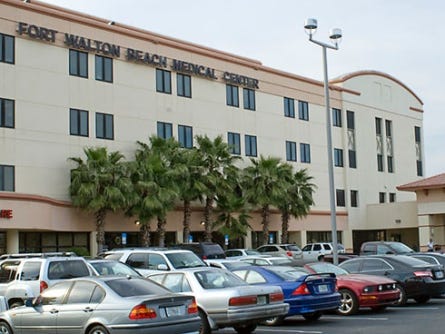
The director of emergency services at Fort Walton Beach Medical Center and Okaloosa County Sheriff Larry Ashley spoke in favor of bringing a trauma center to Okaloosa County during a Friday workshop about possible changes to the state’s trauma system.

FORT WALTON BEACH — Changes could be made soon to the number of certified trauma centers in Northwest Florida and throughout the state.

The Florida Department of Health hosted a workshop Friday morning at the Okaloosa County Health Department to gather input about possible changes to the state’s trauma system.

Florida is divided into 19 trauma service areas. Trauma Service Area 1 is comprised of Okaloosa, Walton, Santa Rosa and Escambia counties. The only certified trauma centers in the area are Sacred Heart Hospital and Baptist Medical Center in Pensacola.

One of the key points that Okaloosa County’s delegation raised Friday was the need for trauma care nearby.

“I can tell you as being a father, a husband, a son, that in the event that there’s something that happens to myself or my family, I want to go to the closest, most appropriate place I can to get the best care, and I don’t want to travel for over an hour,” said Wes Boles, director of emergency services at Fort Walton Beach Medical Center. “I don’t want to sit on scene for 20 minutes waiting for an aircraft to come so I can get care. If we have an opportunity to affect the quality of care in the state of Florida, then we have to take many, many variables into consideration.

“Let’s not fight over who gets what and where. Let’s put the patient first,” Boles added.

Friday’s workshop was the seventh in a series of meetings around the state to discuss the trauma system. It also was the first of three workshops in counties without a certified trauma center. The Department of Health will host similar meetings in Collier and Highlands counties later this month.

The American College of Surgeons Committee on Trauma is expected to present its final report on how to improve the state’s trauma system in the next several months, said Dr. John Armstrong, Florida’s surgeon general and secretary of health.

“This rule-making process really is an opportunity for all of us to work together and move Florida closer to a trauma system that is inclusive, sustainable and integrated for safe and effective care of injured patients and the trauma population,” Armstrong said.

Representatives from Sacred Heart Hospital spoke against having a certified trauma center in Okaloosa County.

“The Panhandle of Florida is well served by trauma centers,” said Genevieve Harper, staff attorney for Sacred Heart Health System. “In TSA 1, we have two Level II trauma centers and one pediatric trauma center for a population of approximately 700,000. There is no evidence of a lack of access to a trauma center.”

Harper said Sacred Heart’s patient outcome numbers were better than the state average, and if the region really needed another trauma center its numbers would be lower.

he also argued that a trauma center in Okaloosa would take four to five years to fully mature, and it could decrease the chances of Bay County’s new trauma center becoming fully effective by pulling patients from there.

“Redundancies in the trauma system is something we want to avoid because low patient volume will decrease quality of care we can give to our patients, and increased cost will be passed along to our community,” Harper said.

Okaloosa County Sheriff Larry Ashley said a local certified trauma center is greatly needed. Ashley said having the closest center in Escambia County takes time away from his deputies and investigators when they must travel there for follow-up investigations.

Ashley said there were other, more important reasons to have a trauma center close by.

“I’ve had three deputies killed in the line of duty, shot to death, in the last three years,” Ashley said. “I’m not a doctor. I don’t know if we could have saved them or not, but having the ability to get them to a trauma center quicker certainly weighs on my mind.”

Contact Daily News Business Editor Dusty Ricketts at 850-315-4448 or dricketts@nwfdailynews.com. Follow him on Twitter @DustyRnwfdn.

This article originally appeared on Crestview News Bulletin: Officials lobby for trauma center in Okaloosa County

Doctors, first responders speaking at March 8 trauma care meeting

FORT WALTON BEACH — Doctors, first responders, and other stakeholders will speak in support of expanding access to trauma care during a workshop hosted by the Florida Department of Health, or DOH, at 8 a.m. March 8 at the Okaloosa County Health Department in Fort Walton Beach. The DOH is convening workshops across the state to gather public input about strengthening the Florida trauma system. 

"Minutes – even seconds – can be the difference between life and death when dealing with traumatic injuries," said Dr. Tama Van Decar, Fort Walton Beach Medical Center's chief medical officer.  "A trauma patient's chances of survival increase by 25 percent when they receive trauma care in a trauma center.  However, Okaloosa and Walton County currently have no trauma center to serve our residents and visitors in times of crisis."

Trauma patients in these counties are forced to travel great distances to either Pensacola or Panama City. This takes much longer than the ideal "Golden Hour" in which they should receive trauma care.  Furthermore, when winds reach 40 miles per hour, access from parts of Walton and Okaloosa counties to a trauma center becomes by increasingly dangerous ambulance and virtually impossible by air transport.

"For this community, a local trauma center would mean faster treatment for trauma patients and that will greatly improve our ability to save lives," said Mitch Mongell, Fort Walton Beach Medical Center chief executive officer.  "The expansion of trauma care is critical to communities like Walton and Okaloosa Counties where quality trauma care is nonexistent."

This article originally appeared on Crestview News Bulletin: Doctors, first responders speaking at March 8 trauma care meeting

Crestview program aids residents' efforts to quit smoking

Miriam Lavandier, left and Patricia Smith,right

CRESTVIEW — Penny Eubanks, West Florida Area Health Education Center’s assistant director and a former smoker, knows how difficult it is to quit smoking.

 "A lot of times, it will take people multiple times to stop," she said. "The big thing is you have to want to."

Relatives can bring the subject to focus.

"When I quit smoking 17 years ago, it was primarily because of my son," Eubanks said.

Patricia Smith, who participates in AHEC’s Quit Smoking Now program, said her reason was similar.

"My son wants me to quit, my husband wants me to quit," the 47-year-old said. 

Her son, Christopher York, who lives in Biloxi, said he would quit smoking if she would do the same.

"That's just more incentive for me to quit smoking," Smith said.

Another incentive is for her health.

"I have heart disease and high blood pressure,” she said, adding the former runs in her family.

Aiding her mission to quit that habit is AHEC’s six-week program, which provides free counseling and offers four weeks’ supply of free nicotine patches and lozenges.

"Most of the time, the patches are not enough for them, so we offer the combination treatments," Miriam Lavandier, the program’s instructor, a certified tobacco treatment specialist, said.

A box of nicotine patches can cost $30 to $40 per week, she said.

The state-funded program, which applies to smoking and chewing tobacco users, has been available at AHEC’s south Ferdon Boulevard location for the past six years. Tobacco users meet for one hour a week and learn effective ways to avoid tobacco use, cope with nicotine withdrawals and prevent relapses.

The Crestview location promotes health and wellness through several programs that serve Okaloosa, Santa Rosa, Escambia and Walton counties. 

This will be the second time that Smith has participated in AHEC’s program; she completed the course two years ago.

"I just wasn't mentally prepared for it then," she said.

This time, with support from physicians, friends and family, she is determined to quit smoking once and for all.

"This is it, I've got to do it," Smith said. "It’s going to kill me if I don't."

Want to go?

West Florida Area Health Education Center is at 1455 S. Ferdon Blvd. Call 398-6965 or see westfloridaahec.org for more information.

Contact News Bulletin Staff Writer Matthew Brown at 850-682-6524 or matthewb@crestviewbulletin.com. Follow him on Twitter @cnbMatthew.

This article originally appeared on Crestview News Bulletin: Crestview program aids residents' efforts to quit smoking

Free leg pain screening event is March 4 in Crestview

CRESTVIEW — Coastal Vein Institute, in collaboration with The American Venous Forum and Legs for Life organizations, will offer a free varicose, spider vein and peripheral arterial disease screening to raise awareness for vascular disease and available treatment options.

The event is 2-5:30 p.m. March 4 at 550 W. Redstone Ave., Suite 410, Crestview.

In America, 72 percent of women and 42 percent of men reportedly will experience varicose veins by the time they are in their 60s. Venous insufficiency typically occurs in women ages 40-49 and in men ages 70-79.

Common risk factors for varicose veins and venous reflux include multiple pregnancies, family history, obesity and standing professions.

A leading cause of varicose veins is venous reflux disease caused by “leaky” valves in the greater saphenous vein running from ankle to groin in each leg.

In addition to varicose veins, symptoms may include leg pain, fatigue, swelling and skin ulceration. This condition can be progressive if left untreated and symptoms may worsen with time.

One in every 20 Americans over age 50 has peripheral arterial disease.

Individuals with the disease have a five-fold increased relative risk of a cardiovascular ischemic event and total mortality that is two to three times greater than those without it.

People with peripheral vascular disease often change their lifestyles, especially when they have standing professions and can’t tolerate being on their feet all day.

Screenings for vascular disease include a limited ultrasound and ankle brachial index. The screenings are quick and painless.

Contact Coastal Vein Institute, 682-0032, to register for the screening.

This article originally appeared on Crestview News Bulletin: Free leg pain screening event is March 4 in Crestview

Groups launch website to explain Affordable Care Act's provisions

TALLAHASSEE — Progress Florida and Florida CHAIN have launched Health Care for Florida Now, www.healthcareforflorida.org, to educate Floridians about new health coverage opportunities and to engage public support to protect, implement and support the Affordable Care Act.

The website acts as a clearinghouse for information on the health law's implementation and Florida's Medicaid expansion.

A key element of the health law is the extension of the Medicaid program, which will address Florida’s high rate of uninsured residents. More than 1 million people — many who have jobs but cannot afford health insurance — will become eligible for coverage.

Accepting the funds will also help to spur Florida’s still stagnant economy, a Florida CHAIN spokesperson said.

Another feature of the health law creates a health insurance marketplace in 2014 that will allow millions of Florida families to have affordable health care coverage.

"By providing a competitive health care marketplace, consumers will have more control, higher quality choices and better protections when buying insurance," a spokesperson said.

The marketplace will help low- and middle-income Floridians qualify for tax credits that will ensure affordable coverage, a spokesperson said.

Florida CHAIN is a statewide health care advocacy organization. Progress Florida is a nonprofit that promotes progressive values.

This article originally appeared on Crestview News Bulletin: Groups launch website to explain Affordable Care Act's provisions

error: Content is protected !!