Please ensure Javascript is enabled for purposes of website accessibility
Skip to main content
Advertisement

Look Good, Feel Better program scheduled in Crestview

CRESTVIEW — Look Good Feel Better's next session is 1-3 p.m. Aug. 11 at North Okaloosa Medical Center, Senior Circle classroom, 127 E. Redstone Ave., Suite A.

Advance registration is required to provide cosmetics that match your skin tone.

This group program is open to all women with cancer who receive chemotherapy, radiation or other treatments.

Call the American Cancer Society, 1-800-227-2345, for details.

This article originally appeared on Crestview News Bulletin: Look Good, Feel Better program scheduled in Crestview

Six parks receive advisories for hazardous water

FORT WALTON BEACH — Six Okaloosa County parks may have potentially hazardous bathing water, the Florida Department of Health in Okaloosa County stated this week.

On July 21, Liza Jackson and Garniers Parks, Fort Walton Beach; Marler Park, Okaloosa Island; Poquito Park, Shalimar; Lincoln Park, Valparaiso; and Fred Gannon Rocky Bayou State Park, Niceville, failed tests based onEPA-recommended enterococci standards.

Enteric bacteria’s presence indicates fecal pollution from stormwater runoff, pets and wildlife or human sewage.

Call 689-7859 or 833-9247 for more information.

This article originally appeared on Crestview News Bulletin: Six parks receive advisories for hazardous water

Crestview boy back home following viral meningitis diagnosis

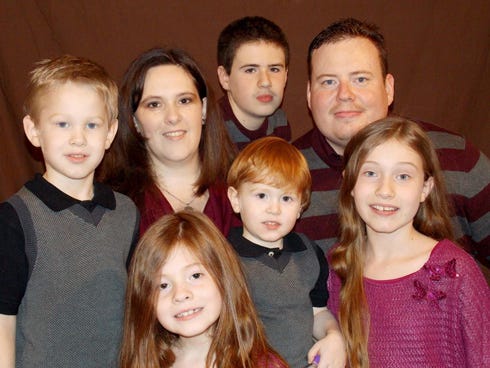
Gabriel Stackhouse, 7 — top row, far left — is back home with his family after a 12-day hospital stay. Pensacola doctors treated him for a severe case of viral meningitis that North Okaloosa Medical Center doctors diagnosed over the Fourth of July weekend. Pictured from left are Gabriel's mother, Michelle; brother, Jared; and his father, Kelly. On the bottom row are siblings Ellie, Zeke and Alena Stackhouse.

CRESTVIEW — Kelly and Michelle Stackhouse are glad to have their 7-year-old son, Gabriel, back at home.

Gabriel, who has a severe case of viral meningitis, returned to Crestview Wednesday after spending 12 days at Sacred Heart Hospital in Pensacola, where he received a brain MRI, two spinal taps and IV treatments.

“It’s quite a relief to have the family back together,” Kelly Stackhouse said. “What’s most important is that we consider ourselves fortunate to have our son back.”

The Stackhouses noticed something was wrong on the Fourth of July weekend, when Gabriel showed flu-like symptoms including fever and headaches. They took him to North Okaloosa Medical Center and then to Sacred Heart following the meningitis diagnosis.

Doctors told Kelly there is no risk of other family members being infected. However, Gabriel’s parents are concerned about their son’s weight; he lost 9 pounds while hospitalized.

Then there are the bills. The family lacks health insurance, and a gofundme.com account has been set up to offset medical expenses. More than $1,600 of a $20,000 goal has been donated so far.

Family, friends and Victory Baptist Church members also have helped by donating and providing daily meals.

Such acts are common when someone needs help, the church's pastor, Rev. Wayne Matheson.

“We took to (the situation) like a family, which is what a church is supposed to do,” he said.

HOW TO HELP

Click here to donate toward Gabriel Stackhouse's medical expenses>>

Email News Bulletin Staff Writer Matthew Brown, follow him on Twitter or call 850-682-6524.

This article originally appeared on Crestview News Bulletin: Crestview boy back home following viral meningitis diagnosis

Okaloosa parks pass hazardous water tests

FORT WALTON BEACH — No Okaloosa County parks have hazardous bathing water this week, the Florida Department of Health in Okaloosa County stated.

On July 16, all 13 parks passed tests based onEPA-recommended enterococci standards, and only three, Marler Park on Okaloosa Island, Lincoln Park in Valparaiso, and Henderson Beach in Destin, earned "moderate" instead of "good" ratings.

Enteric bacteria’s presence indicates fecal pollution from stormwater runoff, pets and wildlife or human sewage.

Call 689-7859 or 833-9247 for more information.

This article originally appeared on Crestview News Bulletin: Okaloosa parks pass hazardous water tests

Residents, visitors urged to take precautions during extreme heat

Residents should take precautions to avoid heat exhaustion, the Florida Department of Health in Okaloosa County states.

Tips:

•Dress in lightweight, light-colored, loose-fitting clothing

•Drink plenty of water; avoid alcohol and caffeinated drinks

•Eat smaller meals more often

•Reduce or eliminate strenuous activity outside or reschedule to coolest time of day

•Spend more time in air-conditioned places

•When outside, seek out shade during peak sun (between 10 a.m. and 4 p.m.)

•Use sunscreen

Signs of heat exhaustion:

•Heavy sweating

•Paleness

•Muscle cramps

•Tiredness

•Dizziness

•Headache

•Nausea or vomiting

•Fainting

•Skin — cool and moist

•Pulse rate — fast and weak

•Breathing — fast and shallow

Untreated heat exhaustion may progress to heat stroke.

If you suspect heat exhaustion, try these cooling measures:

•Drink cool, nonalcoholic beverages, as directed by your physician

•Rest in an air-conditioned environment

•Take a cool shower, bath or sponge bath

•Wear lightweight clothing

•Prevent sunburn with a 30 SPF sunscreen

Seek medical attention immediately if symptoms are severe or you have heart problems or high blood pressure, a department spokesperson states. Otherwise, help the person cool off and seek medical attention if symptoms worsen or last longer than one hour.

Heat exhaustion, a milder form of heat-related illness, can develop after exposure to high temperatures and inadequate or unbalanced replacement of fluids.

Infants and children up to 4 years old, people 65 or older, and those who are overweight, ill or on certain medications are prone to heat exhaustion.

This article originally appeared on Crestview News Bulletin: Residents, visitors urged to take precautions during extreme heat

North Okaloosa, Fort Walton Beach hospitals recognized for reducing early elective deliveries

MAITLAND — March of Dimes and the American College of Obstetricians and Gynecologists of District XII (Florida) are recognizing more than 40 Florida hospitals for successfully reducing their rates of early elective deliveries. This includes inductions of labor and cesarean sections scheduled without a medical reason before 39 weeks of pregnancy. 

North Okaloosa Medical Center in Crestview and Fort Walton Beach Medical Center are among recognized hospitals.

The March of Dimes and the ACOG presented a joint special recognition banner to each hospital highlighting its commitment to improving the quality of care for mothers and babies.

The banner recognition program is an element of the March of Dimes national campaign, "Healthy Babies are Worth the Wait." One goal is to reduce the rate of elective deliveries before 39 weeks of pregnancy to 5 percent or less. 

"Studies have shown that deliveries that are scheduled for non-medical reasons may increase harm to infants, increase health care costs, and worsen medical outcomes," said Dr. Robert Yelverton, Chair of ACOG District XII. "We are extremely pleased with the participation from the hospitals across Florida and with the great results this collaborative effort is seeing."

This article originally appeared on Crestview News Bulletin: North Okaloosa, Fort Walton Beach hospitals recognized for reducing early elective deliveries

O Negative blood needed immediately

O Negative blood supply has reached very low levels due to summer vacations and school and college summer breaks.

An immediate appeal is being issued for all O Negative donors to donate at OneBlood, the local blood center, as soon as possible.

Crestview's location is 2400 S. Ferdon Blvd. Suite B.

Any patient can receive O Negative blood, regardless of the recipient’s blood type. O Negative is critical for trauma patients, premature babies and emergency surgeries.

Generally healthy people age 16 or older who weigh at least 110 pounds can donate blood. 

This article originally appeared on Crestview News Bulletin: O Negative blood needed immediately

Couple paying it forward following son's cancer treatments

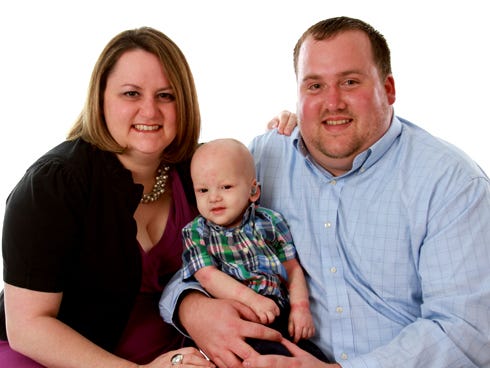
The Jackson family is giving back to St. Jude Children’s Research Hospital, which provided their son, Noah — who had a cancerous brain tumor — surgery and treatments at no cost. Pictured are Krystal, Noah and Caleb Jackson.

CRESTVIEW — Noah Jackson may not have celebrated his first birthday on Saturday if St. Jude Children's Research Hospital hadn't stepped in to help.

HEALTH CARE — NO COST

When Noah was born June 28, 2013 at Sacred Heart Hospital in Pensacola, doctors spotted glioblastoma, a cancerous brain tumor.

They removed the tumor during emergency surgery, but Sacred Heart specialists recommended that Noah receive additional treatment at St. Jude.

For seven months in Memphis, Tenn., St. Jude provided two surgeries, six rounds of chemotherapy, lodging and food. In addition, specialists provided physical, occupational and speech therapies during a crucial point in Noah's development.  

All the surgeries, treatments and therapies came at no cost to the family.

Now, little Noah's latest brain scan, as of February, shows no cancer.

'WHAT A BLESSING'

Despite favorable results, Noah is not medically cleared at this time.

“Until he is five years clean, they won’t diagnose him as beaten (cancer),” Caleb, his father, said. “So we have a little ways to go, but we are doing about as good as we can right now.”  

Still, it's a relief, Krystal, his mother said.

 “The weight that was lifted … I can’t even describe how wonderful it is, and what a blessing it’s been for us,” she said.

Now, the Jacksons are paying it forward. The family is raising money for St. Jude. With the support of friends, family and the community, they've raised more than $32,000.

 “As a parent, this is a way … we can fight back,” Krystal said, referring to cancer.

'AMAZING COMMUNITY'

Back at his Crestview home, Noah receives additional chemotherapy and care.

Although treatments can take a toll on an infant, Noah has a smile on his face.

“He is a very happy baby; he just takes it all in stride,” Caleb said.

His parents also are happy, thanks to Crestview residents' support.

“This is an amazing community; they have rallied behind us with support and prayers,” Krystal said.

HOW TO HELP

Visit bit.ly/1lw2dzh to donate toward Noah’s Birthday Wish

Email News Bulletin Staff Writer Matthew Brown, follow him on Twitter or call 850-682-6524.

This article originally appeared on Crestview News Bulletin: Couple paying it forward following son's cancer treatments

Neurosurgeon: The greatest thing you can do you for body is to build muscle

If you want good health, a long life and to feel your best well into old age, the No. 1 most important thing you can do is strength-training, says Dr. Brett Osborn, author of “Get Serious, A Neurosurgeon’s Guide to Optimal Health and Fitness.”

“Our ability to fight off disease resides in our muscles,” Dr. Osborn says. “The greatest thing you can do for your body is to build muscle.”

He cites a large, long-term study of nearly 9,000 men ages 20 to 80. After nearly 19 years, the men still living were those with the most muscular strength. (BMJ, formerly British Medical Journal, 2008).

Muscle is all protein – “nothing but good for you,” Dr. Osborn says.

Fat, however, is an endocrine organ, meaning it releases hormones and other chemicals. When a person has excess fat, he or she also a disrupted flow of excess biochemicals, which can increase insulin resistance and boost risk factors for stroke and high blood pressure, among other problems.

“Increased cytokines, an immune system chemical, for example, are associated with increased risk for cardiovascular disease,” Dr. Osborn says. “You’re only as old as your arteries!”

Strength-training has health benefits for everyone, he adds, no matter their size.

“Some fat is visceral fat – it’s stored around the organs and it’s even more dangerous than the fat you can see,” he says. “People who look thin may actually be carrying around a lot of visceral fat.”

So, what’s the workout Dr. Osborn recommends?

“Back to basics,” he says. “These five exercises are the pillars of a solid training regime.”

•  The squat is a full-body exercise; it’s the basic movement around which all training should be centered. Heavy squats generate a robust hormonal response as numerous muscular structures are traumatized during the movement (even your biceps). Standing erect with a heavy load on your back and then repeatedly squatting down will stress your body inordinately – in a good way — forcing it to grow more muscle.

•  The overhead press primarily activates the shoulders, arm extenders and chest. Lower body musculature is also activated as it counters the downward force of the dumbbell supported by the trainee. From the planted feet into the hands, force is transmitted through the skeletal system, stabilized by numerous muscular structures, most importantly the lower back.

•  The deadlift centers on the hamstrings, buttocks, lumbar extensors and quadriceps, essentially the large muscles of your backside and the front of your thighs. As power is transferred from the lower body into the bar through the upper body conduit, upper back muscles are also stressed, contrasting with the squat, which is supported by the hands. Deadlifts are considered by some to be the most complete training exercise.

•  The bench press mostly targets the chest, shoulders and triceps; it’s the most popular among weightlifters, and it’s very simple – trainees push the barbell off the lower chest until the arms are straight. This motion stresses not only the entire upper body, but also the lower body, which serves a stabilizing function. This provides a big hormonal response and plenty of bang for your buck.

•  The pull-up / chin-up stresses upper body musculature into the body. A pull-up is done when hands gripping over the bar; a chin-up is where hands are gripping under the bar. Nine out of 10 people cannot do this exercise because most simply haven’t put in the effort. It’s also been called a “'man’s exercise,' which is nonsense,” he says. "There are no gender-specific exercises. Women, too, should aspire to enjoy the health benefits entailed with this pillar.

“There are no secrets to a strong and healthier body; hard work is required for the body that will remain vital and strong at any age,” Osborn says. “Always practice proper form and safety. Otherwise, the result will be the opposite of your goal, an injury.”

Brett Osborn is a New York University-trained, board-certified neurological surgeon with a secondary certification in anti-aging and regenerative medicine. He is the author “Get Serious, A Neurosurgeon’s Guide to Optimal Health and Fitness,” available at www.drbrettosborn.com.

This article originally appeared on Crestview News Bulletin: Neurosurgeon: The greatest thing you can do you for body is to build muscle

Health department: Protect yourself against mosquitoes

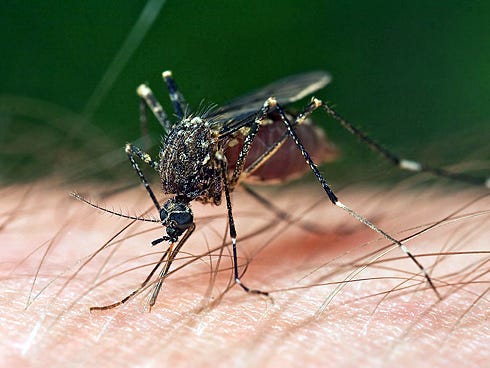
The Florida Department of Health in Okaloosa County and Okaloosa County Mosquito Control want residents and visitors to protect themselves against mosquito-borne diseases.

Standing water caused by recent heavy rainfall across the area has increased the incidence of these pests.

To prevent mosquitoes from living and multiplying around your home or business:

•Drain water from containers where sprinkler or rainwater has collected.

•Discard old tires, drums, bottles, cans, pots and pans, broken appliances and other unused items. Even small amounts of water can serve as a breeding site for mosquitoes.

•Empty and clean birdbaths and pets' water bowls at least once or twice a week.

•Protect boats and vehicles from rain with tarps that don’t accumulate water.

•Maintain swimming pools in good condition and appropriately chlorinated. Empty plastic swimming pools when not in use.

•If you must be outside when mosquitoes are active, wear shoes, socks, long pants and long sleeves.

•Apply mosquito repellent to exposed skin and clothing. Always use repellents according to the label. Repellents with 10-30 percent DEET, picaridin, oil of lemon eucalyptus, or IR3535 are effective.

•Never use repellents on children younger than 2 months. Use mosquito netting to protect children younger than 2 months old.

•Keep mosquitoes out of your house. Repair broken screening on windows, doors, porches and patios.

Most people will not get ill from a mosquito bite. Common symptoms of mosquito-borne virus infection may include headache, fever, fatigue, dizziness, weakness and confusion. Medical attention may be needed.

DID YOU KNOW?

•Mosquitoes develop in an aquatic environment for four to 16 days. 

•Adult mosquitoes live for 21 to 33 days. 

•Female adult mosquitoes can lay eggs 5 to 7 times every 2 to 3 days. 

•Adult female mosquitoes mate the first or second day after emergence. 

•Nearly all female mosquitoes need a blood meal to lay eggs.

This article originally appeared on Crestview News Bulletin: Health department: Protect yourself against mosquitoes

error: Content is protected !!