Please ensure Javascript is enabled for purposes of website accessibility
Skip to main content
Advertisement

Secondhand smoke awareness is Tobacco Free Florida Week's focus

FORT WALTON BEACH — The Florida Department of Health’s Tobacco Free Florida program and the Florida Department of Health in Okaloosa County (DOH-Okaloosa) are launching a new initiative, Secondhand Smoke Exposed, as part of the eighth annual Tobacco Free Florida Week, taking place May 8-14, to educate Okaloosa County residents about the dangers of secondhand smoke.

This year’s theme, Secondhand Smoke Exposed, focuses on dispelling the common myth that secondhand smoke is harmless. A report by the U.S. Department of Health and Human Services stated that breathing even small amounts of secondhand smoke can be dangerous.

In observance of Tobacco Free Florida Week, Students Working Against Tobacco members from Crestview High School will teach Bob Sikes Elementary fifth graders about the dangers of secondhand smoke.  DOH-Okaloosa staff members will also attend a health fair for employees of the City of Fort Walton Beach and will educate attendees about the dangers of tobacco.  

“Many people are unaware of how dangerous secondhand smoke exposure can be,” stated Carrie Ziegler, DOH-Okaloosa assistant director. “DOH-Okaloosa and its dedicated community partners are committed to educating the public about the dangers secondhand smoke and encourage residents to join the fight against tobacco and help make Okaloosa County a healthier place to live, learn, work, and play.”

 DOH-Okaloosa supports local tobacco-related interventions, including raising public awareness about subject areas related to secondhand smoke. From guiding a multi-unit housing property through the process of going smoke-free, to presenting the benefits of a tobacco free college campus, representatives in Okaloosa County offer various services.

To aid in reducing secondhand smoke exposure to pets, DOH-Okaloosa has recently started working with the Panhandle Animal Welfare Society in Okaloosa County to implement a 100 percent tobacco free policy for their grounds.

Despite the growing trend of smoke-free policies and the substantial decrease of smokers in the state, many of Okaloosa County’s most vulnerable are still involuntarily affected by secondhand smoke, which has hundreds of toxic chemicals including about 70 that are known to cause cancer, according to the U.S. Department of Health and Human Services.

May is also Asthma and Allergy Awareness Month. The  Centers for Disease Control and Prevention stated in a report that tobacco smoke is one of the most common asthma triggers.

If you smoke, the best thing you can do to protect your loved ones is to quit. Floridians who want to quit smoking are encouraged to use Tobacco Free Florida’s free and proven-effective services. More information is available at tobaccofreeflorida.com.

This article was updated May 10, 2016 to fix a typing error in the term "Health and Human Services" in the second paragraph and remove a double headline.

This article originally appeared on Crestview News Bulletin: Secondhand smoke awareness is Tobacco Free Florida Week's focus

Florida university study: Pain can cause inflammation in older adults

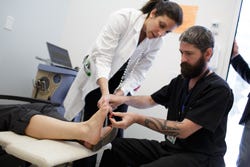
With a thermode — a device that looks like a microphone with a copper tip — Yenisel Cruz-Almeida, Ph.D., left, and another University of Florida researcher apply heat to the feet of participants in a study that tested the inflammatory response to pain of older adults versus younger adults.

GAINESVILLE — When older relatives complain about their pains, show a little empathy, because new research suggests that as we age, we may all become more sensitive to pain. A small, preliminary University of Florida Health study has suggested for the first time that inflammation may occur more quickly and at a higher magnitude — and stays around longer — when older adults experience pain versus when younger adults experience pain.

 This could mean that older adults could be at risk for developing chronic pain and may benefit from taking anti-inflammatories soon after an injury or procedure, according to the researchers.

Older adults often have a certain level of chronic inflammation in their bodies. But UF researchers found that when they induced pain in older adults, proteins associated with inflammation increased more than they did in younger participants and stayed in the bodies of older adults longer. The researchers also found that anti-inflammatory cytokines, proteins that soothe inflammation, peaked later for older adults than younger adults. They published their results were published in a previous issue of Experimental Gerontology.

“Older people go through painful procedures more often, and we wanted to research whether this accumulation of painful procedures or more acute pain episodes that older people encounter is bad,” said Yenisel Cruz-Almeida, Ph.D., MSPH, an assistant professor in the UF College of Medicine’s department of aging and geriatric research who also is affiliated with the UF Institute on Aging. “If you have enough of those in a shorter period of time, does this predispose you to have chronic pain?”

When older adults have this kind of elevated inflammatory response, they’re more likely to have pain generated in the periphery of the body — their tissue and limbs outside of the spinal cord and brain, said the study’s senior author Joseph Riley, Ph.D., director of the pain clinical research unit in the UF Pain Research and Intervention Center of Excellence.

“If older adults are more likely to have these pain messages sent through the spinal cord to the brain, and the nervous system is being adapted to go through these changes, they may become more pain prone,” said Riley, also a professor in the UF College of Dentistry’s department of community dentistry and the UF College of Public Health and Health Professions’ department of clinical and health psychology.

While the study does not establish whether accumulation of acute pain predisposes older adults to chronic pain, the researchers say their findings suggest this is a possibility, and it’s the first step in pain research to further understand the relationship between pain and aging. The researchers said the study’s sample size, though small, was more than adequate to demonstrate large differences between the older and younger adults they tested. The differences in inflammation within each group varied very little compared with the overall difference between the two groups, which suggests the populations they sampled were very different and there was little chance of sampling error, Riley said.

Cruz-Almeida and Riley studied eight healthy older adults, whose average age was 68, and nine healthy younger adults, whose average age was 21. None of the participants had illnesses such as diabetes or hypertension. During an initial visit, researchers induced pain in the participants in two ways, either using heat applied to the feet or a cold ice bath.

The first session determined how sensitive the participants were to pain. Determining a tolerable temperature allowed the researchers to recreate the same amount of pain for each participant in the subsequent sessions.

Participants rated their pain on a scale from 1 to 10. The researchers were aiming to induce pain to a Level 4 — a level that created the painful stimuli the researchers needed, but didn’t dissuade the participants from returning for the other visits required in the study.

To study inflammation in the blood, the scientists inserted a catheter into each participant before inducing pain. That allowed them to collect the participant’s blood before the pain stimulus and then at three, 15, 30, 45, 60 and 90 minutes after the stimulus. These blood samples allowed the researchers to study inflammatory markers in the blood, finding that older adults had higher levels of inflammation when pain was induced than the younger adults.

Riley said activation of the immune system and increased inflammation are not necessarily harmful, but it’s important to understand how the length of time the immune system is activated affects the body.

“We think that the longer you have the immune system activated, having these elevated inflammatory cytokines, the more this activation can alter the homeostasis of the body. Usually an imbalance like that can be associated with autoimmune disorders, which also increase with age,” Cruz-Almeida said. “But the truth is we don’t know what the direct implications would be. We think low-grade inflammation is related to endocrine abnormalities such as diabetes and the development of heart problems. … We need to keep looking and doing future research.”

Riley said immediate implications of the research for patients could be to attack pain quickly with anti-inflammatory medication.

“Early treatment of an injury even with over-the-counter anti-inflammatories may be a good idea,” Riley said. “It’s those first few days of bombarding the central nervous system with pain signals that has a bigger effect (on the body).”

Morgan Sherburne is a science writer for University of Florida Health.

This article originally appeared on Crestview News Bulletin: Florida university study: Pain can cause inflammation in older adults

Laurel Hill woman's 'match made in heaven' includes a kidney donor

Andrew Twitty will donate a kidney to his wife, Jessica. The couple is shown with their children Neal, 11, and Hannah, 9.

LAUREL HILL — Many couples say theirs is a “match made in heaven.” There’s no doubt in Andrew and Jessica Twitty’s minds that God matched them up — heart, soul and now, a kidney.

Jessica was diagnosed with chronic kidney disease five years ago. Four years later she started dialysis.

At the University of Florida Health Shands Hospital, she was placed on the kidney transplant list, facing a potential wait as long as five years unless a donor could be found just for her.

“They have about 120,000 patients waiting for organ transplants today,” Jessica said. “It is shocking how the numbers keep rising.”

Soon it looked like her brother would be a perfect match.

“It turned out he wasn’t,” Jessica said. “It turned out Andrew was a match. He was shocked, but was glad he turned out to be the donor.”

Andrew’s tests will be complete this week. Soon Jessica can end her daily home dialysis, which their children, Neal, 11, and Hannah, 9, take in stride.

“It becomes a basic routine every day of your life,” Jessica said. “It makes it very adjustable for your children when you can do it at home and work it around their schedule.”

Having family members nearby has been a big help, she said.

“It has been a wonderful blessing to have family around to help and help manage things and be very supportive of what we’re going through,” Jessica said.

But above all, it is their faith that sustains the family. For Hannah, learning her dad was giving her mom one of his kidneys was no big surprise. She already knew.

“What amazed us was, when we were going through the process, Hannah said her dad was going to be the match because Jesus had told her,” Jessica said. “It was amazing to us that this little girl had more confidence than Mommy and Daddy, whose nerves were wracked.”

There’s a good reason, the family’s pastor at Hopewell United Methodist Church, told them.

“Sometimes God will talk to little kids and they’ll listen more than adults do,” Jessica said. “Like Andrew said, it’s kind of funny how God works sometimes. We don’t understand them, but he has his ways.”

This article originally appeared on Crestview News Bulletin: Laurel Hill woman's 'match made in heaven' includes a kidney donor

Crestview's Drew Barefield, Children's Miracle Network state champion, sets $1 million goal

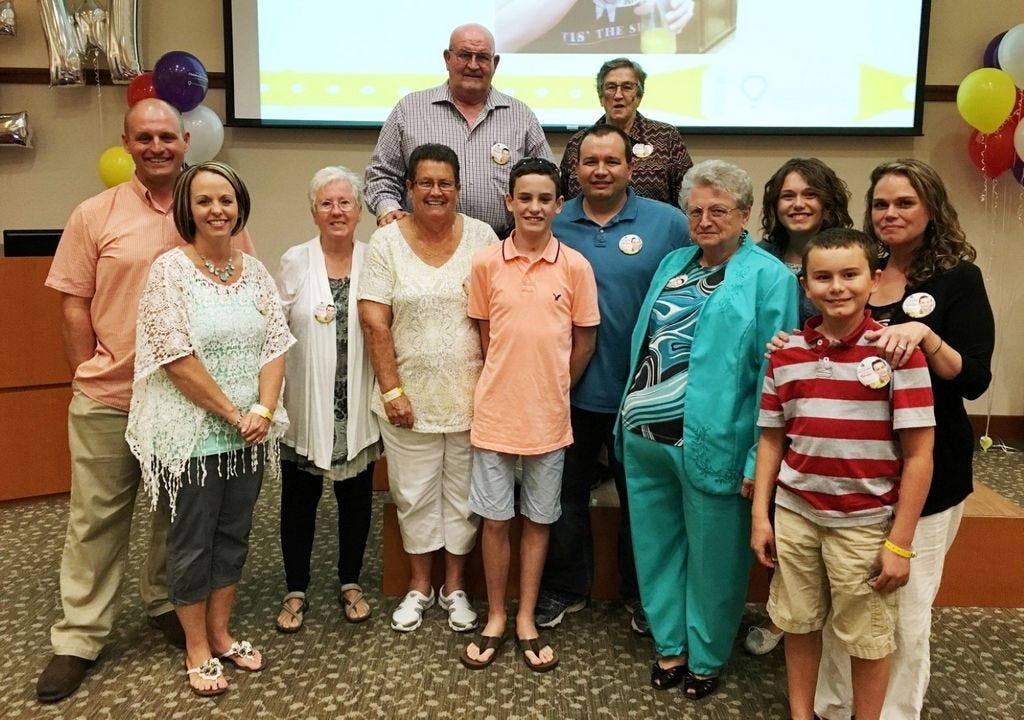
Drew Barefield is surrounded by his family after being named this year's Children's Miracle Network Hospitals Florida Champion Monday night at Sacred Heart Hospital in Pensacola. Included are (top row) Bubba Barefield grandpa and aunt, Beverly Barefield. Bottom row: Trey Barefield, dad; Wendy Barefield, mom; Marie Wilkerson; Jan Barefield, aunt; Drew; Jessie Barefield, uncle; Jil Barefield, grandma; Jorah Barefield, cousin; Brandy, aunt; and Jace, cousin.

CRESTVIEW — After more than a year of often painful surgeries and physical therapy, Davidson Middle School student Drew Barefield will share his positive attitude to encourage other kids who also face long-term recoveries from traumatic mishaps.

Drew, now 14, was struck by a boat while snorkeling on June 28, 2014. Monday night at Sacred Heart Hospital in Pensacola, he was named this year’s Children’s Miracle Network Hospitals Florida Champion.

“Drew spent 75 days in The Children’s Hospital at Sacred Heart and underwent 13 surgeries,” hospital spokesman Mike Burke stated in a media release. “During his treatment, he showed a positive, ‘can-do’ attitude and genuine concern for other pediatric patients.”

As a Children’s Miracle Network champion, Drew will serve as a fundraising and awareness ambassador for The Children’s Hospital at Sacred Heart and all children treated at the charity’s 170 member hospitals, the release stated.

“I was very excited and surprised,” Drew said of his appointment. “For me, doing this is just to repay the community and show them how much I’m thankful for the community supporting me through my recovery.”

Drew and his family will travel to Washington, D.C., and Orlando to meet with media and highlight the work taking place at Children’s Hospitals.

“I’ll be going to Washington, D.C., in June, and while I’m there it’s going to be the two-year anniversary of my accident,” Drew said. “I can’t believe it’s almost been two years. It feels like it’s been five years.”

Drew will also represent The Children’s Hospital at Sacred Heart at various as-yet unspecified events throughout the year.

“My goal is to raise a million dollars for the Children’s Miracle Network Hospital,” Drew said.

With his therapy and seemingly endless rounds of medications behind him, Drew is focused on his future. He is currently taking weekly avionics courses taught by Embry-Riddle Aeronautics University faculty at Crestview High School.

“I want to be in the naval aviation field, like an air traffic controller,” he said.

Drew said he’s looking forward to sharing his experiences — especially the importance of a positive mental attitude — with other kids facing long recoveries from trauma.

“I would advise people to stay positive and think of the bright side of things,” Drew said. “I know they’re hurting now but they’re going to make it.”

This article originally appeared on Crestview News Bulletin: Crestview's Drew Barefield, Children's Miracle Network state champion, sets $1 million goal

NOMC: 5 ways to stay healthy while on vacation

CRESTVIEW — The North Okaloosa Medical Center offers the health-related tips below for when you go on vacation.

Whether your plan is to play tourist in your hometown, travel overseas or something in between, unexpected illness can ruin your summer vacation.

1. Manage your medications. If you take prescription drugs, visit your primary care doctor and request any refills you may need during your time away from home. Also ask for copies of your prescriptions, including generic names of your medications and dosages, as a record in case of a medical emergency.

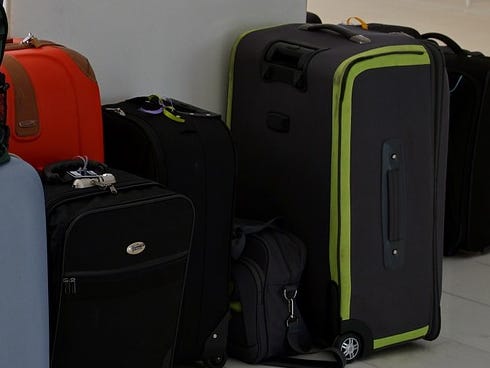
You can also ask your doctor for an advance antibiotic prescription in the event you contract moderate to severe diarrhea while away, or malaria treatment medications if you are traveling to a country where malaria is common. Be sure to pack your prescription medications in their original containers in your carry-on luggage to ensure you won't lose them.

2. Raid your medicine cabinet. Pack an assortment of basic over-the-counter medications for unexpected illness, such as a pain reliever and/or fever reducer, antihistamine, decongestant, antidiarrheal medication and a mild laxative.

3. Pack for protection. Depending on your final destination, bring items such as sunscreen, bug spray and protective clothing to prevent sunburn and bug bites.

4. Bring your own water bottle. If you are staying in the country, help your wallet and the environment by bringing reusable water bottles instead of buying bottled water or sodas.

5. Don’t forget first aid. Pack a well-stocked first-aid kit in case of minor scrapes, bumps or bruises.

The Centers for Disease Control and Prevention recommends you include bandages, antiseptic, gauze, an elastic bandage, aloe gel for sunburns, moleskin for blisters, tweezers, scissors, cotton-tipped applicators, a digital thermometer and oral rehydration solution packets (a concoction you mix with water to help rehydrate after diarrhea, heat exhaustion or vomiting).

Before you take time off, visit your primary care doctor for a well visit to discuss healthy habits and get up-to-date on medications and vaccinations.

This article originally appeared on Crestview News Bulletin: NOMC: 5 ways to stay healthy while on vacation

Crestview teen named Children’s Miracle Network Hospitals Florida Champion

Drew Barefield

CRESTVIEW — Trauma survivor Drew Barefield of Crestview has been named this year’s Children’s Miracle Network Hospitals Florida Champion.

Drew, 14, will serve as a fundraising and awareness ambassador for The Children’s Hospital at Sacred Heart and all children treated at the North American charity’s 170 member hospitals.

After being struck by a boat, Drew spent 75 days in The Children’s Hospital at Sacred Heart and underwent 13 surgeries.

During his treatment, he showed a positive, “can-do” attitude and genuine concern for other pediatric patients.

Drew will be recognized as the CMNH Champion on Monday, May 2, at 4:30 p.m. in the Greenhut Auditorium in the Sacred Heart Hospital Pensacola Conference Center, 5151 N. Ninth Ave., Pensacola. Valet parking will be available.

Along with other CMNH State Champion delegates, Drew and his family will travel to Washington, DC, and Orlando later this year to meet with media and highlight the work taking place at Children’s Hospitals.

Drew will also represent The Children’s Hospital at Sacred Heart, a Children’s Miracle Network Hospital, at various events throughout the year.

This article originally appeared on Crestview News Bulletin: Crestview teen named Children’s Miracle Network Hospitals Florida Champion

Study suggests certain people with depression may benefit from exercise

Dr. Vonetta Dotson, Ph.D., the first author of a University of Florida study, said, "I'd like to take the same approach to exercise that we take to medication, which is to have a personalized medicine approach."

GAINESVILLE — Call it personalized medicine for depression — but the prescription in this case is exercise, which University of Florida Health researchers have found helps people with certain genetic traits.

A UF study has found that specific genetic markers that put people at risk for depression also predict who might benefit from exercise, according to a study published recently in The Journal of Frailty & Aging. The researchers found that men who were carriers of two specific genes had the most significant response to exercise. The results suggest physical activity as part of a treatment plan — exercise as moderate as walking — could help the carriers of these genes.

“I want to better understand who could benefit most from physical activity. I’d like to take the same approach to exercise that we take to medication, which is to have a personalized medicine approach,” said Vonetta Dotson, Ph.D., the study’s first author and an assistant professor in the College of Public Health and Health Profession’s department of clinical and health psychology.

“If we show through systematic research that exercise has a good chance of helping a patient because of their particular characteristics, I think that might help with patients’ motivation to exercise.”

Data gathering

The results came from a small pilot study, so more research needs to be done before this work can be translated into clinical practice. But in the future, it’s possible that blood or saliva could be tested to determine if a person could benefit from physical activity to lower depressive symptoms.

The study used data gathered in the Lifestyle Interventions and Independence for Elders, or LIFE, pilot study. During the LIFE pilot study, 396 sedentary older adults were separated into two groups: those who received health education classes and those who were given moderate physical activity classes for 12 months.

A subsequent paper published from the LIFE pilot study found that exercise did not significantly affect depression symptoms across the whole group, but that changed when the research team tunneled down into the data.

“When we looked at subgroups, we ended up finding significant response to exercise in men who were carriers of a specific gene.” Dotson said.

To assess the participants’ response to exercise, they took a test called the Center for Epidemiologic Studies Depression Scale, a screening test for depression and depressive disorders, at the beginning of the LIFE study’s intervention. They took the test again after the interventions ended, at 12 months. The scale assesses four factors, including symptoms of sadness and fearfulness, symptoms such as loss of appetite and concentration difficulties, and a diminished capacity to experience pleasure or perceived difficulties in social relationships.

The participants also underwent genetic testing before the intervention, and the researchers tested three genes: the brain-derived neurotrophic, or BDNF, gene, a serotonin transporter gene and a gene called apolipoprotein E. The researchers found the greatest decrease in symptoms such as loss of appetite and concentration difficulties in men who carried the BDNF genetic variation that predisposed them to depression. They also saw an increase in the capacity to experience pleasure in men who exercised regularly who carried specific variations of the serotonin transporter gene.

Exercise vs. medication

Co-author Taimour Langaee, Ph.D., MSPH, a research associate professor in the UF College of Pharmacy’s department of pharmacotherapy and translational research and Center for Pharmacogenomics, is interested in research studies on the effect of antipsychotic drugs on depression. When patients are treated with antidepressants, the level of BDNF expression normalizes, helping them overcome depression, Langaee said. This study was different because it was designed to investigate the effect of physical activity in relation to genetic variations in these genes on changes in depressive symptoms.

“We already know that physical activity increases neurotransmitters and endorphins level,” he said. “So, we speculated that physical activity increased the expression of BDNF, leading to a decrease in somatic symptoms.”

Langaee said the study’s results were significant, but a larger sample size and more genetic testing is needed to better determine the effect of physical activity on these genes.

Dotson said the study provides evidence that physical activity could be explored as an intervention for depression, but warns that this study was not done in people whose symptoms were severe enough to be formally diagnosed with clinical depression. She said it’s also important to understand the benefits of exercise because of the impact medications may have on the brains of older adults.

“I’m trying to understand how exercise versus antidepressants affect the brain,” Dotson said. “The next step for me is to understand from a brain standpoint who is going to benefit and how exercise is going to be beneficial in addition to or as an alternative to medication.”

This article originally appeared on Crestview News Bulletin: Study suggests certain people with depression may benefit from exercise

Okaloosa health department releases water quality results

FORT WALTON BEACH — The Florida Department of Health in Okaloosa County has announced water quality test results for local parks.

FORT WALTON BEACH — No Okaloosa County parks have potentially hazardous bathing water, the Florida Department of Health in Okaloosa County stated April 25.

Only one park, Gulf Islands National Seashore, Okaloosa Island, received a moderate (instead of good) rating. The test are based on EPA-recommended enterococci standards. Enteric bacteria's presence indicates fecal pollution from stormwater runoff, pets and wildlife or human sewage.

This article originally appeared on Crestview News Bulletin: Okaloosa health department releases water quality results

April 7 Pilgrim's Pride poultry recall expands

WASHINGTON — Pilgrim’s Pride Corp., a Waco, Texas establishment, is recalling approximately 4,568,080 pounds of fully cooked chicken products that may be contaminated with extraneous materials, including plastic, wood, rubber, and metal, the U.S. Department of Agriculture’s Food Safety and Inspection Service stated in a media release.

This is a Class I recall, described by the USDA as a "a health hazard situation where there is a reasonable probability that the use of the product will cause serious, adverse health consequences or death."

The scope of this recall expansion now includes a variety of chicken products associated with extraneous material contamination. The chicken products were produced on various dates between Aug. 21, 2014, to March 1, 2016.

The following products are subject to recall:

●30-pound boxes containing 5-pound clear bags of 6116 Gold Kist Farms Fully Cooked Whole Grain Breaded Chicken Nuggets Nugget Shaped Chicken Patties, with use by/sell by dates of Oct. 23, 2016 and March 1, 2017; and packaging dates of Oct. 23, 2015 and March 1, 2016.

●20-pound boxes containing 5-pound clear bags of 6145 Gold Kist Farms Menu Right Fully Cooked Whole Grain Breaded Chicken Nuggets Breaded Nugget Shaped Chicken Patties with use by/sell by dates of May 28, 2106 and April 27, 2016; and packaging dates of May 28, 2015 and April 27, 2015.

●30-pound boxes containing 5-pound clear bags of “6253 Gold Kist Farms Fully Cooked Whole Grain Homestyle Breaded Strip Shaped Chicken Patties” with use by/sell by dates of April 27, 2016 and August 6, 2016, and packaging dates of April 27, 2015 and August 6, 2015.

●30-pound boxes containing 5-pound clear bags of “6353 Gold Kist Farms Fully Cooked Whole Grain Homestyle Breaded Breakfast Chicken Patties” with use/by sell by dates of Sept. 17, 2016 and Sept. 21, 2016 and packaging dates Sept. 17, 2015 and Sept. 21, 2015.

●30-pound boxes containing 5-pound clear bags of “6654 Gold Kist Farms Fully Cooked Whole Grain Homestyle Breaded Chicken Patty” with use by/sell by dates of May 11, 2016, June 5, 2016, and Aug. 21, 2015, and packaging dates of May 11, 2015, June 5, 2015, and Aug. 21, 2014.

●30-pound boxes containing 5-pound clear bags of “66660 Gold Kist Farms Fully Cooked Whole Grain Hot & Spicy Breaded Chicken Patty” with use by/sell by date of July 18, 2016 and packaging date of July 18, 2015.

●20-pound boxes containing 5-pound clear bags of “69160 Gold Kist Farms Fully Cooked Whole Grain Popcorn Style Chicken Patty Fritters” with use/by sell by dates of Aug. 19, 2016 and Sept. 25, 2016, and packaging dates of Aug. 19, 2015 and Sept. 25, 2015.

●10-pound boxes containing 5-pound clear bags of “70340 Pierce Chicken Fully Cooked Breaded Chicken Tenderloins” with a use by/sell by dates of Sept. 28, 2016, Sept. 25, 2016, and Nov. 9, 2016, and packaging dates of Sept. 28, 2015, Sept. 25, 2015, and Nov. 9, 2015.

●30-pound boxes containing of 5-pound clear bags of “612100 Gold Kist Farms Fully Cooked Whole Grain Breaded Chicken Nuggets Nugget Shaped Chicken Patties” with use by/sell by dates of July 11, 2016, Nov. 9, 2016, and Nov. 25, 2016 and packaging dates of July 11, 2015, Nov. 9, 2015, and Nov. 25, 2015.

●30-pound boxes containing 5-pound clear bags of “615300 Gold Kist Farms Fully Cooked Whole Grain Home-style Breaded Chicken Nuggets Nugget Shaped Chicken Patties” with  use by/ sell by dates of Oct. 8, 2016, Oct. 9, 2016, Oct. 3, 2016, Oct. 20, 2016, Nov. 24, 2016, Oct. 1, 2016, Oct. 16, 2016, Oct. 14, 2016, and packaging dates of Oct. 8, 2015, Oct. 1, 2015, Oct. 16, 2015, Oct. 9, 2015, Oct. 3, 2015, Oct. 20, 2015, Nov. 24, 2015, and Oct. 14, 2015.

●30-pound boxes containing 5-pound clear bags of “625300 Gold Kist Farms Fully Cooked Whole Grain Home-style Breaded Chicken Strip Shaped Chicken Patties” with a use by/sell by date of Oct. 16, 2016, and a packaging date of Oct. 16, 2015.

●20-pound boxes containing 5-pound clear bags of “633100 Gold Kist Farms Fully Cooked Whole Grain Home-style Breaded Breakfast Chicken Breast Patties with Rib Meat” with a use by/sell by date of Oct. 3, 2016, and a packaging date of Oct. 3, 2015.

●30-pound boxes containing 5-pound clear bags of “662100 Gold Kist Farms Fully Cooked Whole Grain Breaded Chicken Patties” with  use by/sell by dates of Oct. 7, 2016 and Aug. 13, 2016, and packaging dates of Oct. 7, 2015 and Aug. 13, 2015.

●30-pound boxes containing 5-pound clear bags of “665400 Gold Kist Farms Fully Cooked Whole Grain Home-style Breaded Chicken Patties” with  use by/sell by dates of Oct. 6, 2016, July 24, 2016, July 1, 2016, July 25, 2016, Aug. 29, 2016, Sept. 12, 2016, Dec. 2, 2016, Dec. 21, 2016, and packaging dates of Oct. 6, 2015, July 24, 2015, July 1, 2015, July 25, 2015, Aug. 29, 2016, Sept. 12, 2016, Dec. 2, 2016, Dec. 21, 2016.

●30-pound boxes containing of 5-pound clear bags of “666600 Gold Kist Farms Fully Cooked Whole Grain Hot & Spicy Breaded Chicken Patties” with use by/sell by dates of Oct. 8, 2016, Sept. 29, 2015, Sept. 30, 2016, and packaging dates of Oct. 8, 2015, Sept. 29, 2015, Sept. 30, 2015.

●10-pound boxes containing 5-pound clear bags of “92105 Sweet Georgia Brand FULLY COOKED WHOLE GRAIN Breaded Chicken Breast Nuggets Breaded Nugget Shaped Chicken Patties With Rib Meat” with a use/by sell by date of May 28, 2016, and a packaging date of May 28, 2015.

●10-pound boxes containing 5-pound clear bags of “92430 Sweet Georgia Brand Fully Cooked Breaded Chicken Tenderloins” with use by/sell by dates of Sept. 28, 2016, Nov. 9, 2016, and packaging dates of Sept. 28, 2016, Nov. 9, 2016.

●10-pound boxes containing 5-pound clear bags of “93406 Sweet Georgia Brand Fully Cooked Whole Grain Popcorn Style Chicken Patty Fritters” with a use by/sell by date of May 28, 2016 and a packaging date of May 28, 2015.

●10-pound boxes containing 5-pound clear bags of “94208 Sweet Georgia Brand Fully Cooked Whole Grain Hot And Spicy Breaded Chicken Patty” with a use by date of July 18, 2016 and a packaging date of July 18, 2015.

●10-pound boxes containing 5-pound clear bags of “96965 Sweet Georgia Brand Fully Cooked Whole Grain Breaded Chicken Nuggets Nugget Shaped Chicken Patties” with a use by/sell by date of Oct. 14, 2016 and a packaging date of Oct. 14, 2015.

●10-pound boxes containing 5-pound clear bags of “96971 Sweet Georgia Brand Fully Cooked Whole Grain Breaded Chicken Breast Patties With Rib Meat” with a use by/sell by date of Oct. 8, 2016 and a packaging date of Oct. 8, 2015.

●10-pound boxes containing 5-pound clear bags of “96973 Sweet Georgia Brand Fully Cooked Whole Grain Breaded Chicken Patties” with use by/sell by dates of July 24, 2016, July 1, 2016, Dec. 2, 2016, Sept. 12, 2016, and packaging dates of July 24, 2015, July 1, 2015, Dec. 2, 2015, Sept. 12, 2015.

●10-pound boxes containing 5-pound clear bags of “96978 Sweet Georgia Brand Fully Cooked Whole Grain Hot And Spicy Breaded Chicken Patties” with use by/sell by dates of Oct. 8, 2016 and Sept. 30, 2016, and packaging dates of Oct. 8, 2015 and Sept. 30, 2016.

 ADDITIONAL INFORMATION

  Additional information on production dates and case codes can be found here.

●On April 7, 2016, Pilgrim’s Pride Corp recalled approximately 40,780 pounds of fully cooked chicken nuggets produced on Oct. 5, 2015. The following product is subject to recall:

●20-lb. cardboard boxes containing two, 10-lb. clear plastic bags of fully cooked chicken nuggets labeled as “GOLD KIST FARMS Fully Cooked Whole Grain Popcorn Style Chicken Patty Fritters” with package codes 5278105021, 5278105022, 5278105023, 5278105000, and 5278105001.

 The products subject to recall bears establishment number “EST. 20728” inside the USDA mark of inspection. These items were shipped for institutional use nationwide. According to Pilgrim’s Pride Corp. records, schools have purchased products through the company’s commercial channels.

The problem was first discovered after the firm received several consumer complaints regarding plastic contamination of the chicken nuggets. The firm notified FSIS personnel of the issue on April 6, 2016. FSIS personnel identified more affected product types and dates of production after investigating additional consumer complaints of foreign material contamination received by the recalling firm.

There have been no confirmed reports of adverse reactions due to consumption of these products. Anyone concerned about an injury or illness should contact a healthcare provider. 

Consumers who have purchased the recalled products are urged not to consume them. These products should be thrown away or returned to the place of purchase.

FSIS routinely conducts recall effectiveness checks to verify recalling firms notify their customers of the recall and that steps are taken to make certain that the products are no longer available to consumers. When available, the retail distribution list(s) will be posted on the FSIS website at http://www.fsis.usda.gov/recalls.

CONTACT INFORMATION

Consumers with questions about the recall can contact James Brown, Consumer Relations Manager, at 800-321-1470. Media with questions about the recall can contact Cameron Bruett, Head of Corporate Affairs, at 970-506-7801.

 Consumers with food safety questions can "Ask Karen," the FSIS virtual representative available 24 hours a day at AskKaren.gov or via smartphone at m.askkaren.gov. The toll-free USDA Meat and Poultry Hotline 1-888-MPHotline (1-888-674-6854) is available in English and Spanish and can be reached from l0 a.m. to 4 p.m. (Eastern Time) Monday through Friday. Recorded food safety messages are available 24 hours a day. The online Electronic Consumer Complaint Monitoring System can be accessed 24 hours a day at: http://www.fsis.usda.gov/reportproblem.

This article originally appeared on Crestview News Bulletin: April 7 Pilgrim's Pride poultry recall expands


Here's how to protect yourself and loved ones from mosquitoes

FORT WALTON BEACH — Mosquitoes can carry harmful viruses that cause serious illness in people. DOH-Okaloosa has an established partnership with the Okaloosa County Mosquito Control and works collaboratively to help protect and promote the health of residents and visitors.

There are routine steps all people should take to reduce the possibly risk of mosquito bites.

Dr. Karen A. Chapman, Director of DOH-Okaloosa. “The easiest way to remember how you can help eliminate mosquito bites is to "drain and cover.”

Drain

Draining standing water stops mosquitoes from multiplying.

●Drain water from garbage cans, house gutters, buckets, pool covers, coolers, toys, flowerpots or any other containers where sprinkler or rain water has collected.

●Discard old tires, drums, bottles, cans, pots and pans, broken appliances and other items that are not being used.

●Empty and clean birdbaths and pets' water bowls at least once or twice a week.

●Protect boats and vehicles from rain with tarps that do not accumulate water.

●Maintain swimming pools in good condition with appropriate chlorination. Empty plastic swimming pools when not in use.

Cover

Covering is another step you can take. Cover your skin with clothing or repellent.

●Wear shoes, socks, long pants and long sleeves. This type of protection may be necessary for people who must work in areas where mosquitoes are present.

●Apply mosquito repellent to bare skin and clothing.

●Always use repellents according to the label. Repellents with DEET (N,N-diethyl-meta-toluamide), picaridin, oil of lemon eucalyptus and IR3535 are effective.

●Do not apply repellent to children younger than two months old. Use mosquito netting instead.

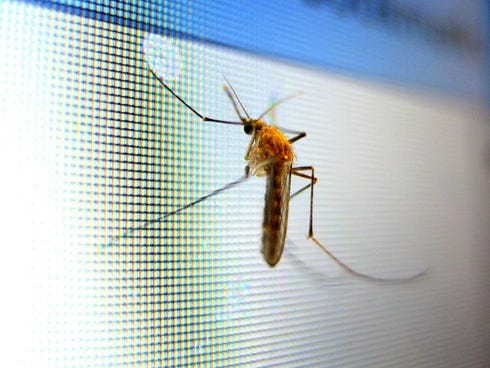
COVER doors and windows with screens to keep mosquitoes out of your house.

●Keep mosquitoes out of your house. Repair broken screening on windows, doors, porches, and patios.

“Mosquitoes only need about a bottle cap or a magnolia leaf full of water to reproduce and can bite at all times of the day,” continued Dr. Chapman. “Whether you are around the house or traveling, staying consistent on protecting yourself and family with these simple steps is important.”

For more information on mosquito-borne and other insect-borne diseases, visit www.floridahealth.gov/diseases-and-conditions/mosquito-borne-diseases.

For the more information about local mosquito control efforts or to access the mosquito spraying schedule for Okaloosa County, visit www.co.okaloosa.fl.us/pw/environmental/mosquito-control.

This article originally appeared on Crestview News Bulletin: Here's how to protect yourself and loved ones from mosquitoes

error: Content is protected !!