Please ensure Javascript is enabled for purposes of website accessibility
Skip to main content
Advertisement

Crestview police and associates share favorite recipes

Crestview Police Officer Corey Newcomb wields his backyard barbecue tools. [Brian Hughes | Crestview Police Department]

CRESTVIEW — They may wear blue while on duty, but Crestview Police officers and administrative staff happily swap their uniforms for chef's aprons when it comes to family get-togethers and backyard cookouts.

With the Fourth of July holiday ideal for gathering around the picnic table, several officers and police staff shared some family favorite recipes.

Cold Bean Salad

Marie Saccaro, Crestview Citizens Police Academy Alumni Inc. president, shared this recipe, which she said is popular at family gatherings and potluck occasions.

Ingredients:

Salad:

  • 1 (14.5-ounce) can green beans, drained
  • 1 (14.5-ounce) can wax beans, drained
  • 1 (15.5-ounce) can garbanzo beans
  • 1 (14.5-ounce) can kidney beans, drained
  • 1 (14.5-ounce) can black beans, drained
  • 1/2 cup chopped green pepper
  • 1/2 cup chopped onion
  • 1/2 cup chopped celery

Dressing:

  • 1/2 cup olive oil
  • 1/2 cup vinegar
  • 1/2 tsp. pink or regular salt
  • 1/2 tsp. black pepper
  • 1/2 cup sugar

Mix all the beans together in a bowl with the onions, celery and peppers. Toss the mixture.

Mix the dressing ingredients and stir until the sugar is dissolved. Pour over the beans and toss until all is coated and mixed. Refrigerate for 6-8 hours then serve.

Cuppa Cuppa Cuppa

This southern cobbler recipe I make is similar to the one mentioned in "Steel Magnolias":

Ingredients:

  • 1 stick of butter
  • 1 cup flour
  • 1 cup whole milk
  • 1 cup sugar
  • 2 tsp. baking powder (omit if using self-rising flour)
  • Pinch of salt
  • 2 cups blueberries (or other fruit)

Put the butter in a baking dish. Put it in the oven, then turn the oven on to 350°F and let the butter melt as the dish heats up.

Meanwhile, mix the flour, whole milk, and sugar in a large bowl. If you use all-purpose flour (instead of self-rising) add 2 teaspoons of baking powder. Add a pinch of salt. Mix it all together to make a runny batter. Take the hot baking dish out of the oven and pour the batter over the melted butter. Do not stir. Spread the blueberries (or other fruit) across the top, without stirring.

The fruit will sink into the batter as it bakes.

Bake it about 45 minutes, but toward the end, ensure the edges don't burn. It should be a golden brown and the edges should be a bit browner. It is great served hot with ice cream on top.

Note: You can use 1/3 cup brown sugar and 2/3 cup granulated sugar, and a teaspoon cinnamon and a 1/4 teaspoon nutmeg to make it a bit spicier if you use sliced apples, pears or peaches instead of blueberries.

Easiest Ever Grilled Corn on the Cob

Officer Wanda Hulion, Community Services, said, "Somebody told me about this (corn recipe) and I said, 'That's just too easy.'"

Ingredients:

  • As much fresh corn on the cob as you want
  • Mayonnaise

Shuck and clean the corn well. Rub mayonnaise thoroughly over each cob.

Wrap each cob individually in aluminum foil and cook on the grill about 15 minutes, turning them occasionally.

Remove the foil for the last five minutes to allow the corn to brown.

Chicken Andouille Gumbo

Rebecca Temple, Investigator Shawn Temple's wife, provided this gumbo dish. Andouille makes it a blend of both Creole and Cajun cuisine. It's a family favorite for any occasion, indoors or out.

Ingredients:

  • 1 chicken or chicken parts, 2 to 2 1/2 pounds
  • 3 quarts water
  • 1 lb. okra, sliced into half-inch rounds
  • 1/2 cup plus 2 tbsp. cooking oil
  • 1/2 cup all-purpose flour

Cajun "Holy Trinity":

  • 2 cups chopped onions
  • 1/2 cup chopped celery
  • 1 cup chopped green bell pepper
  • 1 16-ounce can chopped tomatoes
  • 3/4 pound andouille sausage, sliced into 1/4-inch pieces
  • 1 bay leaf
  • 1 tsp. thyme
  • 1 tsp. dried basil
  • 1/2 tsp. sage
  • 1/2 tsp. each black and white pepper
  • 1/4 tsp. or to taste cayenne pepper
  • 2 tsp. salt

Chop the chicken into eight pieces if not already cut up. Cover with water and simmer for about an hour until chicken is tender and comes off the bones easily. Pour off the stock and set it aside.

In a large, heavy skillet, sauté the okra in 2 tablespoons oil for 10-15 minutes to remove sliminess. Set aside.

Meanwhile, in a large heavy Dutch oven, heat 1/2 cup oil over medium-high heat. Add the flour and make a roux, being careful not to burn the flour. If you do, start over. As soon as a dark brown color is reached, add the trinity and cook, stirring regularly, until tender. Allow the vegetables to stick to the bottom a bit, scraping them off with a spatula or spoon.

When the trinity is softened, add the tomatoes, andouille and okra. Cook and stir periodically for 15 minutes. Add the spices and mix well. Add about 8 cups of the chicken stock and simmer 1 hour, stirring occasionally. Add the cooked chicken and extra stock if needed and simmer 15 more minutes. Season to taste, then serve over rice.

This article originally appeared on Crestview News Bulletin: Crestview police and associates share favorite recipes


Breaking Bread: GMO labeling due on packaged foods by summer 2018

Last year, Congress passed a law requiring that foods containing genetically modified ingredients reveal that on their labels.

By the summer of 2018, the marketing division of the U.S. Department of Agriculture is charged with defining what that label will say.

Will it actually list the ingredients (as in: “This product contains genetically modified corn and soy”), or will it be a QR code connecting the consumer to the information on a website?

The debate over the label’s wording could prove as contentious as the fight over genetically modified organisms themselves.

GMOs are plants whose DNA has been changed. The development is beyond the typical cross-breeding of plants because the changes are made in the laboratory at the cellular level.

Opponents of GMOs fought hard for the labeling. They consider GMOs less safe than non-GMO foods, have ethical concerns about tampering with nature, have issues with the corporations behind GMO seed (namely Monsanto), and fear environmental damage from widespread GMO crops.

GMOs were developed 20 years ago to help farmers by changing the structure of plants to make them more resistant to disease so that farms could produce higher yields while applying fewer pesticides. GMOs are produced mostly for commodity crops: Corn, soy, canola and sugar beet.

Recently, I had the chance to sit in while a group of Ohio food manufacturers learned about the new labeling law from Steve Armstrong of EAS Consulting.

Armstrong is a lawyer who specializes in food labeling and food-regulation compliance; until recently, he served as the chief food-law counsel for Campbell’s Soup Co. Armstrong traveled to Columbus to speak at the Ohio Food Industry Summit, sponsored by the Center for Innovative Food Technology in Toledo.

Armstrong’s time at Campbell’s is significant because, under his counsel, the company adopted a corporate strategy not to oppose GMO labeling but to embrace the transparency.

He encouraged the Ohio food makers at the summit to do the same.

Some already are.

Orrville-based J.M. Smucker Co. already has introduced its labeling: On the back of a jar of apricot preserves, for example, you might be surprised to read: “Partially produced with genetic engineering.”

Farmers, food manufacturers and the companies that produce genetically modified seed fought hard to avoid the labeling. Their fight made consumers trust GMOs even less, Armstrong emphasized, as consumers wondered what the industries were trying to cover up.

Armstrong pointed to recent research showing that 87 percent of global consumers think that GMOs are less safe and less healthy than non-GMO foods. This despite statements to the contrary from the USDA, U.S. Food and Drug Administration, World Health Organization, American Medical Association and National Academies of Sciences, Engineering and Medicine.

Armstrong’s point is this: Consumers want to know everything about their food — where it comes from, what’s in it, who produced it. Such knowledge is the consumer’s right, Armstrong emphasized.

Soon, however, consumers might see their concerns about GMOs tested in a new way. The Arctic Apple, a fruit sold sliced that is genetically modified to not turn brown, is about to hit grocery stores nationwide. It represents the first GMO convenience product — rather than a commodity ingredient such as corn syrup — and producers want to see how Americans will react to it.

Scientific advancements in food production have helped to feed a hungry world, and that’s a good thing. I know that the canola oil I often use probably comes from a GMO plant, and I don’t think I’m suffering negative effects from it.

But I have concerns about corporate domination over the seed for American commodity crops. And an apple that doesn’t brown, although it might be perfectly safe, strikes me as downright unnatural. Convenient, yes, but unnatural nonetheless.

Eventually, there might be enough research to convince everyone that GMOs are safe, or to prove that they’re not.

Until then, providing as much information to consumers as possible is the right thing to do.

— Lisa Abraham writes about food for The Columbus (Ohio) Dispatch. Email her at labraham@dispatch.com or follow her on Twitter at @DispatchKitchen.

This article originally appeared on Crestview News Bulletin: Breaking Bread: GMO labeling due on packaged foods by summer 2018

Breaking Bread: GMO labeling due on packaged foods by summer 2018

Last year, Congress passed a law requiring that foods containing genetically modified ingredients reveal that on their labels.

By the summer of 2018, the marketing division of the U.S. Department of Agriculture is charged with defining what that label will say.

Will it actually list the ingredients (as in: “This product contains genetically modified corn and soy”), or will it be a QR code connecting the consumer to the information on a website?

The debate over the label’s wording could prove as contentious as the fight over genetically modified organisms themselves.

GMOs are plants whose DNA has been changed. The development is beyond the typical cross-breeding of plants because the changes are made in the laboratory at the cellular level.

Opponents of GMOs fought hard for the labeling. They consider GMOs less safe than non-GMO foods, have ethical concerns about tampering with nature, have issues with the corporations behind GMO seed (namely Monsanto), and fear environmental damage from widespread GMO crops.

GMOs were developed 20 years ago to help farmers by changing the structure of plants to make them more resistant to disease so that farms could produce higher yields while applying fewer pesticides. GMOs are produced mostly for commodity crops: Corn, soy, canola and sugar beet.

Recently, I had the chance to sit in while a group of Ohio food manufacturers learned about the new labeling law from Steve Armstrong of EAS Consulting.

Armstrong is a lawyer who specializes in food labeling and food-regulation compliance; until recently, he served as the chief food-law counsel for Campbell’s Soup Co. Armstrong traveled to Columbus to speak at the Ohio Food Industry Summit, sponsored by the Center for Innovative Food Technology in Toledo.

Armstrong’s time at Campbell’s is significant because, under his counsel, the company adopted a corporate strategy not to oppose GMO labeling but to embrace the transparency.

He encouraged the Ohio food makers at the summit to do the same.

Some already are.

Orrville-based J.M. Smucker Co. already has introduced its labeling: On the back of a jar of apricot preserves, for example, you might be surprised to read: “Partially produced with genetic engineering.”

Farmers, food manufacturers and the companies that produce genetically modified seed fought hard to avoid the labeling. Their fight made consumers trust GMOs even less, Armstrong emphasized, as consumers wondered what the industries were trying to cover up.

Armstrong pointed to recent research showing that 87 percent of global consumers think that GMOs are less safe and less healthy than non-GMO foods. This despite statements to the contrary from the USDA, U.S. Food and Drug Administration, World Health Organization, American Medical Association and National Academies of Sciences, Engineering and Medicine.

Armstrong’s point is this: Consumers want to know everything about their food — where it comes from, what’s in it, who produced it. Such knowledge is the consumer’s right, Armstrong emphasized.

Soon, however, consumers might see their concerns about GMOs tested in a new way. The Arctic Apple, a fruit sold sliced that is genetically modified to not turn brown, is about to hit grocery stores nationwide. It represents the first GMO convenience product — rather than a commodity ingredient such as corn syrup — and producers want to see how Americans will react to it.

Scientific advancements in food production have helped to feed a hungry world, and that’s a good thing. I know that the canola oil I often use probably comes from a GMO plant, and I don’t think I’m suffering negative effects from it.

But I have concerns about corporate domination over the seed for American commodity crops. And an apple that doesn’t brown, although it might be perfectly safe, strikes me as downright unnatural. Convenient, yes, but unnatural nonetheless.

Eventually, there might be enough research to convince everyone that GMOs are safe, or to prove that they’re not.

Until then, providing as much information to consumers as possible is the right thing to do.

— Lisa Abraham writes about food for The Columbus (Ohio) Dispatch. Email her at labraham@dispatch.com or follow her on Twitter at @DispatchKitchen.

This article originally appeared on Crestview News Bulletin: Breaking Bread: GMO labeling due on packaged foods by summer 2018

Breaking Bread: GMO labeling due on packaged foods by summer 2018

Last year, Congress passed a law requiring that foods containing genetically modified ingredients reveal that on their labels.

By the summer of 2018, the marketing division of the U.S. Department of Agriculture is charged with defining what that label will say.

Will it actually list the ingredients (as in: “This product contains genetically modified corn and soy”), or will it be a QR code connecting the consumer to the information on a website?

The debate over the label’s wording could prove as contentious as the fight over genetically modified organisms themselves.

GMOs are plants whose DNA has been changed. The development is beyond the typical cross-breeding of plants because the changes are made in the laboratory at the cellular level.

Opponents of GMOs fought hard for the labeling. They consider GMOs less safe than non-GMO foods, have ethical concerns about tampering with nature, have issues with the corporations behind GMO seed (namely Monsanto), and fear environmental damage from widespread GMO crops.

GMOs were developed 20 years ago to help farmers by changing the structure of plants to make them more resistant to disease so that farms could produce higher yields while applying fewer pesticides. GMOs are produced mostly for commodity crops: Corn, soy, canola and sugar beet.

Recently, I had the chance to sit in while a group of Ohio food manufacturers learned about the new labeling law from Steve Armstrong of EAS Consulting.

Armstrong is a lawyer who specializes in food labeling and food-regulation compliance; until recently, he served as the chief food-law counsel for Campbell’s Soup Co. Armstrong traveled to Columbus to speak at the Ohio Food Industry Summit, sponsored by the Center for Innovative Food Technology in Toledo.

Armstrong’s time at Campbell’s is significant because, under his counsel, the company adopted a corporate strategy not to oppose GMO labeling but to embrace the transparency.

He encouraged the Ohio food makers at the summit to do the same.

Some already are.

Orrville-based J.M. Smucker Co. already has introduced its labeling: On the back of a jar of apricot preserves, for example, you might be surprised to read: “Partially produced with genetic engineering.”

Farmers, food manufacturers and the companies that produce genetically modified seed fought hard to avoid the labeling. Their fight made consumers trust GMOs even less, Armstrong emphasized, as consumers wondered what the industries were trying to cover up.

Armstrong pointed to recent research showing that 87 percent of global consumers think that GMOs are less safe and less healthy than non-GMO foods. This despite statements to the contrary from the USDA, U.S. Food and Drug Administration, World Health Organization, American Medical Association and National Academies of Sciences, Engineering and Medicine.

Armstrong’s point is this: Consumers want to know everything about their food — where it comes from, what’s in it, who produced it. Such knowledge is the consumer’s right, Armstrong emphasized.

Soon, however, consumers might see their concerns about GMOs tested in a new way. The Arctic Apple, a fruit sold sliced that is genetically modified to not turn brown, is about to hit grocery stores nationwide. It represents the first GMO convenience product — rather than a commodity ingredient such as corn syrup — and producers want to see how Americans will react to it.

Scientific advancements in food production have helped to feed a hungry world, and that’s a good thing. I know that the canola oil I often use probably comes from a GMO plant, and I don’t think I’m suffering negative effects from it.

But I have concerns about corporate domination over the seed for American commodity crops. And an apple that doesn’t brown, although it might be perfectly safe, strikes me as downright unnatural. Convenient, yes, but unnatural nonetheless.

Eventually, there might be enough research to convince everyone that GMOs are safe, or to prove that they’re not.

Until then, providing as much information to consumers as possible is the right thing to do.

— Lisa Abraham writes about food for The Columbus (Ohio) Dispatch. Email her at labraham@dispatch.com or follow her on Twitter at @DispatchKitchen.

This article originally appeared on Crestview News Bulletin: Breaking Bread: GMO labeling due on packaged foods by summer 2018

Breaking Bread: GMO labeling due on packaged foods by summer 2018

Last year, Congress passed a law requiring that foods containing genetically modified ingredients reveal that on their labels.

By the summer of 2018, the marketing division of the U.S. Department of Agriculture is charged with defining what that label will say.

Will it actually list the ingredients (as in: “This product contains genetically modified corn and soy”), or will it be a QR code connecting the consumer to the information on a website?

The debate over the label’s wording could prove as contentious as the fight over genetically modified organisms themselves.

GMOs are plants whose DNA has been changed. The development is beyond the typical cross-breeding of plants because the changes are made in the laboratory at the cellular level.

Opponents of GMOs fought hard for the labeling. They consider GMOs less safe than non-GMO foods, have ethical concerns about tampering with nature, have issues with the corporations behind GMO seed (namely Monsanto), and fear environmental damage from widespread GMO crops.

GMOs were developed 20 years ago to help farmers by changing the structure of plants to make them more resistant to disease so that farms could produce higher yields while applying fewer pesticides. GMOs are produced mostly for commodity crops: Corn, soy, canola and sugar beet.

Recently, I had the chance to sit in while a group of Ohio food manufacturers learned about the new labeling law from Steve Armstrong of EAS Consulting.

Armstrong is a lawyer who specializes in food labeling and food-regulation compliance; until recently, he served as the chief food-law counsel for Campbell’s Soup Co. Armstrong traveled to Columbus to speak at the Ohio Food Industry Summit, sponsored by the Center for Innovative Food Technology in Toledo.

Armstrong’s time at Campbell’s is significant because, under his counsel, the company adopted a corporate strategy not to oppose GMO labeling but to embrace the transparency.

He encouraged the Ohio food makers at the summit to do the same.

Some already are.

Orrville-based J.M. Smucker Co. already has introduced its labeling: On the back of a jar of apricot preserves, for example, you might be surprised to read: “Partially produced with genetic engineering.”

Farmers, food manufacturers and the companies that produce genetically modified seed fought hard to avoid the labeling. Their fight made consumers trust GMOs even less, Armstrong emphasized, as consumers wondered what the industries were trying to cover up.

Armstrong pointed to recent research showing that 87 percent of global consumers think that GMOs are less safe and less healthy than non-GMO foods. This despite statements to the contrary from the USDA, U.S. Food and Drug Administration, World Health Organization, American Medical Association and National Academies of Sciences, Engineering and Medicine.

Armstrong’s point is this: Consumers want to know everything about their food — where it comes from, what’s in it, who produced it. Such knowledge is the consumer’s right, Armstrong emphasized.

Soon, however, consumers might see their concerns about GMOs tested in a new way. The Arctic Apple, a fruit sold sliced that is genetically modified to not turn brown, is about to hit grocery stores nationwide. It represents the first GMO convenience product — rather than a commodity ingredient such as corn syrup — and producers want to see how Americans will react to it.

Scientific advancements in food production have helped to feed a hungry world, and that’s a good thing. I know that the canola oil I often use probably comes from a GMO plant, and I don’t think I’m suffering negative effects from it.

But I have concerns about corporate domination over the seed for American commodity crops. And an apple that doesn’t brown, although it might be perfectly safe, strikes me as downright unnatural. Convenient, yes, but unnatural nonetheless.

Eventually, there might be enough research to convince everyone that GMOs are safe, or to prove that they’re not.

Until then, providing as much information to consumers as possible is the right thing to do.

— Lisa Abraham writes about food for The Columbus (Ohio) Dispatch. Email her at labraham@dispatch.com or follow her on Twitter at @DispatchKitchen.

This article originally appeared on Crestview News Bulletin: Breaking Bread: GMO labeling due on packaged foods by summer 2018

'It’s a community, it’s a family'

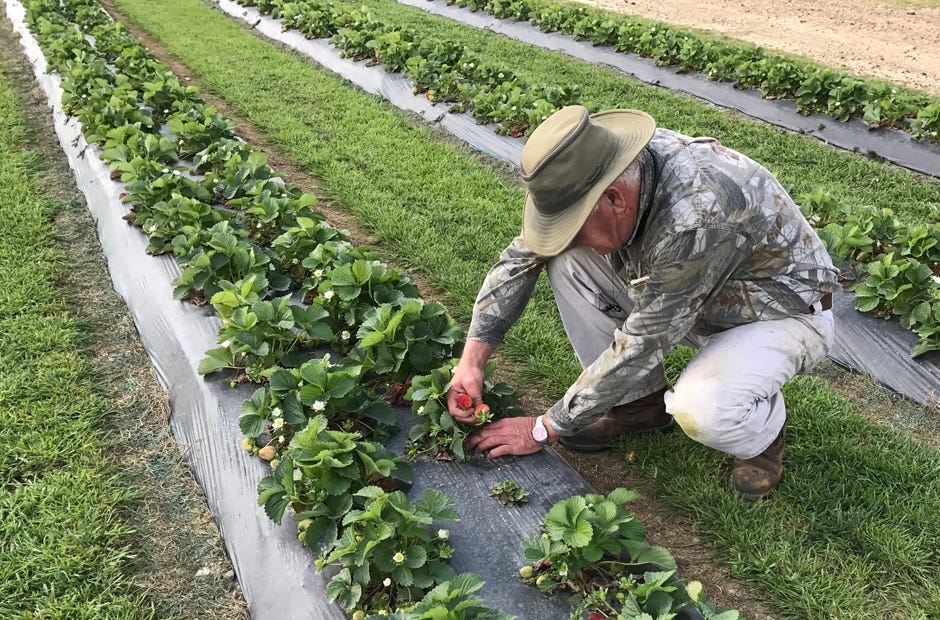
Greg Evers from Akers of Strawberries shows off one of the berries visitors skipped over during its opening weekend. [MARK JUDSON/NEWS BULLETIN]

BAKER — Greg Evers understood that many people want fresh strawberries from a farm they know, not a chain grocery store.

That’s why in 1990, he opened Akers of Strawberries for families and individuals to pick the sweet fruit from the very plants they were growing on.

“It’s a community, it’s a family,” Evers said. “It’s a nice little get-together for the family to come out and pick their berries.”

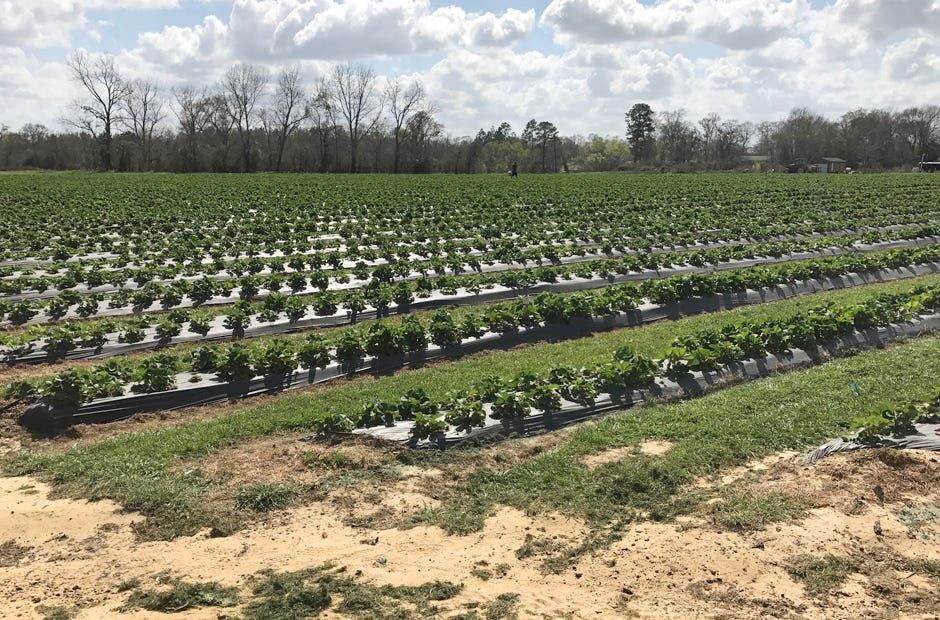
Visitors collect a box near the entrance and stroll the rows of strawberries that line the property’s 10 acres. Pick what you want and how many you want, and then return to the entrance for checkout.

“You just get you a box and go to the field,” Evers said.

That’s what about 3,000 people did this past weekend for the farm’s seasonal opening. It was so many, Akers said, that he won’t have ripe berries to pick until Thursday.

Picking is the only way to get your hands, and tastebuds, on strawberries grown by Evers. Currently, he’s not selling to a distributor or grocery store, he said.

“Ours are sweeter than those you can get at the store and I think that’s our calling card,” Evers said. “It’s just better produce and tastes better.”

After picking, visitors can pair their strawberries with frozen yogurt or shortcake available from a kitchen on the property.

“We started doing the yogurt and shortcake when we first opened in 1990,” Evers said.

There was still plenty of work to be done, even though there were no berries for families to pick after the busy, opening weekend. Several workers were mowing the grass between rows and tending to the farm’s thousands of plants.

On an average day, two or three people work in the fields and another three or four work inside, according to Evers. Most of the staffers are part-timers and there’s no shortage of help.

“If you got two hands when you come here, you might find yourself working,” Evers said.

Akers of Strawberries only sells its namesake fruit, but Evers has experimented with other farms and products. His last venture was a neighboring farm that grew various vegetables.

However, Akers was the prime focus of Evers when he wasn’t wearing a suit and tie in Tallahassee.

In 2001, Evers was elected to the Florida House of Representatives from the state’s first district. He served in the House until 2010, when he was elected to the State Senate. Evers’ run in politics ended in 2016 when he left office and focused on his farm.

This extra focus came into use when a short Florida winter resulted in an early strawberry harvest. The season for strawberries runs from the end of March until the first week of June, according to Evers.

However, Akers saw ripe berries about a month early, he added. He attributed this to a mild winter with no hard freeze period. 

Visitors are welcome to visit Akers of Strawberries from 10 a.m. to 5 p.m. Monday through Saturday and from noon to 5 p.m. on Sundays. The farm is located at 1074 Melton Road, Baker.

WANT TO GO?

This article originally appeared on Crestview News Bulletin: 'It’s a community, it’s a family'

Sub sandwich restaurant set to open in Crestview

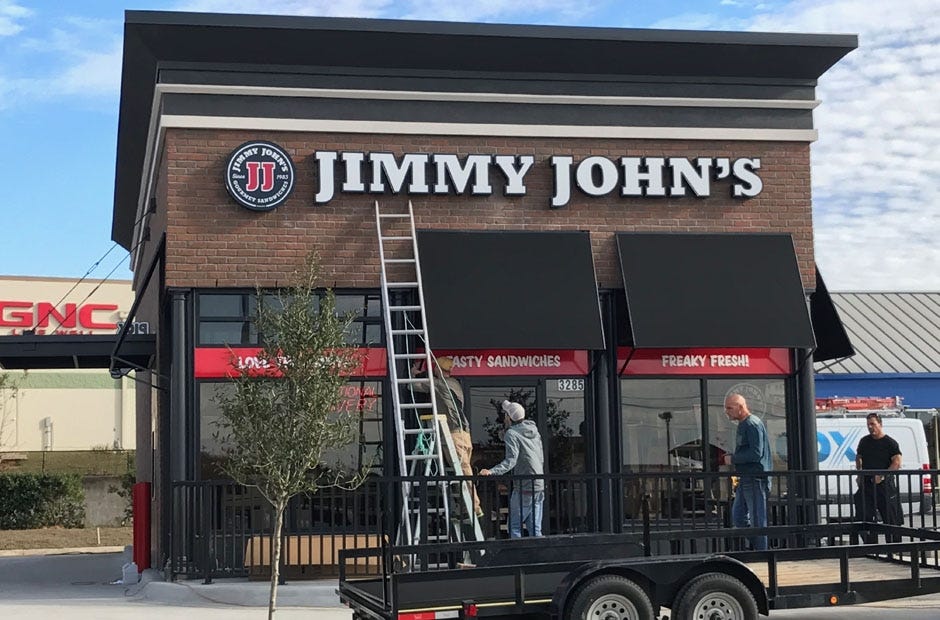
The Crestview Jimmy John's is located off South Ferdon Boulevard, in front of Wal-mart. The restaurant's owner hopes to open the first week of January. MARK JUDSON | News Bulletin

CRESTVIEW — A new sandwich shop is coming to town. Jimmy John’s, an Illinois-based chain with over 2,000 locations, is opening its first restaurant in Crestview.

The City Council in February approved the business for a location at 3285 S. Ferdon Blvd. The 1,150-square-foot, stand-alone building is located in front of Wal-Mart.

Co-franchisee Travis Brown said the Crestview location will feature a drive-thru and deliver within a certain range. The delivery radius will be dictated by the corporate office, Brown said, but should include anything within about a five-minute drive.

This will be the sixth location for Brown and his business partner, James Shutts. Their other restaurants are located in Fort Walton Beach, Destin and Miramar Beach.

“[Crestview] is an obviously growing market,” Brown said when asked why he decided to expand to the area. He added that a community filled with “locals and military” was a perfect fit for the company’s business model.

Jimmy John’s serves about 20 different sub sandwiches and is available for catering services. The company prides itself on food free of hormones, artificial ingredients and artificial preservatives; it reportedly uses food sourced as locally as possible.

The Crestview location was originally scheduled to open Dec. 29, according to Brown, but was delayed due to a pending occupancy license from the city. He hopes to have the restaurant opened by Jan. 4.

A previous version of this story incorrectly stated the restaurant's Crestview address and the last name of co-owner James Shutts.

This article originally appeared on Crestview News Bulletin: Sub sandwich restaurant set to open in Crestview

RECALLED: Avoid these ready-to-eat chicken products

WASHINGTON, Nov. 23, 2016 – National Steak and Poultry, an Owasso, Okla., establishment, is recalling approximately 17,439 pounds of ready-to-eat chicken products due to adulteration because of possible undercooking, resulting in the potential survival of bacterial pathogens in the products, the U.S. Department of Agriculture’s Food Safety and Inspection Service(FSIS) announced today.

The ready-to-eat chicken products were produced Oct. 4, 2016. The products were packaged on Oct. 4 and Oct. 5, 2016. The following products are subject to recall:

5 lb. bags packed 2 bags per case; product labeled “Distributed by National Steak and Poultry, Owasso, OK Fully Cooked, Diced, Grilled Boneless Chicken Breast Meat with Rib Meat” with Lot code 100416, and Case Code: 70020.

5 lb. bags packed 2 bags per case; product labeled “Hormel Natural Choice 100% Natural No Preservatives Fully Cooked Roasted Chicken Breast Strips with Rib Meat Natural Smoke Flavor Added” with Lot code 100416, and Case code 702113.

The cases containing the products subject to recall bear establishment number “P-6010T” inside the USDA mark of inspection. These items were shipped to food service locations nationwide and should not be in consumers’ possession. No other Hormel product is impacted.

The problem was discovered on Nov. 14, 2016, when a food service customer complained to the establishment that product appeared to be undercooked.

There have been no confirmed reports of adverse health effects or illnesses due to consumption of these products. Anyone concerned about a health effect should contact a healthcare provider.

FSIS routinely conducts recall effectiveness checks to verify recalling firms notify their customers of the recall and that steps are taken to make certain that the product is no longer available to consumers. When available, the retail distribution list(s) will be posted on the FSIS website at www.fsis.usda.gov/recalls.

This article originally appeared on Crestview News Bulletin: RECALLED: Avoid these ready-to-eat chicken products

Cuban cuisine coming to Main Street Crestview

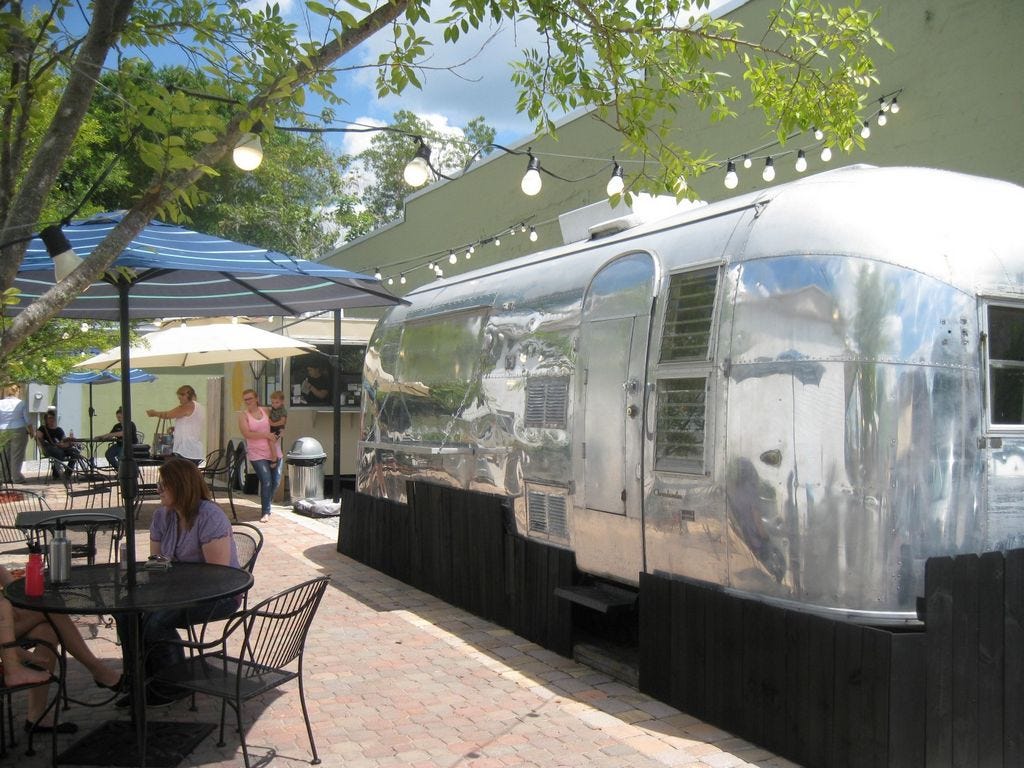
Tony and Manolo's owners, Lindsey and Jesus Blanco, have been polishing a vintage Airstream trailer that will become Main Street's newest eatery. The couple aims for a late-September or early October opening for their Cuban food eatery.

CRESTVIEW — A new Main Street eatery plans a late September or early October opening, bringing the savory kick of authentic Cuban cuisine to downtown.

Tony and Manolo’s owners Lindsey and Jesus Blanco have been polishing the vintage Airstream trailer in the Main Street Eats outdoor food court as they await approval of their plans for the unit’s renovation.

Lindsey Blanco said she and her husband, the son of Cuban immigrants, are eager to see their dream of an establishment offering her mother-in-law’s family recipes finally opened.

“We’re excited,” she said. “I was upset we weren’t able to open before now, but by the end of the month it’ll be starting to cool off and people will want to stay and eat at the tables and hang out downtown.”

MADRE’S RECIPES

The couple, who named their food trailer for their twin sons, plan to offer “curbside Cuban concoctions.”

“It’s going to be a small menu with specials every now and then,” Lindsey said. “It’s all Jesus’ mother’s original recipes that he fell in love with.”

Some of the menu selections will reflect Jesus’ native Key West.

“We’re going to offer conch fritters, which is huge in Key West, and I don’t think anyone here offers them,” Lindsey said.

Selections will also include plantain crisps — shredded plantain fried into a cake — served with a secret sauce, four or five different sandwiches, grilled cheese for kids, Cuban mix, and media noche — a “midnight sandwich” served on sweet bread.

“Our main dishes, as far as a meal, will be slow-roasted mojo pork with black beans and white or yellow rice,” Lindsey said. “Our other main entree will be picadillo,” a kicky ground beef that The New York Times once called “one of the great dishes of the Cuban diaspora.”

‘HOW MUCH LONGER?’

Tony and Manolo’s will also offer a light traditional island breakfast.

“My husband is going to do Cuban coffee in the morning,” Lindsey said. “A Key West traditional breakfast is pressed Cuban bread with butter and homemade guava jam.”

And the jam is authentic. Her mother-in-law makes it from scratch and sends it to her son and his family, Lindsey said.

“We hope we can sell the jam at some point,” she said. “It’s the real deal.”

Add homemade desserts like Key lime pie and rice pudding and it’s no wonder passersby who see the couple polishing the Airstream repeatedly ask, “‘How much longer? How much longer?’” Lindsey said.

“People want to see a new place to eat in town,” she said.

__________________________________________

EATING ON MAIN STREET

Downtown’s the place to dine for casual family outings and date nights. Tony and Manolo’s, a Cuban food trailer going into the Main Street Eats outdoor food court at 147 Main St. N., joins several other downtown eateries.

From north to south, these include:

●Casbah Coffee Company, 196 Pine St. W.

●Hideaway Pizza, 326 Main St. N.

●The Tropical Palm Restaurant, 286 Main St. N.

●Uncle Bill’s Family Restaurant, 252 Ferdon Blvd. S.

●Arirang Korean BBQ and Sushi, 172 Woodruff Ave. E.

●Desi’s Downtown Restaurant, 197 Main St. N.

●Megan’s Sunshine Cafe, 147 Main St. N.

●Coney Island Hotdogs, 107 Main St. N.

●Hub City Smokehouse and BBQ, 168 Main St. S.

●Good Things Donuts, 615  Williams Ave.

Downtown’s the place to dine for casual family outings and date nights. Tony and Manolo’s, a Cuban food trailer going into the Main Street Eats outdoor food court at 147 Main St. N., joins several other downtown eateries.

From north to south, these include:

●Casbah Coffee Company, 196 Pine St. W.

●Hideaway Pizza, 326 Main St. N.

●The Tropical Palm Restaurant, 286 Main St. N.

●Uncle Bill’s Family Restaurant, 252 Ferdon Blvd. S.

●Arirang Korean BBQ and Sushi, 172 Woodruff Ave. E.

●Desi’s Downtown Restaurant, 197 Main St. N.

●Megan’s Sunshine Cafe, 147 Main St. N.

●Coney Island Hotdogs, 107 Main St. N.

●Hub City Smokehouse and BBQ, 168 Main St. S.

●Good Things Donuts, 615  Williams Ave.

EATING ON MAIN STREET

This article originally appeared on Crestview News Bulletin: Cuban cuisine coming to Main Street Crestview

Crestview food festival raises $3,300 for Belize medical mission (PHOTOS, VIDEO)

CRESTVIEW — What do Cajun red beans ‘n’ rice, Vietnamese pork tacos, Korean bulgoki, Peruvian pickled fish salad, southern peach barbecued chicken and Filipino lumpia have in common?

Together, they and cuisine from several other countries raised more than $3,300 to purchase medicine for Operation Medical Care’s ninth annual medical mission to Belize.

PHOTOS: See photos from the International Food Festival>>

Chefs for Sunday’s International Food Festival were mostly among the volunteers who leave Aug. 31 for the weeklong annual mission.

“We’ll arrive in Belize at 11:45, get our stuff to the hotel, put on our scrubs, then travel an hour and a half inland to Orange Walk,” Operation Medical Care treasurer Sharlene Cox said.

“We go to see patients at two businesses and we get done about 6 o’clock that night after having been up at 4 to get to the airport.”

NO WINDOWS, A/C

Businesses throughout the Orange Walk District and neighboring communities donate facilities for the mission to receive patients.

“The places we go, maybe like a school or a business, are usually a concrete building,” Cox said. “It may or may not have window panes, and they don’t have air conditioning. We’re lucky if they have fans we can blow on the doctors as they see people.”

For most patients, the Crestview group’s trip is their lone opportunity to receive medical care in the largely poverty-stricken Central American nation’s rural interior.

“When we get there, there are 300 or 400 people already lined up,” Cox said. “We get out our soccer balls so the children can play until it’s time to be seen.”

990 PATIENTS

Last year, Operation Medical Care saw 990 patients. Among them was Adair Blanco, now 21. He came to Crestview for treatment of a brain tumor after having seen the mission’s founder, retired Crestview pediatrician Dr. Joseph Peter, during last year’s mission.

Peter and Dr. John Johnson were among the more than 300 people who feasted during Sunday’s festival at Bob Sikes Elementary School.

Fort Walton Beach optometrist Dr. Tom Streeter will join them on the Belize mission.

“With the hot sun, they don’t wear sunshades, they don’t wear hats, so they get glaucoma,” Cox said of some of the Belizean patients.

“We are grateful for so much support,” Peter said.

_________________

WANT TO HELP?

Crestview-based Operation Medical Care needs donations of these items for its Aug. 31 to Sept. 5 mission to Belize:

●Small toys for pediatric patients

●Baseball caps and hair bows for children

●Ball caps for adults

●School supplies including pens, pencils, notebooks and paper

●Cash to purchase de-worming medicine and vitamins for adults and children

Drop donations at Our Lady of Victory Catholic Church, 550 Adams Drive, Crestview, 682-4622.

Operation Medical Care is a 501c3 non-profit. Donations are tax-deductible.

Contact Sharlene Cox, 682-6824, for more information.

Crestview-based Operation Medical Care needs donations of these items for its Aug. 31 to Sept. 5 mission to Belize:

●Small toys for pediatric patients

●Baseball caps and hair bows for children

●Ball caps for adults

●School supplies including pens, pencils, notebooks and paper

●Cash to purchase de-worming medicine and vitamins for adults and children

Drop donations at Our Lady of Victory Catholic Church, 550 Adams Drive, Crestview, 682-4622.

Operation Medical Care is a 501c3 non-profit. Donations are tax-deductible.

Contact Sharlene Cox, 682-6824, for more information.

WANT TO HELP?

This article originally appeared on Crestview News Bulletin: Crestview food festival raises $3,300 for Belize medical mission (PHOTOS, VIDEO)

error: Content is protected !!