Please ensure Javascript is enabled for purposes of website accessibility
Skip to main content
Advertisement

Fall plant program at Crestview museum

University of Florida IFAS Okaloosa County Extension Master Gardener Marge Stewart will offer a program about “wild edibles” and will follow with a mini plant clinic.

“If folks want to bring in samples etc., I can work through those after the presentation,” she said. “They can also bring soil samples that I’ll take to the County Extension office for pH testing.”

Mrs. Stewart said home gardeners often become concerned when, despite their best efforts, their plants develop strange fungus or brown spots on their leaves, wilting, and other ailments. As a certified Master Gardener with the Okaloosa County Extension, she can help identify the problem and make recommendations to address it.

Wild edibles can include leaves, berries, mushrooms and more, and our area is an especially fertile area for these natural treats. But knowing which are edible and which can be poisonous is important. Mrs. Stewart will share information on what to look for, and what to look out for.

The program and plant clinic are free. Seating is limited.

The Crestview History Museum is in the historic Bush House, 198 S. Wilson St., in downtown Crestview, and is a facility of the City of Crestview Cultural Services Division. The museum is open 10 a.m. to 4 p.m. Tuesdays through Fridays, and will be open Saturday, Nov. 12, from 10 a.m. to 2 p.m. Ample parking is available around the museum. Mobility impaired visitors may use the access ramp at the south rear entrance.

FWC shoal bass conservation efforts proving to be a success

It’s been a long road to this point. Four years ago, the Shoal Bass population was nearly wiped out by Hurricane Michael. The storm devastated close to 90% of the Shoal Bass population, which was already facing risks because of habitat limitations and genetic hybridization threats.

The first attempt to spawn fingerlings was in 2019. They were released into the river in 2020 and didn’t spawn. A second attempt was made in 2021, but again, the results turned out to be the same. Changes were made to ensure the third time would be the charm.

It worked. Sampling in September by FWC researchers revealed the fish released in 2022 had made a significant contribution to the existing Shoal Bass population. In fact, 65% of the young fish collected were from fish that were produced and released by the hatchery.

They have grown to 4 to 6 inches in length since being stocked into the river, and the successfully stocked fish account for 20% of the current shoal bass population.

“The shoal bass population in the Chipola River has become a top priority of fisheries biologists within the northwest region of Florida since Hurricane Michael,” Fish and Wildlife Research Institute biologist Andy Strickland said. “Management actions to suspend harvest and successfully stock shoal bass have yielded positive results for this unique black bass species.”  

Expectations for the spring of 2023 are that more shoal bass spawned in the hatchery will be released into the river in the hopes that eventually population numbers will be restored to pre-Hurricane Michael levels.

“These cooperative management, hatchery and research actions for the conservation of this unique northwest Florida bass species exemplify how effective the FWC’s efforts can be to preserve a species of greatest conservation need,” according to Christopher Paxton, the DFFM Regional Fisheries Biologist and Administrator.  Population of the Shoal Bass will continue to be monitored to determine if additional stocking efforts will be needed in future years. DNA analysis will help biologists determine if stocked fish continue to contribute to the overall population.  The analysis also is key in determining the success of this FWC Stock Enhancement Program, and for the conservation and enhancement of the native black bass species. At this time, a catch-and-release only regulation is in place for shoal bass.

Dry, windy weather in forecast, fire danger increases

“With the conditions – dry and windy – any new fire has the potential to become a problem,” David Smith, Operations Administrator for Blackwater, said. “The southern-most end of our area received some rainfall Monday evening, but we are very dry with no rain in the extended forecast.”

Current forecasts call for low humidity (below 35% during the day) for the next several days and north winds up to 20 mph. No burn authorizations will be issued for prescribed burns or pile burns until conditions improve, and residents are asked to refrain from any outdoor fire activity for the time being.

The Florida Forest Service said residents should always be prepared for the possibility of a wildfire as Florida experiences a year-round fire season that typically peaks from April to June in our area. The Florida Forest Service offers tips and advice on how to prepare yourself and your home in case you are impacted by a wildfire online at www.BeWildfireReadyFL.com.

The Florida Forest Service, a division of the Florida Department of Agriculture and Consumer Services, manages more than a million acres of state forests and provides forest management assistance on more than 17 million acres of private and community forests. Florida Forest Service is also responsible for protecting homes, forestland and natural resources from the devastating effects wildfire on more than 26 million acres. Learn more at FDACS.gov/FLForestService.  

FWC warns people to leave fawns alone

Sometimes people assume a fawn found by itself has been abandoned, and they try to “rescue” it. But instead of trying to rescue it, FWC advises that you leave it alone.

During the first few weeks of a fawn’s life, a doe will hide her offspring and move to a safe distance to prevent her scent from attracting predators to the young animal’s hiding spot. She’ll return often to nurse and care for the fawn.

While hidden, the baby deer might lie motionless as a survival mechanism to deter prey. But sometimes people mistakenly think a fawn’s lack of movement means it’s sick or injured, prompting them to remove the animal to get it help.

If you find a fawn that you think is abandoned, do not touch it, pick it up or remove it from its natural environment. Instead, leave it alone and quietly move away from the area.

According to FWC’s website, keeping any sick, injured, orphaned or otherwise impaired wildlife beyond the time necessary to transport to a Licensed Wildlife Rehabilitator is a violation of Florida law. A Wildlife Rehabilitation permit issued by FWC is required to rehabilitate wildlife, including any care beyond immediate transport of wildlife to a Licensed Wildlife Rehabilitator.

If you come across a fawn and need additional direction, you can contact the appropriate FWC Regional Office for assistance. Santa Rosa County is in the Northwest Region of FWC.

For more information about deer in Florida, visit MyFWC.com/wildlifehabitats and under “Learn More about Florida Wildlife” click “Species Profiles.” From there you will see “White-Tailed Deer.”

Additional information on what to do if you find what appears to be injured or orphaned wildlife can be found at MyFWC.com/conservation and clicking “How You Can Conserve” then “Living with Wildlife and Preventing Wildlife Conflicts” then “Injured and Orphaned Wildlife.” FWC’s wildlife alert hotline is 1-888-404-3922.

Florida Forest Service restores and maintains longleaf ecosystem in Northwest Florida

TALLAHASSEE — More than 1,000 acres of the Blackwater River, Pine Log and Point Washington state forests have increased in biodiversity during the past three years due to an ongoing Florida Forest Service reforestation project.

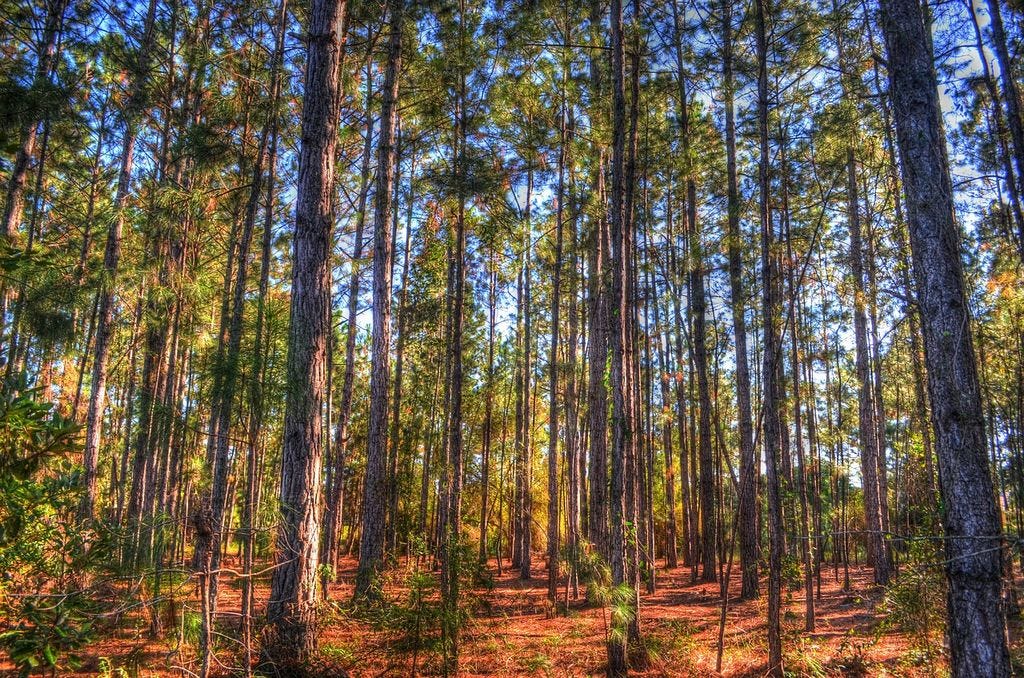
The longleaf pine ecosystem is experiencing a rebirth after approximately 1,094 acres were restored in Okaloosa, Santa Rosa, Walton, Washington and Bay counties’ three state forests. The restoration and reforestation process will bring the forest back to its natural state as a native longleaf pine ecosystem.

Forest health accomplishments included:

●Planting 50 acres of groundcover, including wiregrass

●Reducing hardwood intrusion on 150 acres within red-cockaded woodpecker habitat

●Treating for nonnative invasive plant species

●Conducting prescribed burns on more than 69,000 acres.

A $300,000 grant from the Longleaf Stewardship Fund — a public-private partnership between the National Fish and Wildlife Foundation, USDA Forest Service, U.S. Department of Defense and Gulf Power through its parent company, Southern Company — paid for the work.

In 2012, the National Fish and Wildlife Foundation announced the availability of $2.88 million to fund restoration of longleaf pine forests in the Florida Panhandle and in Georgia, Alabama, Mississippi, North Carolina, South Carolina and Louisiana.

This article originally appeared on Crestview News Bulletin: Florida Forest Service restores and maintains longleaf ecosystem in Northwest Florida

Pine beetle assistance program applications due soon

MILTON — The open application process for the Florida Forest Service’s Southern Pine Beetle Assistance and Prevention Program ends soon.

Non-industrial, private land owners have until July 30 to submit their applications.

The Southern Pine Beetle Assistance and Prevention Program provides incentive payments for non-industrial private forest landowners who conduct a first pulpwood thinning.

The program also offers partial cost reimbursement for activities such as prescribed burning, mechanical underbrush treatments and the planting of longleaf or slash pine, which is less susceptible to southern pine beetle infestations.

In Escambia County and parts of Santa Rosa County west of Highway 87 except the Holley-Navarre area, call Cathy Hardin at 587-5237 or email Cathy.Hardin@FreshFromFlorida.com for more information.

In Okaloosa County and areas of Santa Rosa County east of 87, including Holley-Navarre, call Maria Wilson at 689-7838 or email Maria.Wilson@FreshFromFlorida.com.

This article originally appeared on Crestview News Bulletin: Pine beetle assistance program applications due soon

WILLIAMS: Why butterflies — Crestview's pretty pollinators — are so important

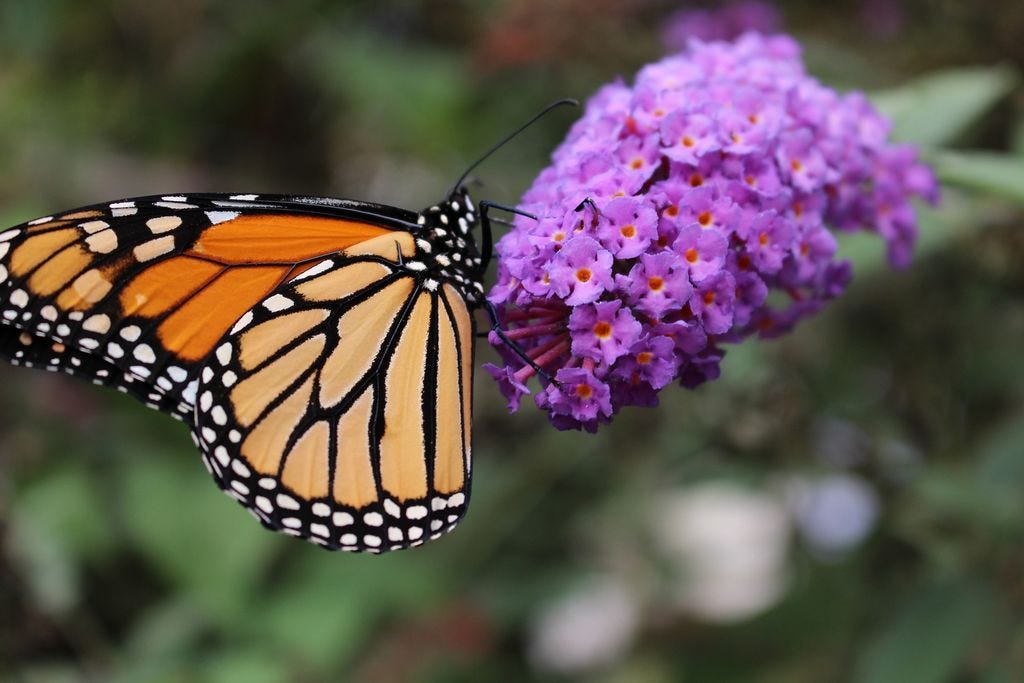
Butterflies, such as this monarch, are important pollinators; good indicators of the ecological quality for a habitat, as important components of the food chain; colorful, aesthetically pleasing, fun to watch; and a backyard, park or schoolyard favorite of children and adults.

You’d have to look hard to find a downside to butterflies. Few cause damage to crops or humans, for instance.

On the positive side, they are important pollinators; good indicators of the ecological quality for a habitat, as important components of the food chain; colorful, aesthetically pleasing, fun to watch; and a backyard, park or schoolyard favorite of children and adults.

Their role in U.S. crops’ pollination is not small. From corn to cabbage to carrots, pollinators are crucial to production of 150 crops worth billions of dollars each year.

The honey bee is the most valuable pollinator; only 15 percent of crops are pollinated by domestic bees; 80 percent are pollinated by wild bees and other wildlife, including butterflies.

More broadly, about 218,000 of the world’s 250,000 flowering plants, including 80 percent of the world’s species of food plants, rely on pollinators to reproduce.

The main threat to butterflies is the destruction and loss of their habitats. The channelization of riparian areas, draining of wetlands, lowering of water tables, growth of cities, and intensification of agriculture all contribute to this habitat loss. Widespread use of pesticides may also threaten healthy butterfly populations.

Scientists are particularly concerned about habitat loss in “nectar corridors”— migratory routes that pollinators follow to take advantage of a sequence of plants coming into bloom along a south-to-north gradient in the spring and the reverse in the fall.

The habitat is critical to migrating Monarch butterflies, as well as hummingbirds, bats, doves and other nectar-dependent migratory animals.

Adult butterflies rely on nectar, while developing caterpillars need leaves and foliage. Both get their water from the plants.

A variety of native wildflowers, trees, shrubs and grasses interspersed across the landscape offers good butterfly habitat. Consider planting wildflower gardens, roadsides and idle areas with native nectar-producing plants, legumes and grasses.

Darryl L. Williams is a district conservationist with the United States Department of Agriculture’s Natural Resources Conservation Service, 938 N. Ferdon Blvd., Crestview. Call him at 682-3714, extension 109.

DID YOU KNOW?

The Monarch butterfly journeys more than 2,000 miles to spend winter in warmer climates. This migration makes it somewhat different from most butterflies, which hibernate.

COMING UP

The Panhandle Butterfly House’s grand opening is 10 a.m. to 3 p.m. May 8 in Navarre Park, at the foot of the Navarre Beach Bridge, on U.S. Highway 98. The event will feature a butterfly-friendly plant sale, a butterfly bazaar featuring butterfly items for sale, and local Master Gardeners will be available to answer questions. Lunch will be available for purchase. Seewww.panhandlebutterflyhouse.org for more information.

The Monarch butterfly journeys more than 2,000 miles to spend winter in warmer climates. This migration makes it somewhat different from most butterflies, which hibernate.

COMING UP

The Panhandle Butterfly House’s grand opening is 10 a.m. to 3 p.m. May 8 in Navarre Park, at the foot of the Navarre Beach Bridge, on U.S. Highway 98. The event will feature a butterfly-friendly plant sale, a butterfly bazaar featuring butterfly items for sale, and local Master Gardeners will be available to answer questions. Lunch will be available for purchase. See www.panhandlebutterflyhouse.org for more information.

DID YOU KNOW?

This article originally appeared on Crestview News Bulletin: WILLIAMS: Why butterflies — Crestview's pretty pollinators — are so important

error: Content is protected !!