Please ensure Javascript is enabled for purposes of website accessibility
Skip to main content
Advertisement
Advertisement

Baker resident's son completes Air Force basic training

U.S. Air Force Airman Cameron D. Turner, a Baker resident's son, has completed basic military training. [Pixabay.com]

U.S. Air Force Airman Cameron D. Turner graduated from basic military training at Joint Base San Antonio-Lackland, San Antonio, Texas.

The airman completed eight weeks’ training in military discipline and studies, Air Force core values, physical fitness, and basic warfare principles and skills.

Airmen who complete basic training also earn four credits toward an associate in applied science degree through the Community College of the Air Force.

Turner is the son of Chasity N. Turner of Mobile, Alabama, Jessie P. McWhorther of Baker, and Tomassa L. Anderson of Navarre.

He is a 2016 graduate of Fort Walton Beach High School.

This article originally appeared on Crestview News Bulletin: Baker resident's son completes Air Force basic training

Pelican Pickers schedule concert

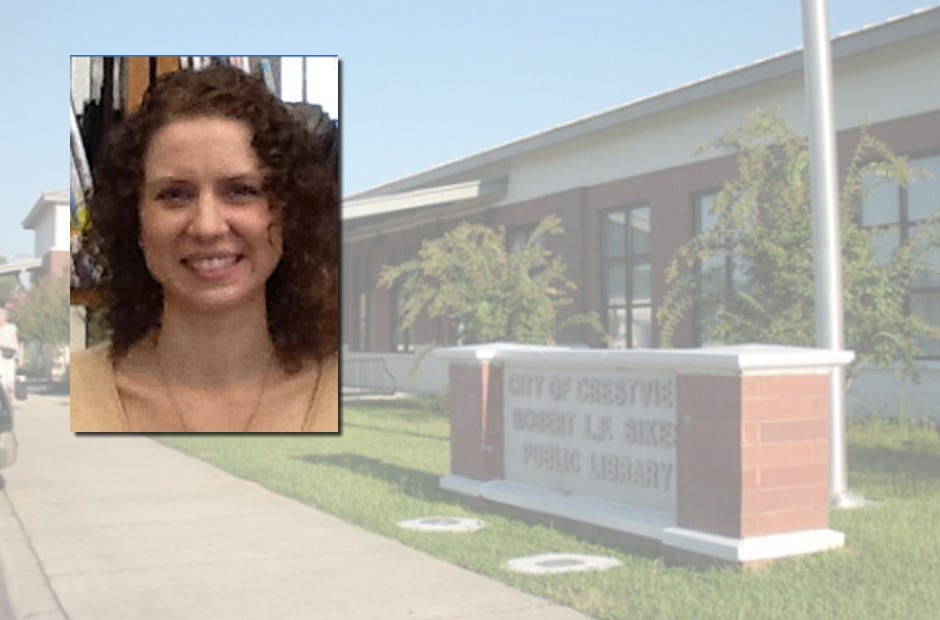
Heather Nitzel is the Crestview Public Library's youth services librarian.

For a toe-tappin’ good time, come to the Crestview Public Library.

The Pelican Pickers will perform 6:30 p.m. Feb. 21 at the library. They play old-timey Appalachian and gospel music with a variety of instruments including the Appalachian mountain lap dulcimer, banjo, mandolin, guitar, Irish penny whistle, fiddle, harmonica, Native American flute, recorder and silver flute.

Most of the songs come from the 1800s or earlier, and some from the early 1900s.

The concert will end around 7:15 p.m. This Family Library Time event is designed for people ages 4 and up. Registration is not required.

Call 682-4432 with any questions.

Heather Nitzel is the Crestview Public Library's youth services librarian.

Here are upcoming Crestview Public Library-related events. The library's address is 1445 Commerce Drive.

AGES 0-2 LIBRARY CLASS: 10:15 a.m. Thursdays and 9:15 a.m. Fridays, Crestview library. Limited to 30 children per class. Topics are: Feb. 16-17, and Feb. 23-24, Birthdays; March 2-3 and 9-10, Chicks and Ducklings; March 16-17, Growing and Gardening; March 23-24 and 30-31, Animal Sounds; April 6-7 and 13, Spring and Easter; April 20-21 and 27, Wildlife; and May 4-5 and 11-12, Praiseworthy Parents.

AGES 3-5 LIBRARY CLASS: 10:15 a.m. Tuesdays, Crestview library. Topics are: Feb. 28, African Tales; March 7, Farm to Table; March 14, In Our Garden; March 28, Flying High; April 4 and 11, Easter; April 25, Environmental Center Field Trip; and May 2 and 9, Praiseworthy Parents. 

MUSIC AT THE LIBRARY: 6-7:30 p.m. March 13 and April 10, Crestview Public Library, 1445 Commerce Drive. Guitarist Jose Diaz will perform. Call 682-4432 to schedule a performance date.

FAMILY LIBRARY TIME: Events for ages 4 and up at the Crestview library include:

●6:30-7:15 p.m. Feb. 21: Pelican Pickers concert

●6:30-7:15 p.m. March 21: Beekeeping with Bundrick Honey Farms.

●6:30-7:15 p.m. April 18: Nonie's Ark visit. Registration limited to first 30 children; ages 4 and up only

FREE TAX PREPARATION AND FILING: 2-6 p.m. Mondays and 10 a.m. to 2 p.m. Tuesdays, Thursdays and Saturdays through April 18. First-come, first-served.

READ TO DOZER: First Saturdays, 10-11 a.m.; for children ages 4 and up.

UPCOMING

This article originally appeared on Crestview News Bulletin: Pelican Pickers schedule concert

North Okaloosa marriages and divorces

These are the marriage and divorces for North Okaloosa County. [Pixabay.com]

CRESTVIEW — Okaloosa County Courthouse records of marriages and divorces from Feb. 6-13 include:

MARRIAGE LICENSES

•Yazdel Fonseca and Joel Dodd, both of Crestview.

•Sofronio None and Alita Rosa, both of Baker.

•Thang Nguyen and Loan Nguyen, both of Crestview.

•Kevin Adams and Brittany Kirkland, both of Laurel Hill.

DIVORCES

•Megan Corder of Cantonment and Tyler Corder, Crestview.

•Phillip Gander, Crestview, and Sara Gander, Fort Walton Beach.

•Mindy Raven Taylor and John Sabor III, both of Crestview.

•Tracy Smith and Douglas Smith, both of Crestview.

•Ashley Arevalo and Eduardo Arevalo, both of Crestview.

•Ashleigh Norris of Crestview and Brandon Norris of Pensacola.

This article originally appeared on Crestview News Bulletin: North Okaloosa marriages and divorces

The Bulletin Kids

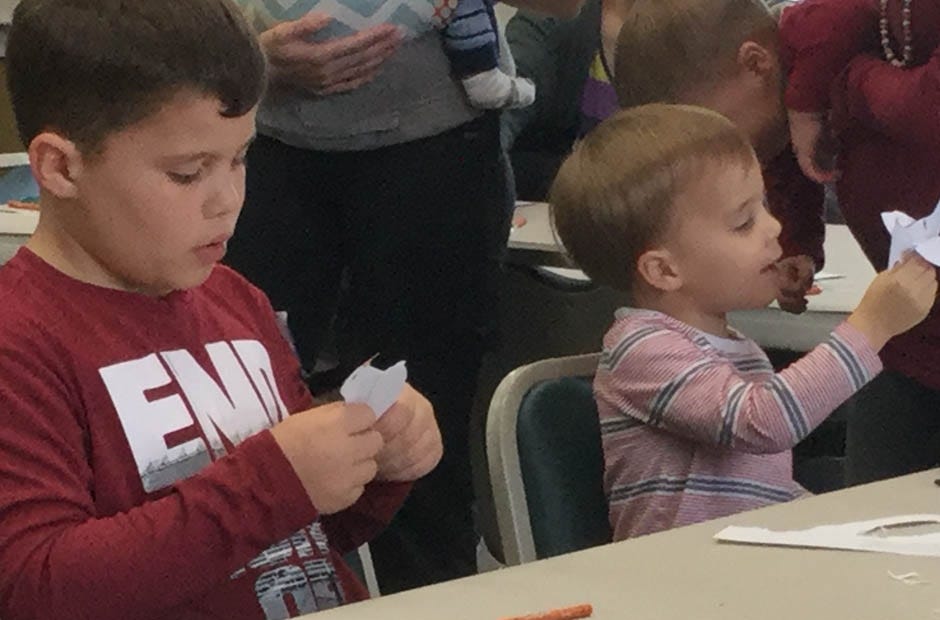
Area residents and Dozer the dog listen as Dr. Chelsea Evans of Okaloosa Eye Care reads "Dogs Don't Need Glasses" by Adrienne Geoghegan recently at the Crestview Public Library. [Special to the News Bulletin]

Have a cute photo of your kids out and about? They could be our next The Bulletin Kid! Email the photo with your child's name, age, hometown and a description of the action to news@crestviewbulletin.com.

This article originally appeared on Crestview News Bulletin: The Bulletin Kids

Workshop set on wild turkey basics

A wild turkey workshop is scheduled for Feb. 23 in Laurel Hill. [Pixabay.com]

CRESTVIEW — The U.S. Department of Agriculture's Natural Resources Conservation Service has scheduled a Feb. 23 workshop on wild turkey management. (See details in the box at right.)

Florida has two out of the five subspecies of wild turkey found in North America: Florida, or Osceola, turkey found predominantly in South Florida and the Eastern wild turkey found here in the panhandle.

Their habitats change with available plants in their region of the state, but here are general facts about Panhandle turkeys:

FOOD PREFERENCES: Their diet is more than 80 percent plant foods; 10 to 20 percent primarily comprises insects. Insects make up the majority of the diet of young poults, while adults will eat anything from acorns and berries to insects, salamanders, snails and small reptiles. Fruits of wild grape, dogwood and wild cherry are favorites. Turkeys also eat numerous seeds, including those of native grasses, sedges, trees and ferns.

WATER. A source of open water is necessary to support a wild turkey population. Creek and river bottoms act like highways for turkeys to move around. The birds drink from spring seeps, streams, ponds, lakes and livestock watering facilities. It's critical to have water as well as foraging, nesting, brood rearing and roosting cover available near each other to support populations.

NESTING COVER. Turkey hens nest in areas that provide cover for themselves and their eggs. Hens nest on the ground in the rough of the pine forest, under a brush pile, in thickets or under downed trees’ branches, and in fallow fields. Their preferred nesting cover is less than 4 feet high and within a half-mile of brood-rearing cover.

ROOSTING COVER. Wild turkeys roost overnight in trees, preferably over or near water to avoid predators. With increased hunting pressure, turkeys may retreat to roosts in remote, dense areas. Hens will roost on the ground after they lay eggs. Hens remain with poults on the ground until about two weeks of age, when the poults begin to roost in trees. Though many different trees may be used for roosting, in Florida pine trees are the preferred roost tree for adult gobblers.

BROOD-REARING COVER. Wild turkeys like open areas of grass and forbs with a thin overstore of trees. A forest opening of one-half acre to three acres is ample for brood rearing. Preferred brood habitat is 1 to 3 feet of tall grass or weeds where newly hatched poults can move about, have access to insects for food as well as dense cover for roosting and to escape predators.

WHAT: Wild Turkey Management Workshop

WHEN: 8 a.m. Feb. 23

WHERE: Ludlam Road in Laurel Hill.

NOTES: Featured topics are turkey biology and management; timber management; prescribing burns; roosting habitat; nesting and brood-rearing habitat; food plot management; tools and equipment for management; and cost-share programs.

Call the U.S. Department of Agriculture Natural Resources Conservation Service office, 682-3714, extension 3, or the Florida Fish and Wildlife Conservation Commission office at 767-3634 by Feb. 15 to register.

Visit the NRCS office at 938 Ferdon Blvd. N., Crestview, for more information.

This article originally appeared on Crestview News Bulletin: Workshop set on wild turkey basics

What's smarter: paying off debts or investing?

Yvonne Shanklin (Special to the News Bulletin)

If you're just starting out in your career, you need to be prepared to face some financial challenges along the way — but here's one that's not unpleasant: choosing what to do with some extra disposable income. When this happens, what should you do with the money? Your decisions could make a real difference in your ability to achieve your important financial goals.

Under what circumstances might you receive some "found" money? You could get a year-end bonus from your employer, or a sizable tax refund, or even an inheritance. However the money comes to you, don't let it slip through your fingers. Instead, consider these two moves: investing the money or using it to pay off debts.

Which of these choices should you pick? There's no one right answer, as everyone's situation is different. But here are a few general considerations:

Distinguish between "good" and "bad" debt. Not all types of debt are created equal. Your mortgage, for example, is probably a "good" form of debt. You're using the loan for a valid purpose — i.e., living in your house — and you likely get a hefty tax deduction for the interest you pay. On the other hand, nondeductible consumer debt that carries a high interest rate might be considered "bad" debt – and this is the debt you might want to reduce or eliminate when you receive some extra money. By doing so, you can free up money to save and invest for retirement or other goals.

Compare making extra mortgage payments vs. investing. Many of us get some psychological benefits by making extra house payments. Yet, when you do have some extra money, putting it toward your house may not be the best move. For one thing, as mentioned above, your mortgage can be considered a "good" type of debt, so you may not need to rush to pay it off. And from an investment standpoint, your home is somewhat "illiquid" – it's not always easy to get money out of it. If you put your extra money into traditional investments, such as stocks and bonds, you may increase your growth potential, and you may gain an income stream through interest payments and dividends.

Consider the tax advantages of investing. Apart from your mortgage, your other debts likely won't provide you with any tax benefits. But you can get tax advantages by putting money into certain types of investment vehicles, such as a traditional or Roth IRA. When you invest in a traditional IRA, your contributions may be deductible, depending on your income, and your money grows on a tax-deferred basis. (Keep in mind that taxes will be due upon withdrawals, and any withdrawals you make before you reach 59½ may be subject to a 10 percent IRS penalty.) Roth IRA contributions are not deductible, but your earnings are distributed tax-free, provided you don't take withdrawals until you reach 59½ and you've had your account at least five years.

Clearly, you've got some things to ponder when choosing whether to use "extra" money to pay off debts or invest. Of course, it's not always an "either-or" situation; you may be able to tackle some debts and still invest for the future. In any case, use this money wisely — you weren't necessarily counting on it, but you can make it count for you.

This article was written by Edward Jones on behalf of your Edward Jones financial adviser.

This article originally appeared on Crestview News Bulletin: What's smarter: paying off debts or investing?

4 ways to control feral hogs

A group of wild pigs is pictured in a trap. [Special to the News Bulletin]

Despite public and private land managers’ efforts, feral hog populations continue to rise in many areas in Florida.

Feral hogs damage crop fields, lawns, wetlands and forests. They can negatively affect native species of plants and animals. Their rooting leads to erosion and decreased water quality.

There are several options for controlling feral hogs. Choosing the right option depends on the situation.

Options include:

•Hunting with dogs

•Hunting with guns

•Using box traps

•Using corral traps

Let's talk about these options.

Hunting with dogs is not very effective for removing enough hogs to control populations. Dog hunting can move sounders — groups of wild hogs — from areas where damage is occurring for a period. This can be helpful when crops need to be protected from hog damage until they can be harvested.

Shooting hogs also is not effective for removing large numbers of hogs. Situations where it is successful include protecting crop fields and taking hogs that will not go into a trap. Shooting success depends on the education level of the hogs and sophistication of the shooting equipment available. Hogs learn quickly to avoid danger. They learn by watching other hogs who get shot or trapped. Hunting pressure can disrupt hog patterns and make them harder to trap or hunt.

Box traps can be effective at trapping young hogs that are not trap smart. A study conducted by a graduate student, Brian Williams, at Auburn University looked at the efficacy of different trap styles. Young hogs entered box traps and corral traps at similar rates. The study also found that adult females were 120 percent more likely to enter corral traps compared to box traps and adult males were more reluctant to enter either trap style but were more likely to enter the corral traps.

Corral traps are shown to be most effective for eliminating complete sounders. By eliminating a sounder at once, populations can be reduced. Corral traps are also more economical. In the Auburn study, the trapping cost per pig for box traps was $671.31 and for corral traps was $121.28.

Corral traps are best for capturing whole sounders. Box traps can be effective for capturing young hogs. When trap-smart adult females or males are in an area, shooting or hunting with dogs are options. Just remember that hunting pressure often moves the hog problem onto another property.

To eliminate hogs from a given area, we must employ several of these strategies. For example, we may be able to trap a sounder in a given area but still have a group of boars that will not go into a trap. In this case, we may set up to shoot them after trapping the rest of the hogs in a corral trap. By using these two techniques, we can drastically reduce the number of hogs in an area.

For more information about feral hogs, go to http://articles.extension.org/feral_hogs.

Jennifer Bearden is an agent at the University of Florida's Institute of Food and Agricultural Sciences Extension office in Crestview.

This article originally appeared on Crestview News Bulletin: 4 ways to control feral hogs

How does this Crestview restaurant stay open?

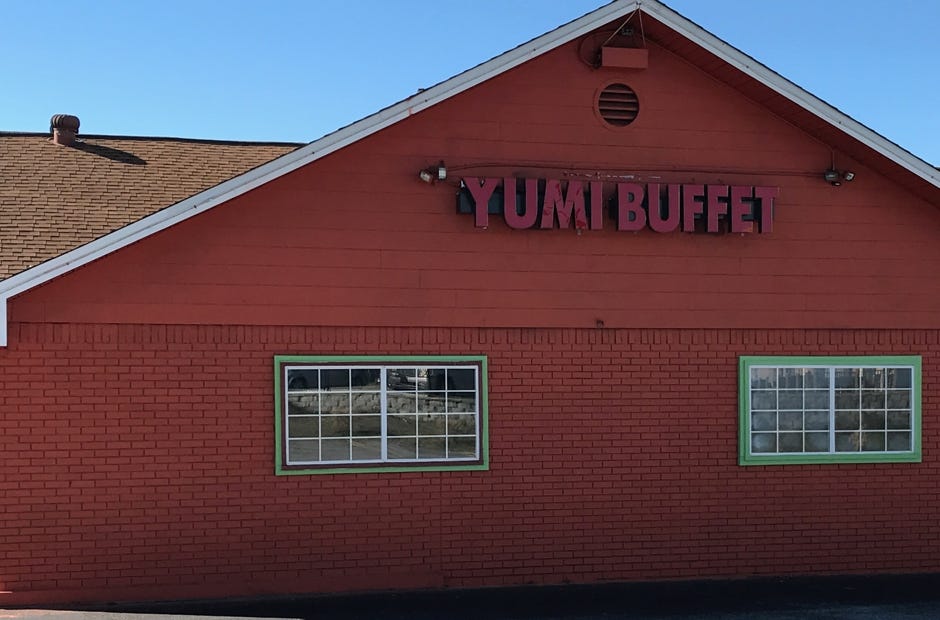
Yumi Buffet was closed Feb. 1, after several health violations including evidence of rodents and unsafe food temperatures. [MARK JUDSON/News Bulletin]

CRESTVIEW — Golden Buffet recently was closed due to health violations; this was its fourth closure in three years.

The restaurant, at 2680 S. Ferdon Blvd., temporarily closed Feb. 1 following a citation for 20 violations, including six high-priority concerns, according to the Florida Department of Business and Professional Regulation’s inspection report.

An inspector reportedly found foods held at unsafe temperatures, roach activity and approximately 60 rodent droppings in the kitchen.

This isn’t the restaurant’s first issue with health closures or the presence of rodents.

An inspector found about 75 droppings on Oct. 14, 2016, in addition to food storage violations. Another closure occurred on June 28, 2016, when Golden Buffet  48 violations, 14 of high-priority status. Approximately 230 rodent droppings were found during that inspection.

The business also closed May 16, 2014, when over 50 droppings and about 37 live roaches were found in the kitchen.

The restaurant reportedly has had 25 complaint-driven inspections since April 2014.

Restaurant emergency closures occur “based on an immediate threat to the public” with the intent to “protect the public health, safety or welfare,” according to the DBPR website.

“The division is currently engaged in administrative action with the Golden Buffet and will continue to monitor their compliance with Florida’s safety and sanitation laws,” DBPR Deputy Director of Communications Kathleen Keenan said in an email.

An administrative action can result in fines, business license suspension or license revocation, Keenan added.

The DBPR follows licensing and disciplinary requirements outlined in Florida Statutes, according to Keenan when asked how the restaurant has been able to maintain its license after so many repeat violations and closures.

“An administrative complaint which affords reasonable notice to the licensee of facts or conduct which warrant the [revocation]” is required, according to the statute.

Keenan didn’t comment on which action the DBPR was pursuing or if the company could lose its license.

A manager or spokesperson was not available for comment in several calls to Golden Buffet.

This article originally appeared on Crestview News Bulletin: How does this Crestview restaurant stay open?

error: Content is protected !!